

Updated Nov 23, 2026
Planning a Bathroom Remodel: Scope, Budget, and Order
Choose a bathroom scope you can afford, see real national cost averages, build a budget with a reserve, and put the work in an order that avoids delays.
Keep the toilet, shower, and sink where they are unless the layout truly does not work. Moving drains is what turns a straightforward replacement into a major project. Settle that first, then set a scope, get local prices, hold money back for what is hidden, and do not let demolition start until your materials are in the house.
Looking for more guidance? Take a look at our Improvements overview.
A bathroom is small, but it packs plumbing, wiring, ventilation, waterproofing, and tile into one tight space. That is why it costs more than its size suggests.
Pick a Scope
| Scope | What changes | Good when |
|---|---|---|
| Refresh | Paint, mirror, hardware, lights on existing boxes, maybe the vanity and faucet | Everything works and you are tired of looking at it |
| Pull and replace | New tub or shower, toilet, vanity, floor, and walls in the same places | The room is worn or leaking but the layout is fine |
| Gut and move | Down to the studs, with fixtures or walls in new places | The layout fails you every day |
Scope tends to creep one reasonable step at a time. A new vanity exposes mismatched floor. A new floor means lifting the toilet. Now you are choosing a toilet. Decide where you will stop, and write down what is staying.
What It Costs
Two national sources are useful for a first number, and neither one knows your house.
The 2025 Cost vs. Value report prices specific projects and asks Realtors what each adds at resale:
| Project | Average cost | Estimated resale value |
|---|---|---|
| Midrange remodel of a 5-by-7-foot bath, same layout, new tub, tile, toilet, vanity, and floor | $26,138 | $20,915 |
| Universal design remodel, with a curbless shower and wider door | $42,183 | $25,812 |
| Upscale remodel | $81,612 | $34,000 |
Houzz's 2026 survey reports a median spend in 2025 of $15,000 on primary bathrooms and $7,000 on guest bathrooms. Those figures mix small updates with full remodels, so they run lower.
Use these to see whether your plan is in the right neighborhood. Then let written local bids set the budget.
What Moves Your Price
- Moving a toilet, tub, or shower drain
- A custom tile shower instead of a one-piece or panel surround
- Glass enclosures and stone
- New circuits, a heated floor, or a fan that has to be ducted outside
- Rot, old pipes, or unsafe wiring found behind the walls
- Upstairs rooms, long carries, and tight stairs
Build the Budget
This example uses invented numbers to show the shape of it.
| Line | Example |
|---|---|
| Contractor's price for a pull and replace | $21,000 |
| Tile, vanity, and fixtures you buy yourself | $4,500 |
| Permits, if not in the bid | $500 |
| Reserve, 15 percent of the first two lines | $3,825 |
| Total to plan for | $29,825 |
Size your reserve by asking each bidder what they most often find when they open a bathroom like yours, and what it usually adds. A room with a soft floor or a history of leaks needs more set aside than a newer one that is only dated. If the total is too high, cut scope before you cut the reserve.
Casa can help you get to a first number. Give us a photo of your bathroom and we can show you a new look, then help you rough out a budget to go with it.
Look Before You Design
Spend an hour on these, and you may save yourself a change order:
- Does the floor feel soft near the toilet or tub?
- Are there stains on the ceiling or wall below?
- Does the fan move air, and does it go outdoors? The EPA recommends venting bathrooms outside to control moisture. Some older fans empty into the attic.
- Do the shutoff valves work?
- Do the outlets have test and reset buttons?
- Is there room in the electrical panel?
- What year was the house built?
Anyone you pay to disturb paint in a pre-1978 home must be lead-safe certified. Remodeling can also disturb asbestos in older materials, and the EPA says not to sand, scrape, or take your own samples.
A Workable Order
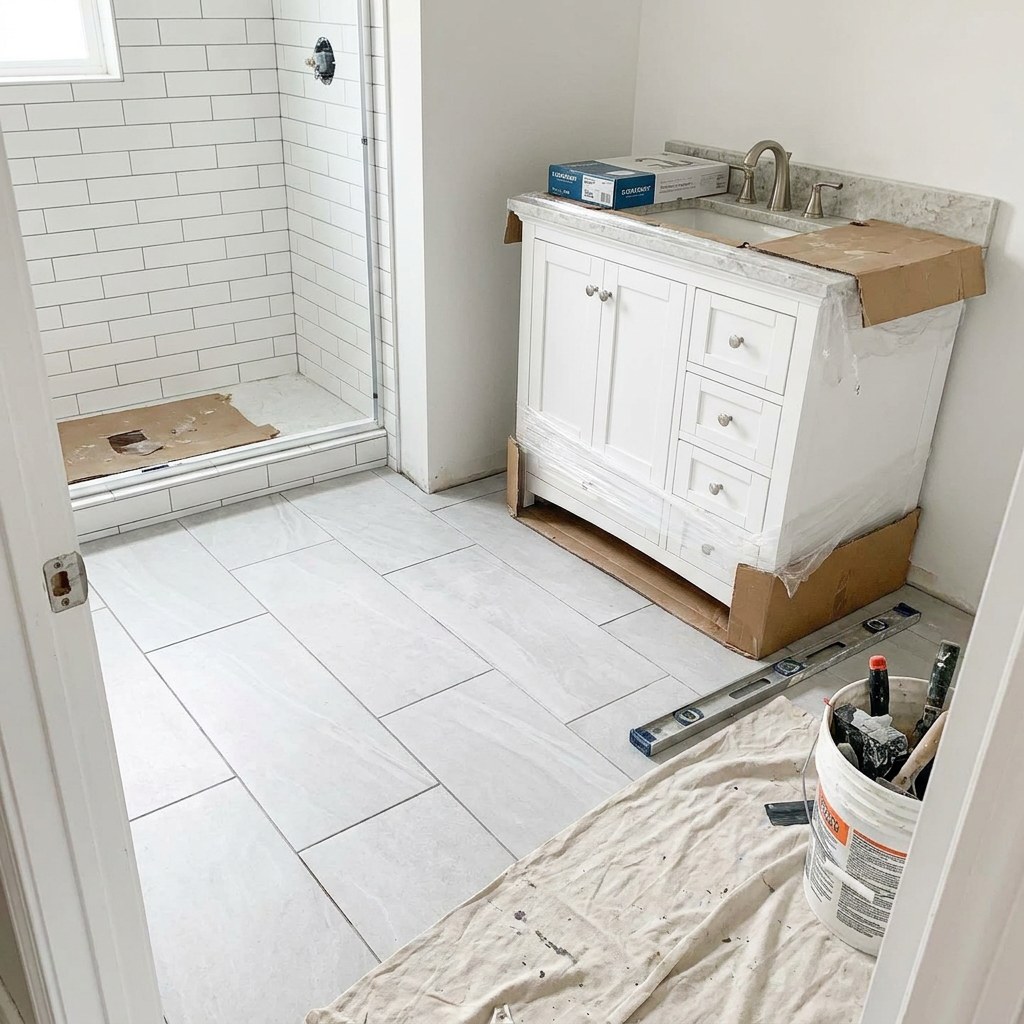
- Set the scope and take measurements.
- Choose every fixture and tile, including valves and drains.
- Get bids, sign a contract, and apply for permits.
- Receive and open every box. A cracked tub is easier to swap before your old one is gone.
- Demolition and repairs to framing and subfloor.
- Rough plumbing, wiring, and fan duct.
- Rough inspection, while the walls are open.
- Wallboard and waterproofing.
- Tile, grout, and paint.
- Vanity, toilet, fixtures, glass, and final inspection.
Ask how the shower will be waterproofed. Tile and grout are not a waterproof layer by themselves, and this is the step you least want rushed.
How Long to Allow
In the same Houzz survey, primary bathroom projects averaged 8.4 months of planning and 4.8 months of construction. Yours may go faster, especially with the layout unchanged, but it helps to know that the thinking takes longer than the building. Get a written schedule from your contractor that names the inspections and the waiting time for tile, waterproofing, and glass.
If this is your only bathroom, plan where everyone will wash before you sign. Ask whether the toilet can be reset each evening, and for how many days it cannot.
Permits
Rules are local. Fairfax County, Virginia requires permits for bathroom remodels and for new or relocated fixtures, but not for replacing a vanity or countertop. Portland, Oregon generally requires one when you move or add plumbing, wiring, or ventilation, or change walls. Call your building department with your scope in hand, and expect your contractor to pull the permit.
What to Do Yourself
Painting, hanging a mirror, swapping a showerhead, and changing towel bars or cabinet knobs are fine weekend jobs. Leave drains, wiring, shower waterproofing, rot, and anything more than a small patch of mold to professionals.
Should You Do It Now?
Go ahead if the shower leaks, the floor is soft, or moisture keeps coming back. Waiting makes those repairs bigger.
Take your time if the room is dry and only dated. Paint, lighting, and hardware can buy you several good years.
Keep it modest if you plan to sell soon. Even the midrange project above was not expected to return its full cost.
Wait if the job would use up your emergency savings.