

Updated Nov 23, 2026
How to Clean Your Bathroom Exhaust Fan to Prevent Moisture and Mold
Clean a bathroom exhaust fan with the power off, test its pull with a tissue, and spot the noises, smells, and duct problems that need an electrician.
Turn the fan off at the breaker, lower the cover, wash it in soapy water, and vacuum the dust you can reach without touching the wiring. Put it back, restore power, and hold a tissue to the grille. If the tissue stays up on its own, the fan is moving air. The whole job takes about twenty minutes, twice a year.
Looking for more guidance? Take a look at our Maintenance overview.
The fan is easy to forget because it hums along on the ceiling whether or not it's doing much. When it's clogged with lint, damp air stays in the room and settles into paint, drywall, and grout.
What Typically Goes Wrong If Ignored
Every shower sends warm, humid air up to the ceiling. The fan is meant to pull it into a duct and out of the house. It also pulls in dust, lint from towels, hairspray, and powder, and over months that sticks to the cover, blades, and motor.
When you leave a fan clogged:
- Airflow drops. The motor spins and makes noise, but little air moves through the choked slots.
- Moisture lingers. Water stays on walls, mirrors, and trim long after the shower is off.
- Mold and mildew take hold. Once they're behind peeling paint or under caulk, scrubbing the surface won't fix the damp that feeds them.
- The motor overheats. Dust holds heat in, so the motor runs hotter and wears out sooner.
What This Task Protects
- Indoor air quality: The EPA says to run the bathroom fan or open a window when showering and to keep indoor humidity below 60 percent, ideally between 30 and 50.
- Walls, ceilings, and trim: Good ventilation keeps paint from peeling, drywall tape from bubbling, and doors from swelling.
- The fan itself: A clean motor runs cooler, quieter, and for less time.
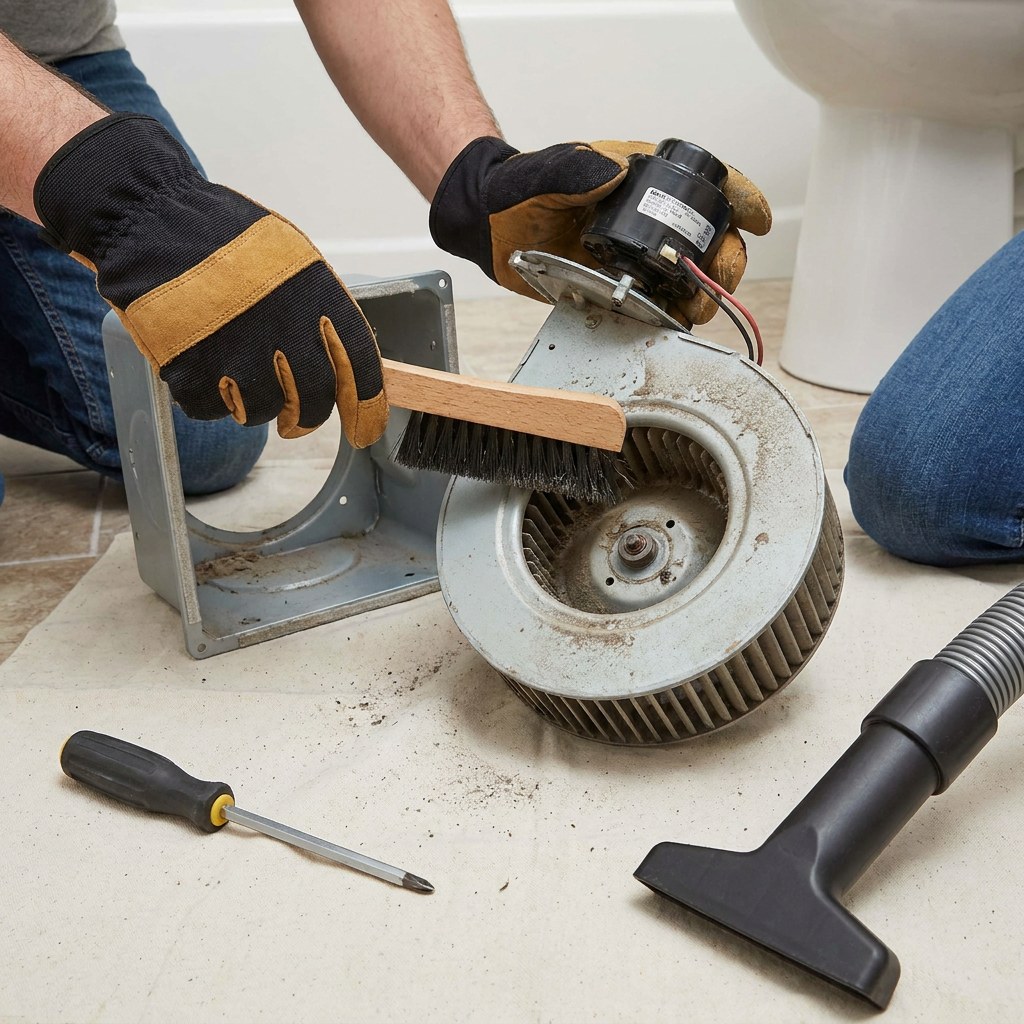
Step by Step Cleaning Checklist
You need a sturdy step stool, a vacuum with a soft brush or crevice tool, a bucket of warm soapy water, an old toothbrush, and a dry microfiber cloth. Glasses and a dust mask help when you're looking up into lint.
1. Cut the Power
Turn off the wall switch, then switch off the breaker for the bathroom. The wall switch alone isn't enough, because someone can flip it while your hand is in the fan. Check that the fan, light, and heater are all dead, and tape a note over the breaker. If the fan has a heater or light, let it cool completely.
2. Remove the Vent Cover (Grille)
Stand securely on a step stool on a dry floor. Gently pull the cover straight down an inch or two. Most are held by two V-shaped spring wires. Squeeze each pair together to release the cover from its slots. If it won't come, stop. It may be held by a screw or painted in.
3. Soak and Wash the Grille
Wash it in warm water with a little dish soap, and use the toothbrush on the slats. Let it air dry completely while you clean the rest.
4. Vacuum the Housing and Motor
Use the soft brush to pull loose lint from the housing, the outside of the motor, and the visible duct opening. Be gentle with the blades, since thin plastic wheels crack. Keep clear of the wires, and leave dust inside the motor alone.
5. Wipe Down the Fan Blades
Use a dry microfiber cloth on the blades and housing. Keep wet cloths, sprays, and wipes out of the box.
6. Check That Things Move
With the breaker still off, turn the fan wheel with a finger. It should spin without catching or grinding. If you can see the small flap (the damper) in the duct opening, nudge it to be sure it swings freely.
7. Reattach the Cover
Once the grille is dry, squeeze the springs, slide them into their slots, and push the cover flush.
8. Restore Power and Test It
Turn the breaker and switch back on. Hold a single square of toilet paper against the grille. If it stays up on its own, the fan is pulling air.
How Often It Should Be Done
For most households, clean the fan every six months. With several people sharing one bathroom, or pets that shed, check it every three to four months. Once a year is usually enough for a guest bathroom.
Run the fan during every shower and for a while afterward. A timer switch makes that easier to remember.
Signs You Have Waited Too Long
- Mirrors stay fogged for more than fifteen or twenty minutes after a shower.
- Water beads or runs down the walls.
- Dark specks of mold or mildew appear on the ceiling above the shower.
- Paint peels, or the door starts to stick.
- The fan buzzes, grinds, or rattles.
- Dust hangs from the slots, or a dark ring of dust forms on the ceiling around the cover.
If It Still Doesn't Pull
| What you notice | Likely cause | Next step |
|---|---|---|
| Spins, but the tissue falls | Blocked duct, stuck flap, or crushed pipe | Look at the outside flap from the ground, then call |
| Hums, won't spin | Motor | Leave it off, call an electrician |
| Rattles | Loose cover, blade, or motor | Reseat the cover. If it continues, call |
| Hot smell | Overheating | Off at the breaker, call |
| Water drips from it | Condensation in the duct | Call |
| Air goes into an open attic | No duct to the outside | Have it ducted outdoors |
Don't climb on the roof to check the vent. A fan that empties into the attic leaves the moisture there, where it can rot the roof framing.
Cost of Neglect vs Cost of Maintenance
Cleaning costs twenty minutes and supplies you already own. Letting it go can cost a new fan and an electrician's visit, and Thumbtack data puts installing a bathroom exhaust fan at $183 to $444. If the damp gets into the walls, add drywall, paint, and mold cleanup on top of that.
Safety Boundaries
- Safe to handle yourself: Removing a cover that comes down by hand, vacuuming, dry wiping, and putting the cover back, all with the breaker off.
- Worth monitoring: A fan that sounds a little loud after cleaning but still clears steam quickly. If it gets worse, plan to replace it.
- Time to call a professional: Burning smells, a fan that won't spin, bare or melted wiring, a breaker that trips, or a duct that has come loose in the attic. If you replace the fan, ask an electrician about one that vents outdoors, fits the opening and duct, and is rated for wet locations if it sits over a tub or shower.
- Mold: The EPA says most people can handle a moldy patch smaller than about 10 square feet. For more than that, or mold inside the duct, call a mold remediation company.
How to Build This Into Your Home Maintenance Schedule
Pair it with something you already do twice a year, such as testing smoke alarms or changing the HVAC filter. Casa can keep track of when each bathroom fan was last cleaned and remind you when it's due.