

Nov 24, 2026
Frozen Pipes? How to Thaw Them Before They Burst
Find the frozen pipe, open the faucet, and warm it safely. Plus what never to use, when to shut off the water, and how to stop the next freeze.
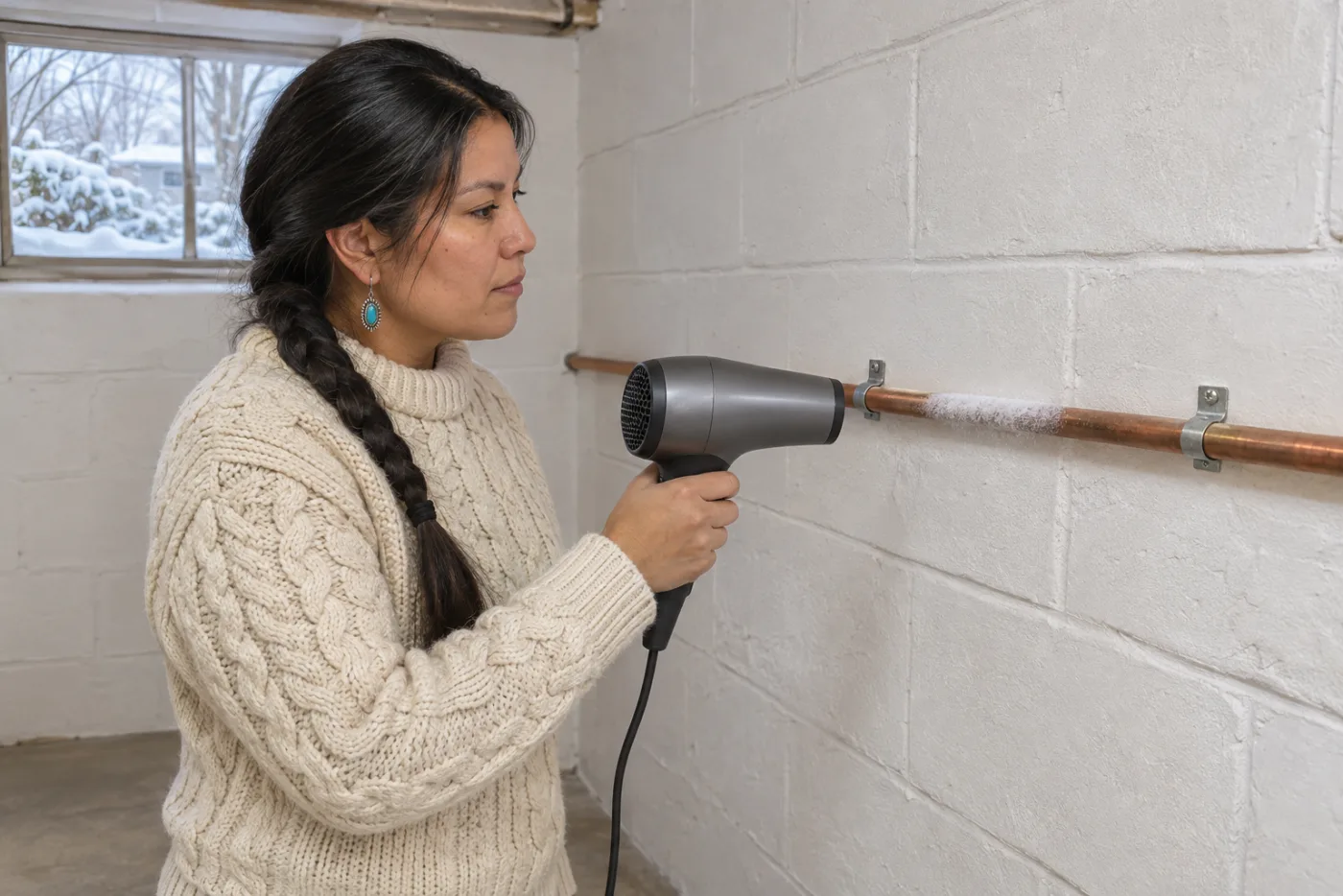
Open the faucet that's barely running and leave it open. Find your main water valve so you can close it fast. Then warm the frozen pipe with a hair dryer or hot towels until the water runs at full pressure. Never use a flame.
Looking for more guidance? Take a look at our Repairs overview.
Is It Frozen?
A faucet that gives a trickle or nothing on a freezing day is the main sign. Check the others:
| What you find | Likely problem |
|---|---|
| One faucet out, others fine | Frozen pipe to that room |
| All faucets on one side of the house | Frozen branch, often an outside wall |
| No water anywhere | Frozen service line, or an outage. Check here |
| Frost, a bulge, or a crack on the pipe | It may already have split |
The Red Cross says pipes usually freeze along outside walls or where water enters through the foundation. Crawl spaces, attics, garages, and cabinets under sinks are next.
Thaw It Step by Step
- Find the main valve and make sure you can turn it. Where to look.
- Look before you heat. If you see a split, bulge, or leak, or the frozen part is inside a wall, shut the water off, stop here, and call a plumber. A pipe can crack while frozen and only leak once it thaws.
- Open the faucet. Running water helps melt the ice.
- Start near the faucet and work back toward the cold section.
- Use gentle heat: a hair dryer, an electric heating pad, towels soaked in hot water, or a space heater kept away from anything that burns.
- Keep going until full pressure returns, then check the whole run for drips.
- Check every other faucet in the house.
Keep the hair dryer and its cord dry, and don't use it if there's water on the floor or in the cabinet.
Never Use These
- A blowtorch, propane or kerosene heater, charcoal, or any open flame
- Boiling water on plastic pipe or a porcelain sink
- A heater left running where you can't see it
- A hammer, or anything pushed into the pipe
Call a Plumber If
- You can't find or reach the frozen section.
- It's in a wall, under a slab, or underground.
- It isn't moving after 30 to 45 minutes of steady heat.
- You see any leak, bulge, or crack.
Stop the Next One Tonight
| Do this | Why |
|---|---|
| Let cold water drip from faucets on outside walls | Moving water is harder to freeze |
| Open cabinet doors under sinks | Lets warm air reach the pipes |
| Keep the thermostat the same day and night | Cold snaps catch homes that set back |
| Close the garage door | Protects lines running through it |
| Unhook garden hoses | Trapped water freezes back into the house. Winterize the faucet |
| Going away? Leave heat at 55°F or higher | The Red Cross minimum for an empty house |
When it warms up, insulate that pipe, seal the gap letting cold air in, and write down where it froze.
If It Bursts
Close the main valve and go to burst pipe: the first 10 minutes.
What It Costs
Thumbtack puts most plumbing jobs at $205 to $654 and a burst pipe repair at $234 to $771. Pipe insulation for one cold run costs a few dollars.
How We Can Help
Send Casa a photo of the pipe and tell us which faucets are out. We help you narrow down where it froze, what's safe to try, and when to stop. If you need a plumber, we can look for local ones, contact the ones you choose, and gather times and prices.
FAQ
Will frozen pipes thaw on their own? Yes, when it warms up. That's also when a cracked one starts to leak, so be home and know where the main valve is.
Should I turn off the water to thaw a pipe? Yes if you see damage or can't see the pipe. Then call a plumber. Otherwise leave it on with the faucet open, and stay close to the valve.
At what temperature do pipes freeze? Water freezes at 32°F, but pipes inside a heated house usually take a harder or longer cold spell. Unheated spaces and drafts make it happen sooner.
Does insurance cover frozen pipes? Often the damage, if it was sudden and you kept the heat on. More on burst pipes and insurance.