

Updated Nov 23, 2026
How to Replace a Broken or Missing Fence Picket
Cut and fasten a new wood picket, or unlock and swap a vinyl one. Tools, spacing, matching the finish, and how to tell if the rail or post is the problem.
To replace a wood picket, pull the old nails or screws, cut a new board to the same height, and fasten it to the top and bottom rails with two exterior fasteners in each. A vinyl picket usually unlocks from slots in the rails instead. Either way it is a short job, as long as the rails and posts are sound.
Looking for more guidance? Take a look at our Repairs overview.
Check those first. A new picket on a rotten rail will be loose again by next season.
If the fence sits on a property line, find out who owns it before you change it.
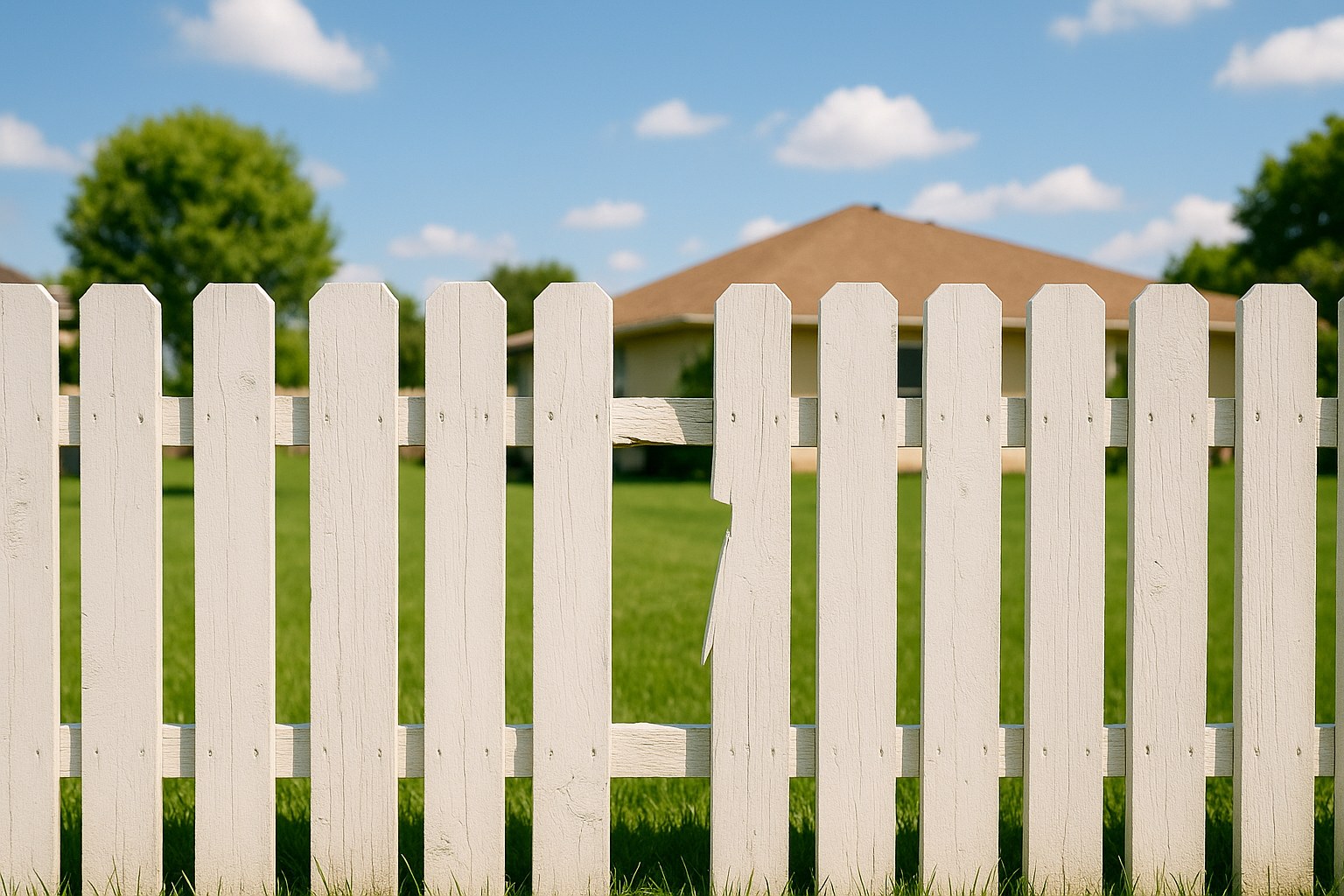
Check the Fence First
Wear work gloves and safety glasses. Broken pickets have sharp edges and loose nails.
- Walk the Fence Line: Start at one end and walk the entire length of your fence. Locate the damaged picket(s), but don't stop there.
- Check the Structure: Stand back and look at the overall fence line. Are the main posts (the thick vertical supports) straight, or are they leaning? Look closely at the horizontal rails that the pickets are attached to. Do you see any major cracks, sagging, or signs of rot?
- Test the Neighbors: Gently push on the pickets surrounding the broken one. Do they feel solid, or are they wobbly and soft? This can indicate rot or loose fasteners that you'll want to address at the same time.
- Identify the Material: Determine what your fence is made of.
- Wood: You'll see wood grain, feel a natural texture, and it will likely be stained or painted. Cedar and pressure-treated pine are common.
- Vinyl: This material looks and feels like plastic. It's often white and has a smooth, uniform finish. You may see seams or caps on the posts.
- Composite or Metal: If it’s not wood or vinyl, you may have a composite (a mix of wood and plastic) or metal (like aluminum or steel) fence. These often require specialized repair methods.
Picket, rail, or post?
Get a fence contractor's opinion if:
- You discover that the posts or rails are cracked, rotting, or leaning. A new picket will not fix that.
- You find widespread rot or damage affecting many pickets.
- Your fence is made of metal, composite, or another material you're not comfortable working with.
Replace the picket yourself if:
- The damage is limited to one or just a few pickets.
- The posts and rails are strong, straight, and in good condition.
Replace a Wood Fence Picket
Wood treated before 2004 may contain arsenic. The EPA says to wear goggles and a dust mask when sawing it, wash your hands after, and never burn it. Throw old pieces away as your local waste service directs.
Tools and materials
- Work gloves and safety glasses
- Replacement wood picket that matches the wood, width, thickness, and top shape
- Measuring tape
- Pencil
- Hand saw or circular saw
- Hammer or drill
- Pry bar or putty knife
- Hot-dipped galvanized or stainless nails, or exterior screws
- Medium-grit sandpaper
- Outdoor paint or stain to match your fence
Remove the broken picket
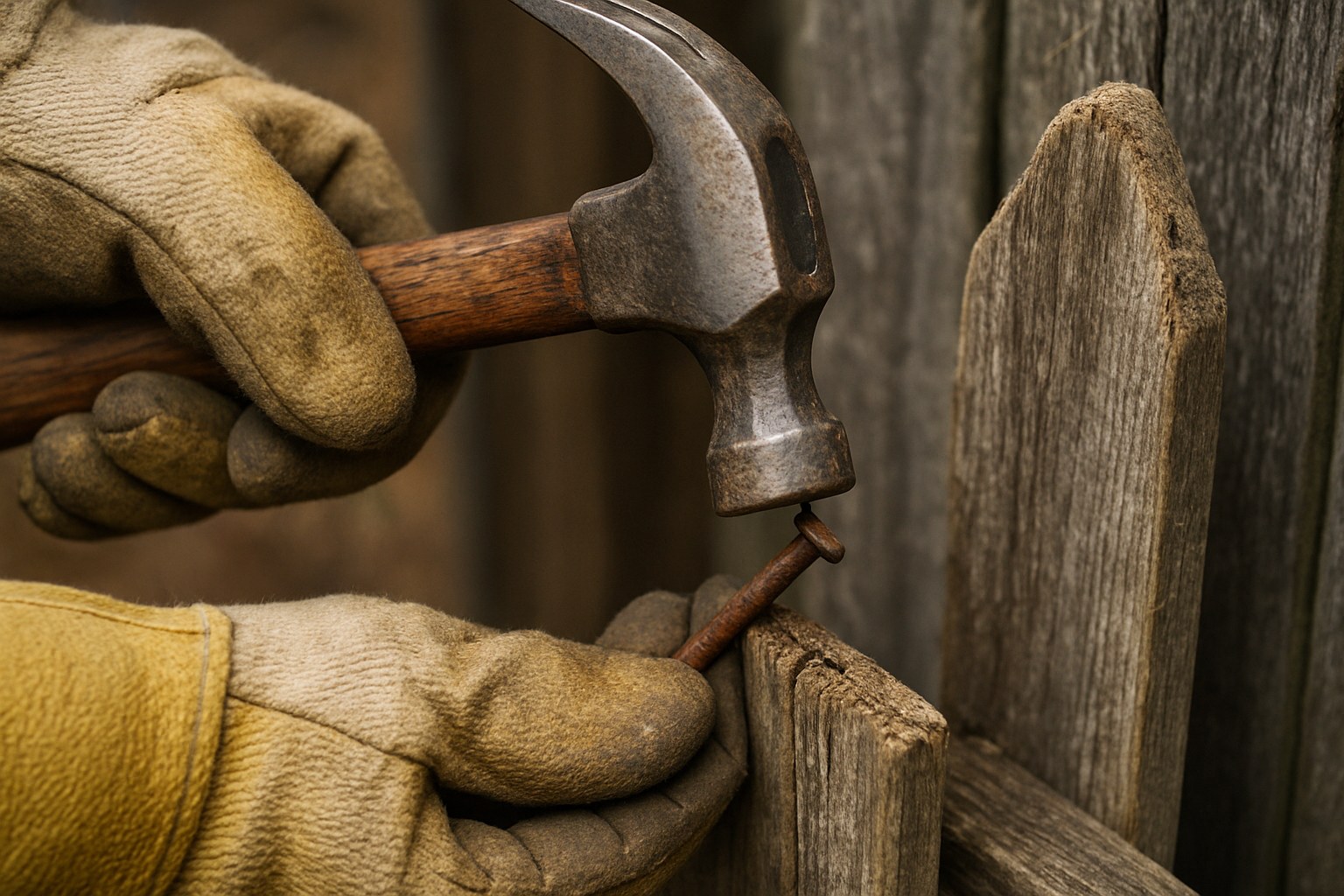
- Remove the Remnants: The first step is to clear out the old, broken pieces. Use the claw of your hammer or a pry bar to carefully pull out any nails holding the broken sections to the rails. If screws were used, simply back them out with your drill.
- Clear Away Debris: Sometimes, splintered wood fragments get stuck to the rail. Use a putty knife to gently scrape them off, creating a clean surface for the new picket.
Install the new wood picket
- Measure and Mark: Measure the height of the neighboring pickets to determine the length you need for the new one. If your fence is on a slope, you may need to account for an angled cut at the top or bottom. Use a straight edge laid across the tops of the adjacent pickets to find the right line. Mark the cut line on your new picket with a pencil.
- Cut to Size: Carefully cut the picket to the correct length using your hand saw. After cutting, lightly sand the cut edge with medium-grit sandpaper to smooth it out and prevent splinters.
- Position the Picket: Place the new picket in the gap. Align the top with its neighbors. Cut a scrap to the width of an existing gap and use it as a spacer. Keep the bottom off the soil so it does not wick water.
- Fasten It Securely: Match how the other pickets are attached. Drill pilot holes near the ends so the wood does not split.
- If using nails: Drive two galvanized nails through the picket into the top rail, and two more into the bottom rail. Galvanized nails help prevent rust streaks.
- If using screws: For extra holding power, use outdoor-rated wood screws. Drive two screws through the picket into each rail.
- Finish to Match: Wipe away any sawdust and apply a coat of your matching outdoor paint or stain. It might take a day or two to fully dry, depending on the weather. A new piece of wood can sometimes look lighter even with the same stain; it will weather and blend in over time.
Give it a gentle shake. If it moves, the rail is the problem, not the picket.
Replace a Vinyl Fence Picket
Vinyl systems differ. Some pickets snap in with tabs, some are screwed, and some panels have to come apart. Check the maker's instructions if you know the brand.
What you need
- Work gloves and safety glasses
- An identical vinyl picket from the same maker, if possible
- Flathead screwdriver
- Damp cloth
Swap the vinyl picket
- Inspect and Locate Tabs: Confirm that the horizontal rails are not cracked. A picket is often held in place by tabs that fit into slots in the rails. Look closely at where the top and bottom of the damaged picket meet the rails.
- Release the Picket: Gently insert a flathead screwdriver into the slot on the side of the rail near the top of the picket. Give it a slight twist to disengage the locking tab. You should feel it loosen. Cold vinyl is brittle, so do this on a mild day and do not force it.
- Remove the Old Picket: Once the top is loose, pull the picket upward to slide it out of the slot in the bottom rail.
- Install the New Picket: Take your new, identical vinyl picket. First, slide the bottom end down into the slot in the lower rail. Then, align the top of the picket with the upper rail's slot and push it down firmly until you hear or feel the locking tab snap into place.
- Final Cleanup: Give the new picket a quick wipe with a damp cloth to remove any smudges or fingerprints.
Check that the picket is locked in and lined up with its neighbors.
If the New Picket Does Not Match
New wood looks brighter than weathered wood. Wait a few weeks for pressure-treated boards to dry, then stain or paint. A semi-transparent stain in the color of the old boards blends better than leaving it bare. If you have spare pickets on a hidden side, move an old one to the front and put the new one there.
What Does Fence Repair Cost?
HomeGuide puts replacing a single board at $100 to $300. Thumbtack's national average for fence repair is $308 to $1,027, with most people paying around $559. Fixing several pickets in one visit usually costs less per board.