

Updated Nov 23, 2026
How to Fix a Clogged Toilet Bowl: A Step-by-Step Guide
Clear a clogged toilet with a flange plunger or toilet snake, avoid an overflow, and know when the clog points to a bigger plumbing problem.
With a plunger and sometimes a toilet snake, you can usually clear a clogged toilet yourself. Don't flush again if the bowl is already full. Lift the tank lid and push the flapper down, or close the shutoff valve behind the toilet, to stop it filling. Skip chemical drain cleaners, which can splash and damage pipes.
Looking for more guidance? Take a look at our Repairs overview.
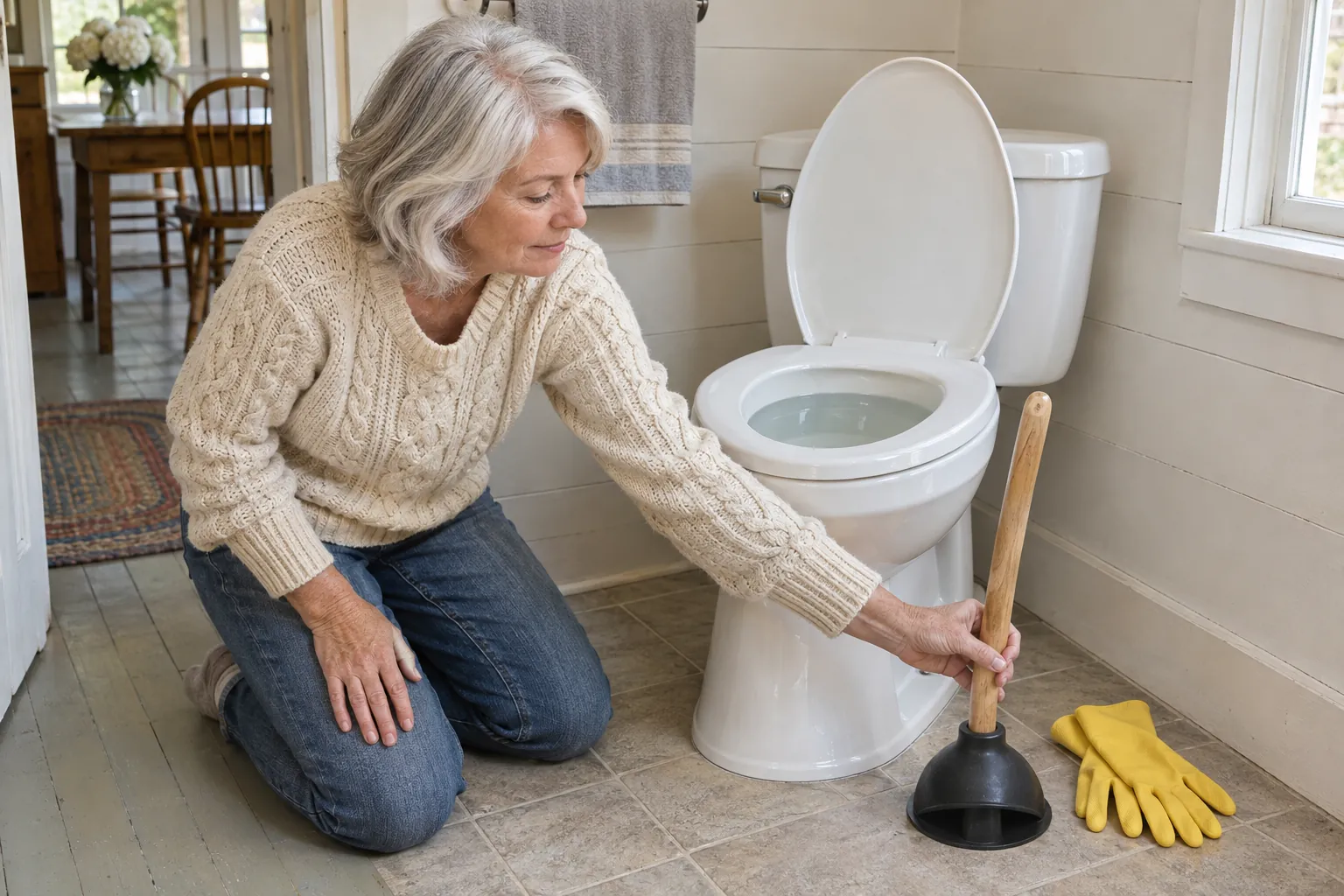
Why is my toilet bowl clogged?
One of the most frequent causes is flushing items that aren't designed to break down in water, like wipes, paper towels, or hygiene products. Other culprits include too much toilet paper, foreign objects accidentally dropped into the toilet, or a buildup of debris in the pipes. While occasional clogs are normal, recurrent blockages might indicate a bigger problem with your plumbing system.
Tools you'll need to unclog a toilet
Before diving in, it's helpful to have these tools on hand:
- A plunger (preferably one with a flange for better sealing)
- A toilet snake (also called an auger)
- Rubber gloves (optional)
- A bucket and towels (for cleanup)
You can find these at a hardware store or online.
Step 1: Assess the situation
The first thing to do when your toilet bowl is clogged is to identify whether there's a visible blockage. Take a look into the bowl. Can you see anything that's obstructing the drain, such as a foreign object or excessive toilet paper?
If you see a blockage
If you can spot the clog, start with a plunger.
- Place and seal the plunger over the hole at the bottom of the toilet bowl. Make sure you've created a good seal---this helps generate the necessary pressure to dislodge the clog.
- Push and pull rapidly on the plunger several times. Use quick, forceful motions, but avoid splashing.
- Remove the plunger and check if the water drains. If not, repeat the plunging process as needed.
Flush the toilet
After using the plunger, try flushing the toilet once, with your hand ready on the flapper or shutoff valve in case the bowl rises. If the water drains properly, congratulations---you've fixed the issue!
If you can't see a blockage, or if the toilet still doesn't flush properly...
If the clog persists, it's time to bring out the toilet snake.
Step 2: Use a toilet snake
A toilet snake is a flexible, coiled tool designed to navigate the twists and turns of your plumbing system. It's perfect for breaking apart stubborn clogs or retrieving objects lodged deep in the drain.
- Insert the end of the toilet snake into the hole at the bottom of the toilet bowl.
- Rotate the handle to extend the snake down the drain. Continue until you feel resistance---this means the snake has reached the clog.
- Rotate the handle five more times to break up or latch onto the blockage.
- Reverse the direction of the handle to retract the snake.
- Remove the snake and dispose of any debris it collects.
Flush the toilet again
Once you've used the snake, test the toilet by flushing it. If the water drains properly, the clog is gone. If not, repeat the process or consider calling a plumber for professional help.
When to call a plumber
Most clogs can be resolved with a plunger or toilet snake, but there are situations where you'll need expert assistance. For example:
- The clog keeps recurring, even after repeated attempts to fix it.
- You suspect a more significant issue, such as tree root intrusion or a damaged sewer line.
- Water is backing up into other drains in your home (a sign of a deeper plumbing problem).
A plumber is worth the call if the clog keeps returning. Thumbtack data puts toilet repair at $149 to $355, and lists clearing a toilet clog at $110 to $275. A serious blockage can run as high as $400.
Preventing future clogs
These tips help prevent clogs:
- Flush only toilet paper and human waste. Avoid flushing wipes, feminine products, or anything labeled "flushable" but not biodegradable.
- Limit toilet paper use. Excessive amounts can quickly block your pipes.
- Keep small items out of reach. Toys and other objects are a common cause.