

Updated Nov 23, 2026
Dishwasher Making a Loud Noise? What Each Sound Means
Match rattling, thumping, grinding, or squealing to its likely cause, tell normal sounds from trouble, and try safe fixes before you call for repair.
Most dishwasher noise comes from something touching a spray arm, a dirty filter, or a machine that is loose or not level. Grinding is different. GE lists it as abnormal and says it can mean the pump is running with no water. Find your sound in the table, then try the matching fix.
Looking for more guidance? Take a look at our Repairs overview.
| Sound | Likely cause | Try first |
|---|---|---|
| Swishing, humming, whining, one loud snap | Normal spray, pump, or detergent cup | Nothing |
| Rattling | Light items moving in the spray | Reload, run one empty cycle |
| Rhythmic knock or thump | Spray arm hitting something | Clear the spray arms |
| Vibration or banging against cabinets | Loose or not level | Level and tighten |
| Grinding | No water in the tub, or hard debris | Check the water supply and filter |
| Squeal or rattle after long disuse | Dry pump seals | Add a quart of water |
| Bang in the pipes as it fills or stops | Water hammer in the plumbing | Call a plumber |
| Beeping | Door opened mid-cycle, or an error | Close the door, press start |
GE says the snap you hear is usually the detergent cup opening. Whirlpool also lists pitch changes, clicking, and a soft gurgle at the sink as normal. A sound that is new or getting louder deserves a look.
Pin Down the Sound
- Take out the dishes and anything loose.
- Run a short cycle and stay nearby.
- Note when the noise happens: filling, washing, draining, or all the time.
If the noise is gone when the machine is empty, the way it was loaded is the cause.
Rattling or Knocking
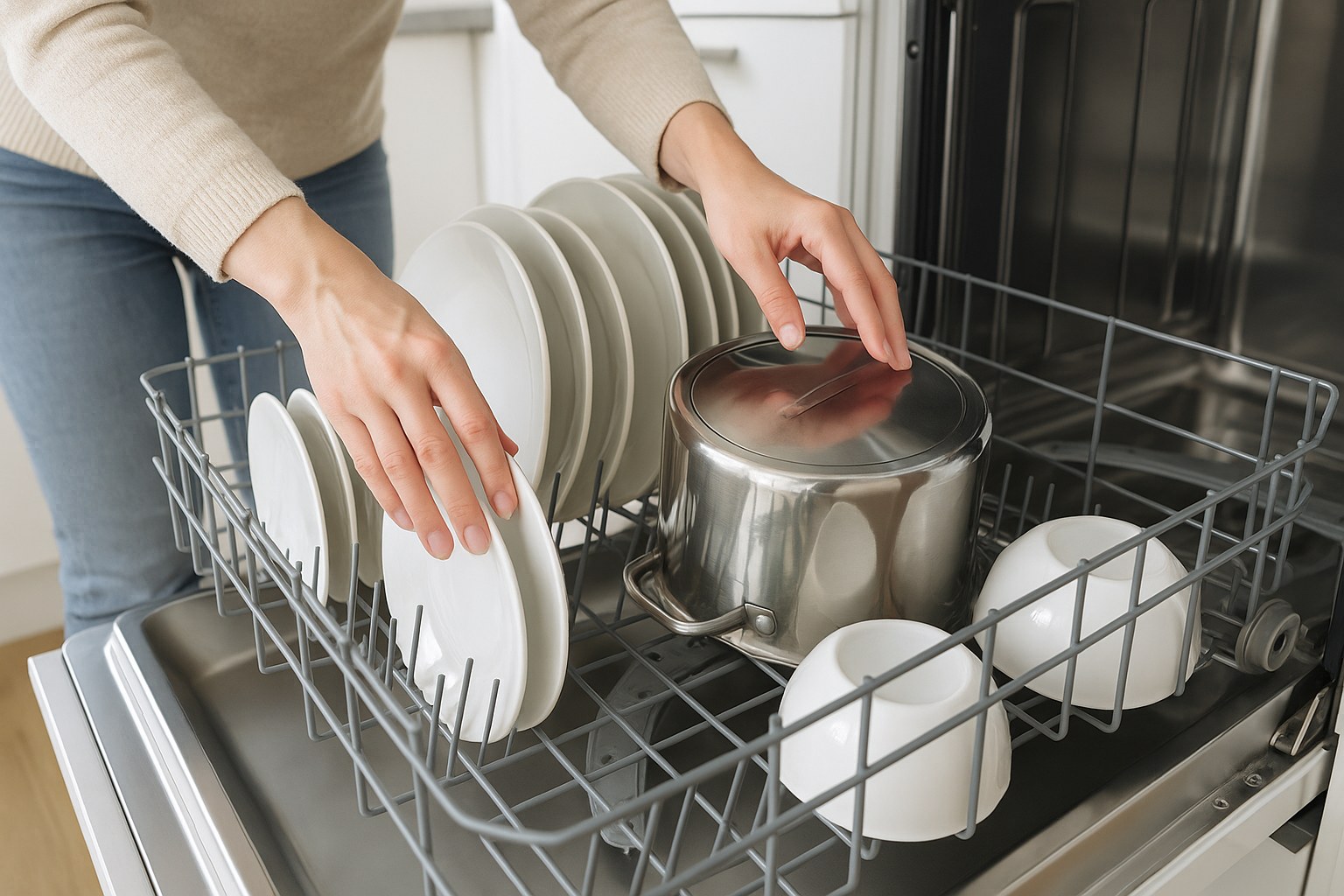
Check loading and loose parts
- Check Dish Placement: Open the dishwasher and look for any dishes, utensils, or plastic containers that may have shifted. Ensure nothing is hanging below the racks where it could obstruct the spinning arms. Large cookie sheets or cutting boards are common culprits.
- Spin the Spray Arms: Gently spin the upper and lower spray arms by hand. They should rotate a full 360 degrees without hitting anything. If they bump into a dish, rearrange the rack.
- Secure the Filter: Check the removable filter at the bottom of the dishwasher tub. If it’s not locked securely in place, it can rattle around during a cycle.
Run another short cycle.
Check the spray arms
A spray arm can crack, come loose, or trap grit.
- Turn off the power to the dishwasher at the circuit breaker.
- Remove the Spray Arms: The lower spray arm usually lifts straight off. The upper one may be held by a plastic nut or clip. Turn it to release it, then pull the arm down.
- Inspect for Damage: Look closely for any cracks, splits, or melted spots on the plastic.
- Check for Debris: Shake the arm gently. If you hear rattling, it means seeds, glass, or other small debris are trapped inside. Run water through the arm in the sink, and clear the spray holes with a toothpick.
Replace a cracked arm, using the model number on the door edge to order the part.
Banging or Vibrating
Rule out a spray arm hitting something first. If the inside is clear, the machine may be loose or out of level. Turn off the power at the breaker before you start, because wiring sits behind the lower panel.
- Remove the toe-kick panel at the bottom. It is usually held by two screws. Do not touch the wiring box or anything else behind it.
- Check for Level: Place a carpenter's level on the bottom of the open dishwasher door and then on the rack track inside. Check it both side-to-side and front-to-back.
- Adjust the Leveling Feet: Most dishwashers have adjustable feet. Turn them by hand or with pliers until the unit is level and all feet touch the floor.
- Secure the Mounting Brackets: Look at the top of the dishwasher frame, right under your countertop. There should be two brackets that screw the dishwasher to the underside of the counter. Make sure these screws are tight. If they are loose, the entire unit can shift and bang against the cabinets during a cycle.
- Re-install the Toe-Kick Panel: Once everything is level and secure, put the panel back on.
Run another cycle. A bang only when water starts or stops is usually water hammer in the plumbing, which a plumber can fix.
Squealing or Whining
A steady whine can be the normal wash motor. On a new or long-unused machine, GE says dry pump seals can squeal, and suggests adding a quart of water to the tub. Otherwise, clean the filter. Turn off the power at the breaker first, and wear gloves in case there is broken glass.
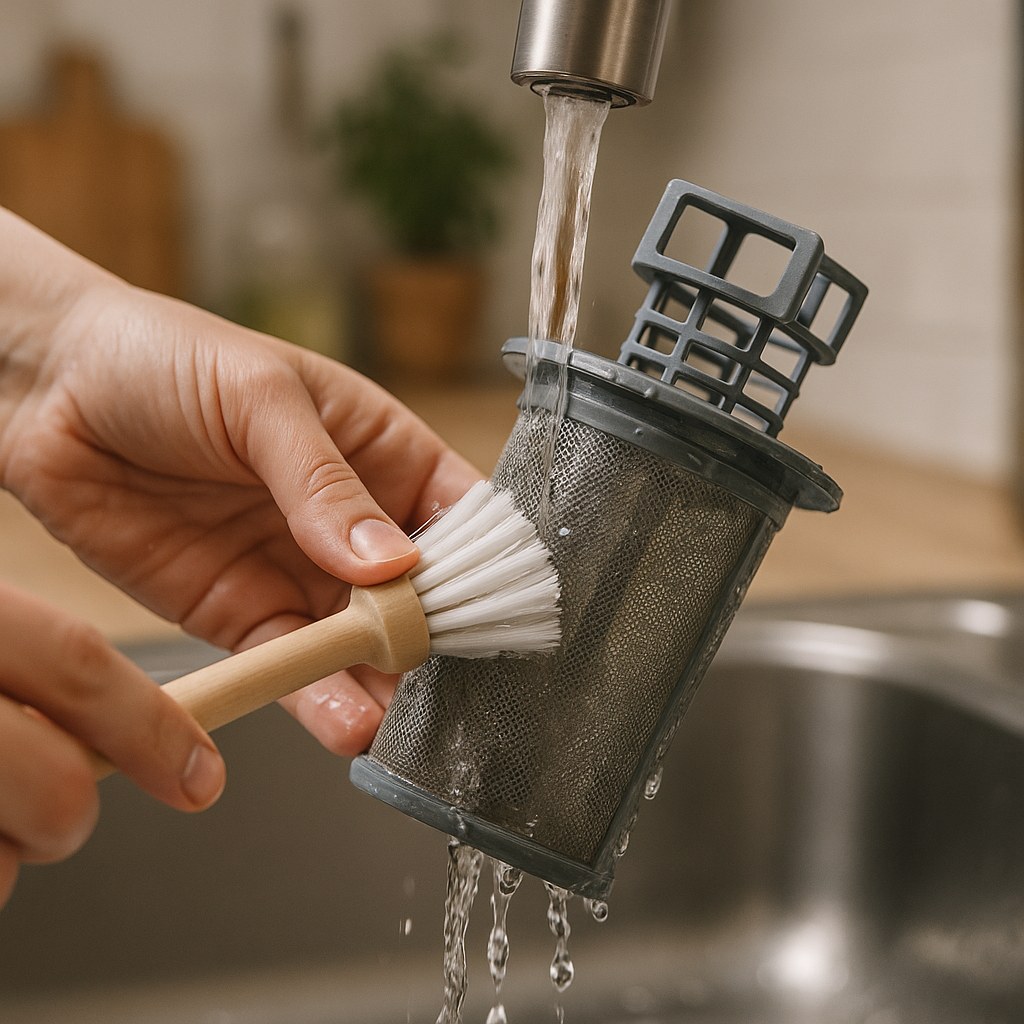
-
Locate and Remove the Filter: The filter is a cylindrical component located on the floor of the dishwasher tub. Twist it counter-clockwise to unlock it, then lift it out along with the mesh screen underneath.
-
Clean the Filter Thoroughly: Take both parts to your sink and rinse them under warm water. Use a soft brush to gently scrub away any food particles, grease, and grime. A clean filter is essential for a quiet, effective dishwasher.
-
Look in the opening where the filter sat. Lift out anything you can see, such as glass, a pit, or a bone. Do not push tools into the pump.
-
Re-install the Filter: Place the clean mesh screen and filter back into the sump, and twist it clockwise to lock it securely in place.
Restore power and run a rinse cycle. If it still squeals, the drain pump may be failing.
Grinding
- Look for water in the tub a few minutes into a cycle. If there is none, check that the valve under the sink is open and the fill hose is not kinked. Stop the machine, because running dry can damage the pump.
- Clean the filter with the power off, as above, and remove any debris you can see.
- Run one short cycle. If it still grinds with water in the tub, turn it off and book a repair.
A hum with no spray or no draining also needs a technician.
When to Call a Repair Technician
- Grinding or a loud hum continues after the filter and water supply check out.
- The dishwasher leaks, will not drain, or leaves dishes dirty.
- You found a cracked part you cannot reach from inside the tub.
- The noise started right after installation. Call the installer.
Record the sound on your phone and note the model number. Ask whether the visit fee goes toward the repair, and check your warranty first. Thumbtack puts the national average for dishwasher repair at $117 to $300.