

Updated Nov 23, 2026
How to Fix a Loose Drawer Handle or a Screw That Spins
Tighten a loose drawer handle in minutes, fix a screw that spins, choose the right screw length, and measure for a replacement that fits the same holes.
Hold the handle still and tighten the screws from inside the drawer. If a screw spins without tightening, check what it threads into. On most drawer pulls it is a machine screw that goes through the drawer front and into the handle itself, so the fix is a new screw, a washer, or a new handle. Wood filler only helps when the screw bites into wood.
Looking for more guidance? Take a look at our Repairs overview.
A screwdriver and a measuring tape are usually all you need. Tightening takes a few minutes, and swapping a handle that fits the same holes takes about ten.
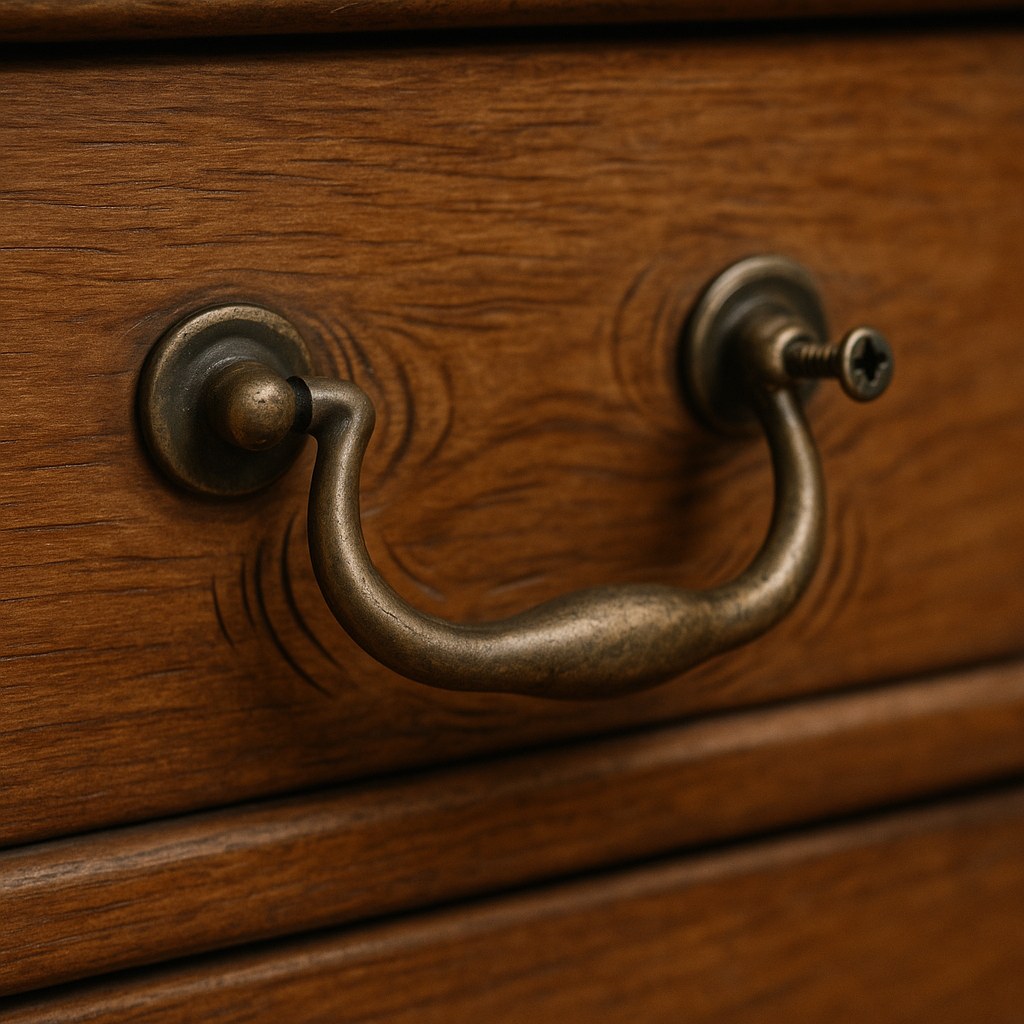
Why Do Drawer Handles Come Loose Anyway?
- Loose screws. The most common cause. Every pull works the screw back a little.
- A screw that is the wrong length. It feels tight but never clamps the handle to the front.
- Worn threads. The screw turns and turns because the threads in the handle, or in the wood, are gone.
- A hole that has grown. Soft particleboard crushes, so the handle shifts even with a tight screw.
- A broken handle. Thin zinc and plastic pulls crack at the posts, right where the screw goes in.
- A drawer that binds. If you have to yank it open, the handle takes the strain.
Step 1: Assess the Situation: Is It Loose or Broken?
Pull the drawer open so you can see the front and the back. On a dresser, open one drawer at a time so it cannot tip.
- Give it a wiggle. If the handle moves but the screw heads do not, the screw is loose in the handle. If the screw heads rock too, the hole is worn.
- Look for cracks, mostly at the base of the posts. A cracked handle will not hold, however tight the screw.
- Turn a screw a little. If it gets firm, tighten it. If it spins with no change, go to the stripped section.
- Check the drawer front. If the whole front moves, the handle is not the problem.
Then work out which kind you have.
| What you see | Type | What holds it |
|---|---|---|
| A screw head inside the drawer, handle outside | Through-bolt | Threads in the handle |
| Screws on the face, visible from the front | Surface-mount, cup, or bin pull | Wood |
| One screw in the middle | Knob | Threads in the knob |
| A tiny set screw on the side or bottom | Set screw pull | A hidden bolt |
| No screws anywhere | Glued, clipped, or integrated | Check the maker before prying |
Step 2: How to Fix a Loose Drawer Handle
What You'll Need:
- A Phillips or flathead screwdriver that fits the screw snugly. A tip that is too small chews up the head.
- A dry cloth
- Medium-strength, removable thread locker or spring washers, if it has come loose before
Steps:
- Empty the drawer if the screws are blocked.
- Hold the handle square against the front so it does not twist.
- Turn each screw clockwise from inside until snug. Do not force it. Over-tightening can crack the drawer front or strip soft zinc.
- On a pull with two screws, go back and forth so both sides seat evenly.
- Wiggle it. If it stays tight, you are done.
If it loosens again within weeks, add a drop of thread locker to the screw, or a spring washer under the head. Use a hand screwdriver for this. A drill can strip a soft handle in a second.
A knob that keeps spinning has only one screw, so nothing stops it turning. Tighten it while you hold the knob still. A rubber or lock washer behind the knob grips the front and keeps it in place.
What If the Screw Just Spins? How to Fix a Stripped Screw Hole
Through-bolt handles and knobs
- Screw too long. It bottoms out before it pulls the handle tight. Add one or two flat washers under the head inside the drawer, or buy a shorter screw. Breakaway screws have notches so you can snap them to length with two pairs of pliers.
- Screw too short. It reaches only a thread or two. Measure the thickness of the drawer front and add about half an inch for thread. Drawer fronts with a false front need a longer screw.
- Stripped threads in the handle. The screw never bites. Replace the handle, or the screw if its threads are worn. To tell which, try the screw in another handle from the same set. If it bites there, the first handle is worn out.
- Hole in the drawer front is too big. The handle shifts even when tight. Use a backplate or large washers on both sides.
- Wrong thread. Cabinet screws are often 8-32 or M4, and they are not interchangeable. Take the old screw to the store and test it by hand in a matching nut.
Surface-mount handles screwed into wood
You will need wooden toothpicks or a small dowel, wood glue, a drill with a small bit, and the original screws.
- Remove the screw.
- Fill the hole with wooden toothpicks or a small dowel coated with wood glue. Trim flush.
- Let the glue dry as the label says.
- Drill a small pilot hole and drive the screw back in.
Do not drive the screw into wet glue and load it. Wood filler alone is weak for a handle that gets pulled every day. A slightly larger or longer screw is another option if it will not poke through.
Step 3: How to Replace a Broken Drawer Handle
Measure Twice, Buy Once
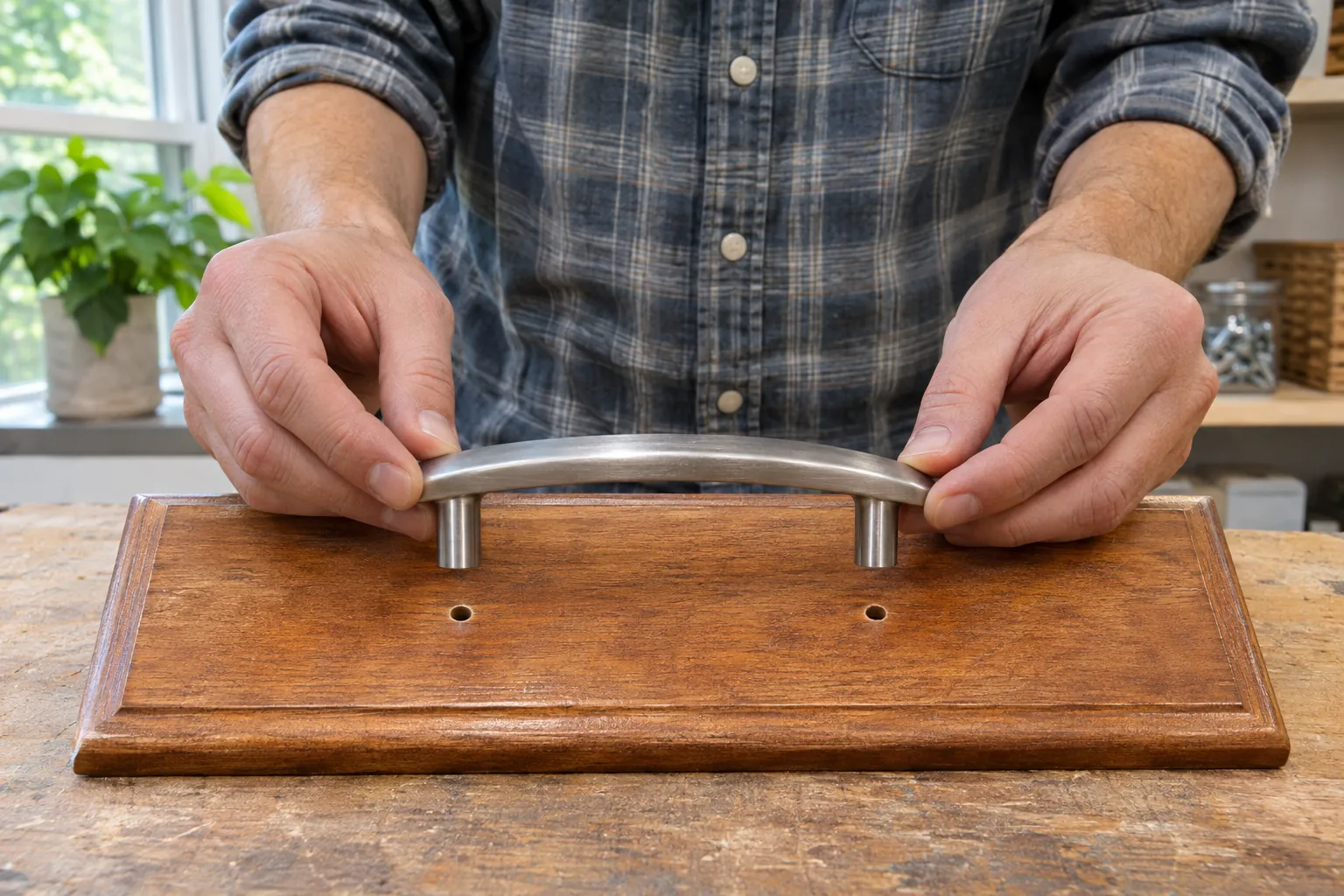
- Take the old handle off and keep the screws.
- Measure center to center between the two holes, not the length of the handle. Common sizes are 3 inches, 3-3/4 inches (96 mm), 4 inches, and 5 inches (128 mm). Measure in millimeters too. A 96 mm pull will not fit holes drilled at 4 inches.
- Check the drawer front thickness so you buy the right screw length.
- Photograph the handle next to the rest of the room's hardware. Finishes with the same name differ between makers, so order one and compare before you buy a full set.
Installing the New Handle
- Wipe the front where the old handle left a mark.
- Line up the new handle and start both screws by hand. If one will not start, the spacing is off. Do not force it.
- Tighten evenly until snug.
- Open and close the drawer a few times. Check that no screw tip sticks out far enough to catch clothes or fingers.
If no handle matches the old spacing, use a backplate that covers the old holes, or choose a longer pull and drill new ones. Fill the old holes first, tape the surface to prevent chipping, and drill from the front with a backing board behind. Make a cardboard template first so every drawer comes out the same.
Renting? Keep the old handles in a labeled bag and choose new ones with the same spacing. Then you can put the originals back when you move.
What If There Are No Visible Screws?
Do not pry. Check these first:
- A tiny hole on the underside or side of a post. That is a set screw. Loosen it with a hex key, and the handle slides off a bolt fixed to the drawer.
- A cap or plug inside the drawer. It may cover the screw head. Lift it with a plastic tool.
- A false front. On many kitchen drawers the handle screws are hidden between two panels. Remove the screws inside the drawer box that hold the decorative front, and you will find them.
- An edge or finger pull. It is fitted in a groove or screwed along the top edge.
- Glue. If nothing else holds it, it may be bonded. Ask the furniture maker which adhesive to use, or have a handyman remove it, since pulling can tear the veneer.
When the Drawer Front Is the Problem
- A crack through the hole: glue and clamp it. Use a backplate to spread the load.
- Swollen particleboard: a screw may never hold. Use a longer through-bolt with a washer, or replace the drawer front.
- A loose drawer front: tighten the screws that join it to the drawer box before you touch the handle.
- The drawer sticks: people yank a handle loose because the slide binds. Fix the slide or the next handle will fail too.
What Does It Cost to Hire It Out?
Thumbtack data puts simple handyman tasks, the ones that take under two hours, at $101 to $257 per job, and furniture repair at $118 to $362. If a loose handle is one of several small jobs, bundle them into one visit. Hiring it out makes the most sense for a whole kitchen of new holes, for antique or veneered furniture, and for a cracked drawer front.
Common Questions
What size screw do drawer handles use? In the US, usually an 8-32 machine screw about 1 inch long for a 3/4-inch front. Imported and metric hardware often uses M4. The front's thickness decides the length.
Why does my drawer handle keep coming loose? The screw is the wrong length, or the drawer is binding. Fix those first, then use thread locker.