

Updated Nov 23, 2026
How to Fix a Noisy Drawer That Squeaks, Grinds or Rubs
Silence a squeaking, grinding or rubbing drawer by cleaning the slides, tightening the screws, and lubricating the right way for your slide type.
A noisy drawer is usually dirty, loose, dry, or rubbing on something. Most can be quieted in under 30 minutes with a vacuum, a screwdriver, and the right lubricant.
Looking for more guidance? Take a look at our Repairs overview.
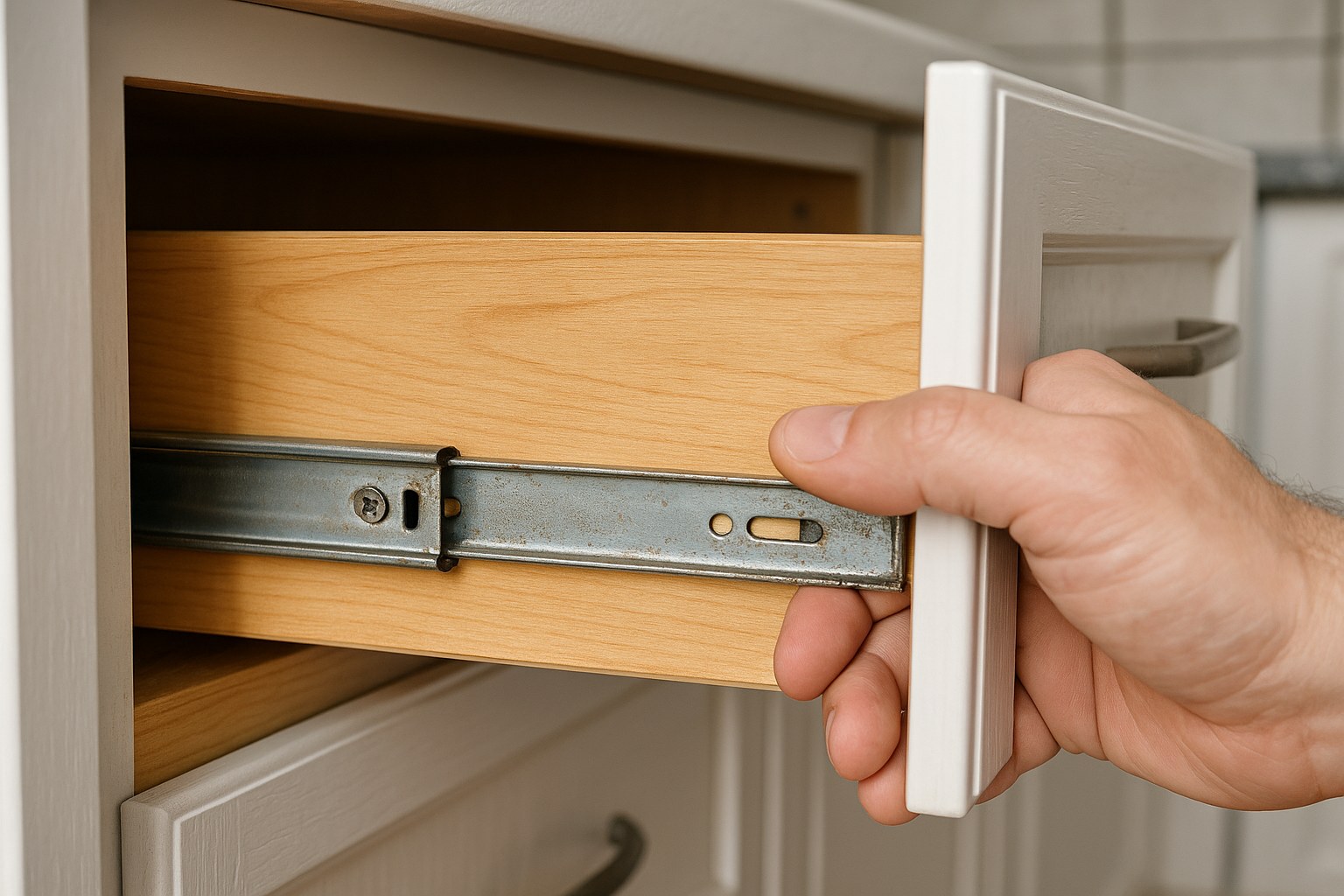
Why Is My Drawer Making Noise? The Most Common Culprits
Here are the usual suspects behind a noisy drawer:
- Debris and Grime: Over time, dust, crumbs, and other small debris can build up in the drawer slides. This creates friction, causing a gritty, grinding sound as the tiny particles get crushed by the moving parts.
- Loose Hardware: The screws holding the drawer slides to the cabinet and the drawer box itself can work themselves loose from repeated opening and closing. This causes the drawer to rattle, wobble, or rub against the cabinet frame.
- An Overloaded Drawer: We’re all guilty of it—stuffing just one more thing into an already full drawer. Excessive weight puts a major strain on the slides and their components, leading to groaning sounds and potential damage.
- Misalignment: If a drawer looks tilted or doesn’t close flush with the cabinet, the slides are likely out of alignment. This forces the drawer to rub against the cabinet frame, creating a scraping or rubbing noise.
- Dry or Worn-Out Slides: Drawer slides need lubrication to move smoothly. Over time, this lubricant can wear off or get gunked up, causing metal-on-metal squeaking. This is true for metal slides and even wooden runners, which can dry out and create friction.
A Step by Step Guide to Fixing a Noisy Drawer
Start with the easiest fixes first. You need a flashlight and a screwdriver.
Step 1: The Initial Inspection
A good look will often point straight to the problem.
- Pull the drawer all the way out so you can see the slides on both sides. If you can, remove the drawer completely. Most modern slides have a small lever you can press to release them.
- Use a flashlight to get a good look at the slides on the drawer and the tracks inside the cabinet. Do you see any obvious debris, dust, or crumbs?
- Check for looseness. Gently wiggle the drawer front and sides. Does it feel wobbly? Look closely at all the screws holding the slides in place. Are any of them loose?
- Observe the alignment. Close the drawer and see if it sits flush and level with the cabinet. As you open it, watch to see if it rubs against the top, bottom, or sides of the opening.
- Listen closely. Slowly open and close the drawer and try to pinpoint where the noise is coming from. Is it a high-pitched squeak (suggesting a lubrication issue) or a low grinding sound (often caused by debris)?
Based on what you find, proceed to the next relevant step.
Step 2: Clean the Drawer Slides Thoroughly
You’d be amazed at how often a simple cleaning solves the problem. If you spotted any gunk during your inspection, this is your first fix.
- Remove the drawer from the cabinet completely.
- Vacuum it out. Use a vacuum with a brush or crevice attachment to suck up all the loose dust and debris from the slides and tracks.
- Wipe them down. Use a slightly damp microfiber cloth to wipe down the full length of the slides and tracks. If there’s sticky residue, you can use a mild all-purpose cleaner.
- Dry everything. Use a separate, dry microfiber cloth to ensure the slides are completely dry before you proceed. Moisture can cause rust on metal slides.
- Reinstall the drawer and test it out. Slide it in and out five or six times. If the noise is gone, congratulations! You’ve just fixed your drawer.
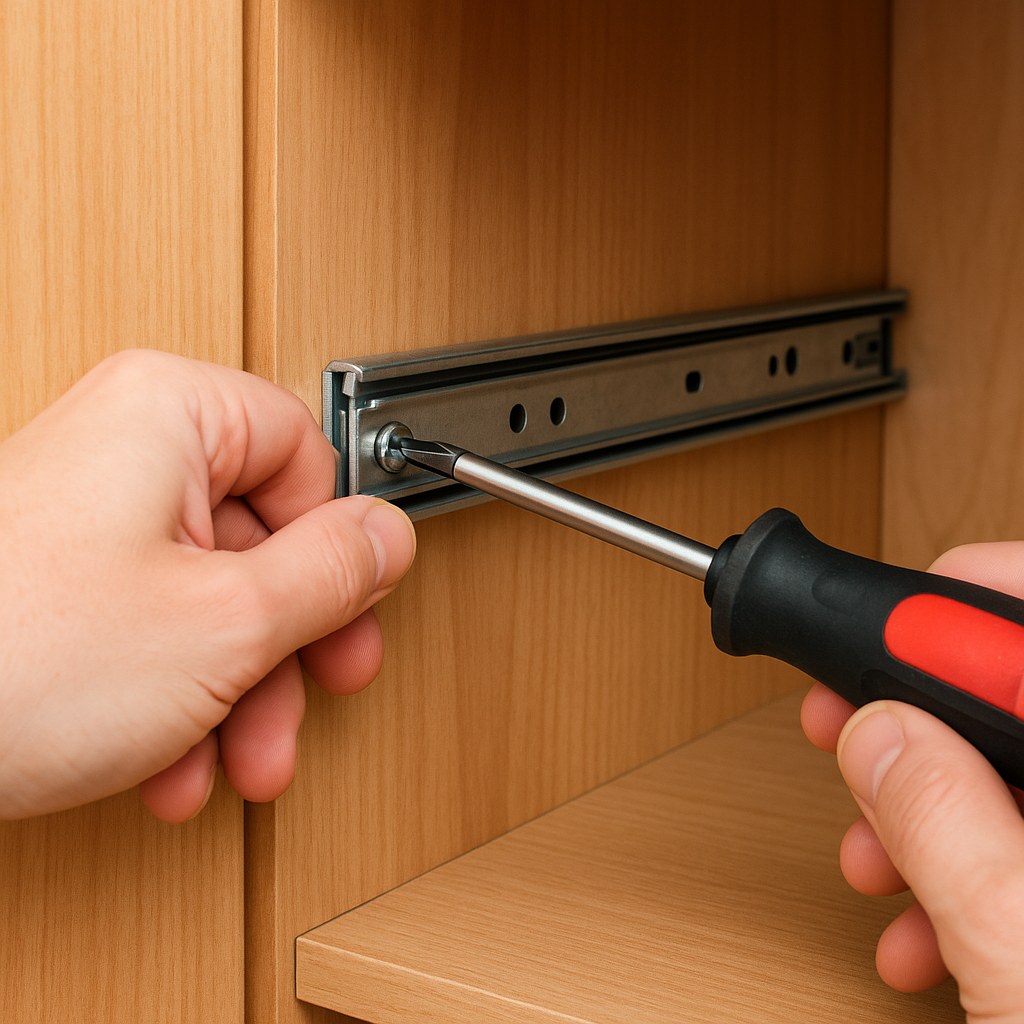
Step 3: Tighten All the Hardware
If cleaning didn't do the trick, or if you noticed some wobbling during your inspection, it’s time to check the hardware.
- With the drawer removed, grab a Phillips head screwdriver.
- Systematically check every screw on all four slide components (one on each side of the drawer, one on each side of the cabinet interior).
- Turn each screw clockwise until it’s snug. Be careful not to overtighten, as this can strip the wood.
- Also, check for any screws on the drawer front or at the back brackets that might be loose.
- Once everything is tightened, put the drawer back in and give it a test. A firm, secure connection can eliminate a surprising amount of noise.
Step 4: Lubricate the Slides
If the drawer is clean and tight but still squeaking, it’s thirsty for some lubricant. But not all lubricants are created equal! It's crucial to use the right type for your slides.
First, identify what kind of slides you have:
- Wooden Slides: Common on older or more traditional furniture, these drawers simply slide wood-on-wood.
- Metal Roller Slides: These common slides have a plastic or metal wheel that rolls along a metal track.
- Ball-Bearing Slides: These are heavy-duty slides that have tiny ball bearings visible in the track, allowing for an incredibly smooth glide.
How to Lubricate Wooden Slides: Rub a thin, even layer of paste wax, a block of paraffin wax, or even just an old candle along the wooden runners on both the drawer and the cabinet. Work it in with a cloth and wipe away any excess.
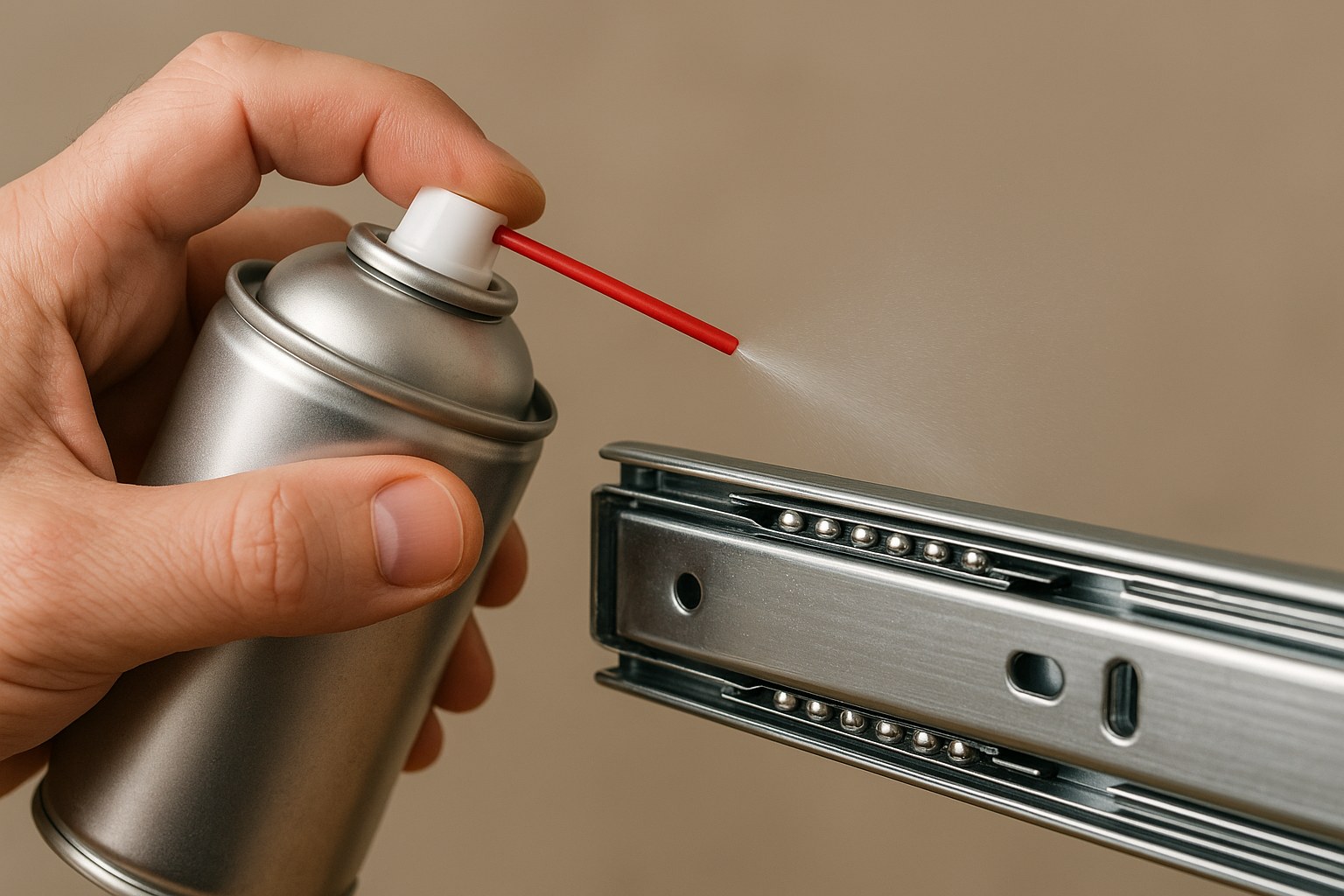
How to Lubricate Metal Roller or Ball-Bearing Slides: For these, you'll want to use a silicone-based lubricant spray. Avoid oil-based lubricants like WD-40, as they can attract dust and gum up the mechanism over time.
- Apply a thin coat of silicone spray directly onto the ball bearings or the track where the roller moves. Use the thin straw applicator that comes with the spray for precision.
- Wipe away any excess drips with a clean cloth.
- Reinstall the drawer and slide it back and forth about ten times to evenly distribute the lubricant. The squeak should be completely gone.
When It’s Time to Call for Help
If you've cleaned, tightened, and lubricated your drawer and it’s still making noise or not functioning properly, you may have a more serious issue. The drawer slides themselves could be bent, damaged, or severely worn out. While replacing drawer slides is a doable DIY project, it requires precise measurements and can be tricky to get right.
If you suspect the slides are damaged, a handyman can usually replace a set quickly. Ask for a price before the visit. Thumbtack puts handyman cabinet work at $179 to $790 per job, national average.