

Updated Nov 23, 2026
Range Hood Fan Not Working? What to Check First
If the hood lights work but the fan doesn't, or nothing works at all, use this order: power, controls, filters, and when a technician should take over.
If the fan above your stove has stopped working, try the hood light first. If the light works but the fan does not, the hood has power, so the fan connector, switch, or motor is the likely cause. If nothing works, check the breaker or the plug. Then clean the grease filters, because a clogged or badly seated filter can stop some hoods from running.
Looking for more guidance? Take a look at our Repairs overview.
If you hear a hum and the fan does not turn, switch it off. The motor may be stuck or failing.
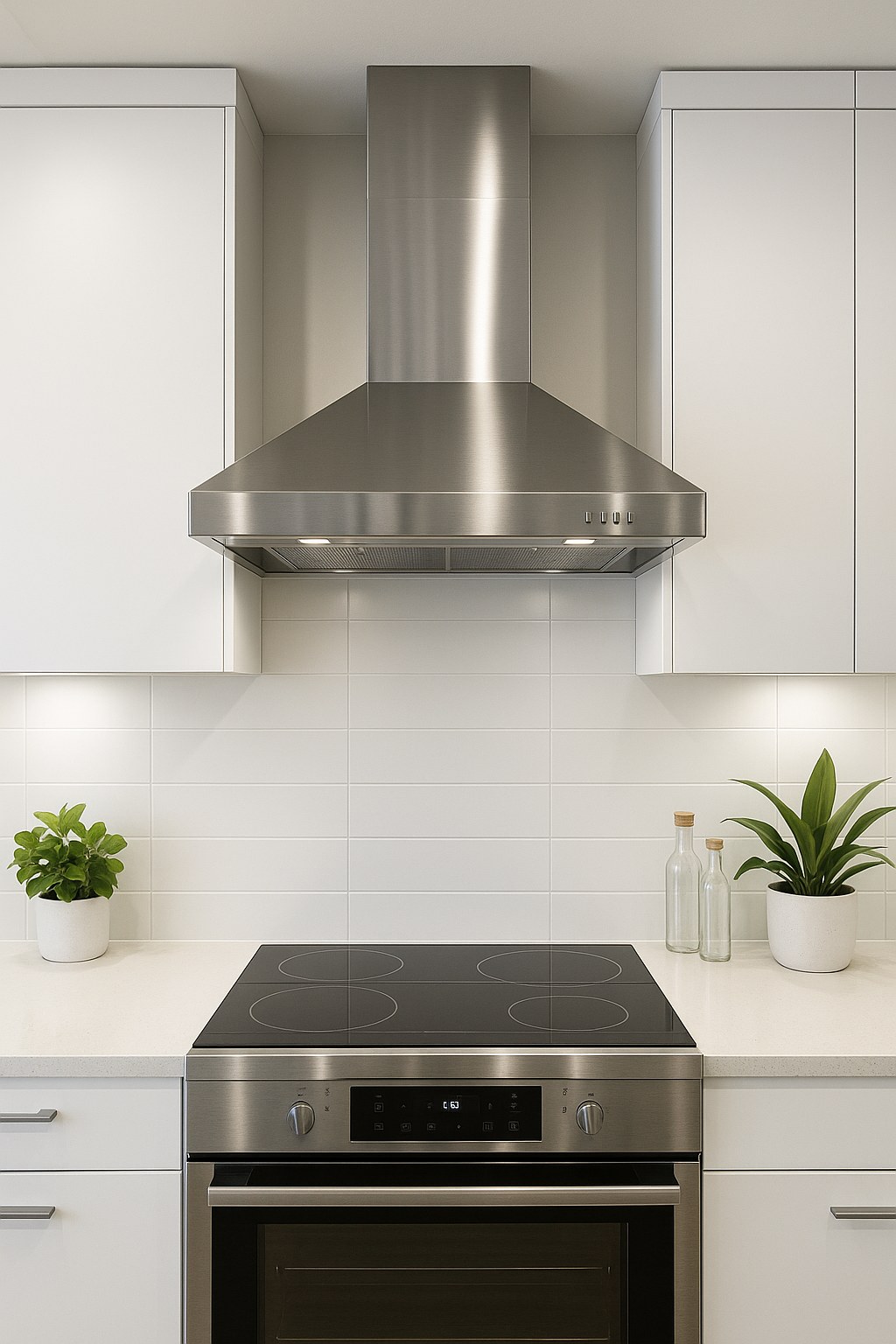
Why Did My Range Hood Fan Stop Working?
| Symptom | Likely cause | Try |
|---|---|---|
| Nothing works, no lights | No power, or miswired | Breaker, plug, then electrician |
| Nothing works just after heavy cooking | Heat protection on some hoods | Let it cool, try again |
| Lights work, no fan | Loose blower connector, switch, or motor | Settings, filter, then service |
| Hums, no spin | Blocked or failing motor | Switch off, service |
| Runs on one speed only | Worn switch or control | Service |
| Cycles on and off | Overheating, dirty filters | Clean filters |
| Squeals, grinds, or wobbles | Worn bearing or greasy fan wheel | Switch off, service |
| Over-the-range microwave fan runs by itself | Often normal | Wait for it to cool |
| Fan runs, no airflow | Blocked filter or duct | Clean filter, check outside flap |
GE says that if neither lights nor blower turn on, the hood may not be connected or wired correctly, and to check the house breaker, then the installer or an electrician. If the lights work but the blower does not, its connector plug may be loose. That plug is inside the hood behind the filters, so leave it to a technician or the installer.
Heat can also be the reason. Broan's guide says the motor has a thermal overload that shuts it off when it overheats and restarts it once it cools. On that hood, very high heat turns off the fan and the lights together. If it keeps shutting off and restarting, Broan says to have it serviced.
Step 1: Is There Any Sign of Life?
- Try the light, then each fan speed.
- Press a fan button and watch for a display, a beep, or a blinking light. A blinking button is often a filter reminder rather than a fault.
- Listen close to the hood, with the burners off. Silence, a click, and a hum are three different answers.
- Light or display works: go to the controls.
- Nothing at all: go to the power.
- A hum or a click with no fan: switch it off and skip to service.
Step 2: Check the Power Supply
- Turn the light and fan to off.
- Find the breaker for the hood or kitchen. If it has tripped, switch it fully off, then on, once.
- If the hood plugs into a cabinet, make sure the plug is seated. Look above the hood or inside the cabinet next to it. Try a lamp in that outlet.
- Press reset on any kitchen GFCI outlet, and check for a wall switch or a remote that controls the hood. Fresh remote batteries fix more hoods than you would think.
- Try the hood again.
If the breaker trips a second time, or the outlet is dead, stop and call an electrician. Do not test wiring or open the panel.
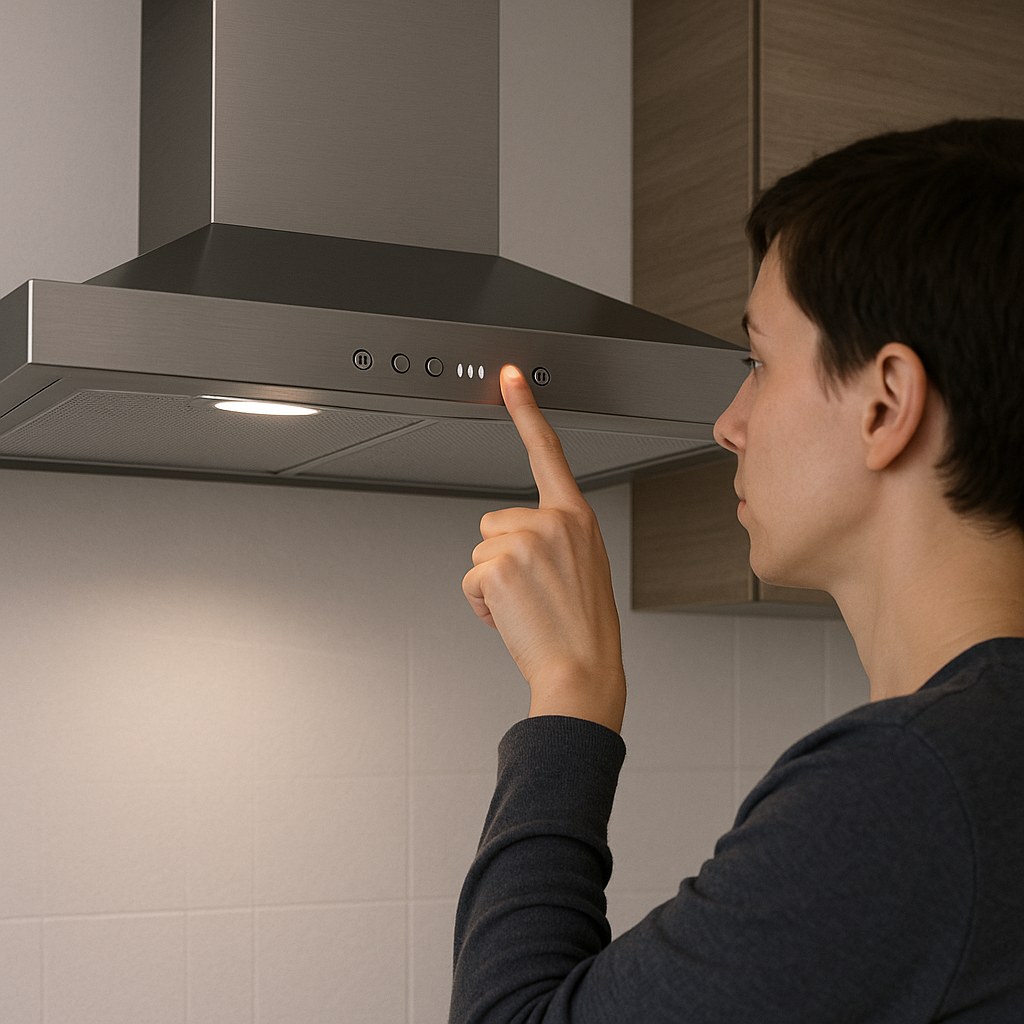
Step 3: Check the Fan Controls
- Try every speed. One dead speed usually means a worn switch.
- Push buttons: press each one fully in and out. A greasy button can stick halfway. Wipe it with a damp, soapy cloth, with the power off.
- Knobs and sliders: move them slowly through the range. If the fan catches at one spot, the control is worn.
- Look for a lock, a delayed-off timer, or a low-power setting.
- On a touch panel, hold the fan or power button for a few seconds, then try again. Some panels reset this way. You can also switch the breaker off for a minute and back on, once.
- Over-the-range microwave? The vent fan can start by itself. GE says its built-in thermostat runs the fan when the unit gets too hot, and you cannot turn it off until it cools. If it will not start at all, look up the model.
Step 4: Inspect and Clean the Grease Filters
A thick layer of grease cuts airflow and can feed a fire.
- Let the hood and burners cool. Switch the hood off at the breaker.
- Release each filter with its latch.
- Soak metal filters in hot water and dish soap for 15 to 20 minutes. Scrub with a soft brush and rinse. Many are dishwasher safe, so check the manual. Do not wash charcoal filters. Replace them. Broan says to change them every 3 to 6 months, or more often if you fry a lot.
- Let everything dry fully.
- Wipe grease from the inside edge you can reach. Do not put your hands near the blades or wiring.
- Seat the filters until they click. Some hoods will not run unless the filter is in place.
- Restore power and try the fan.
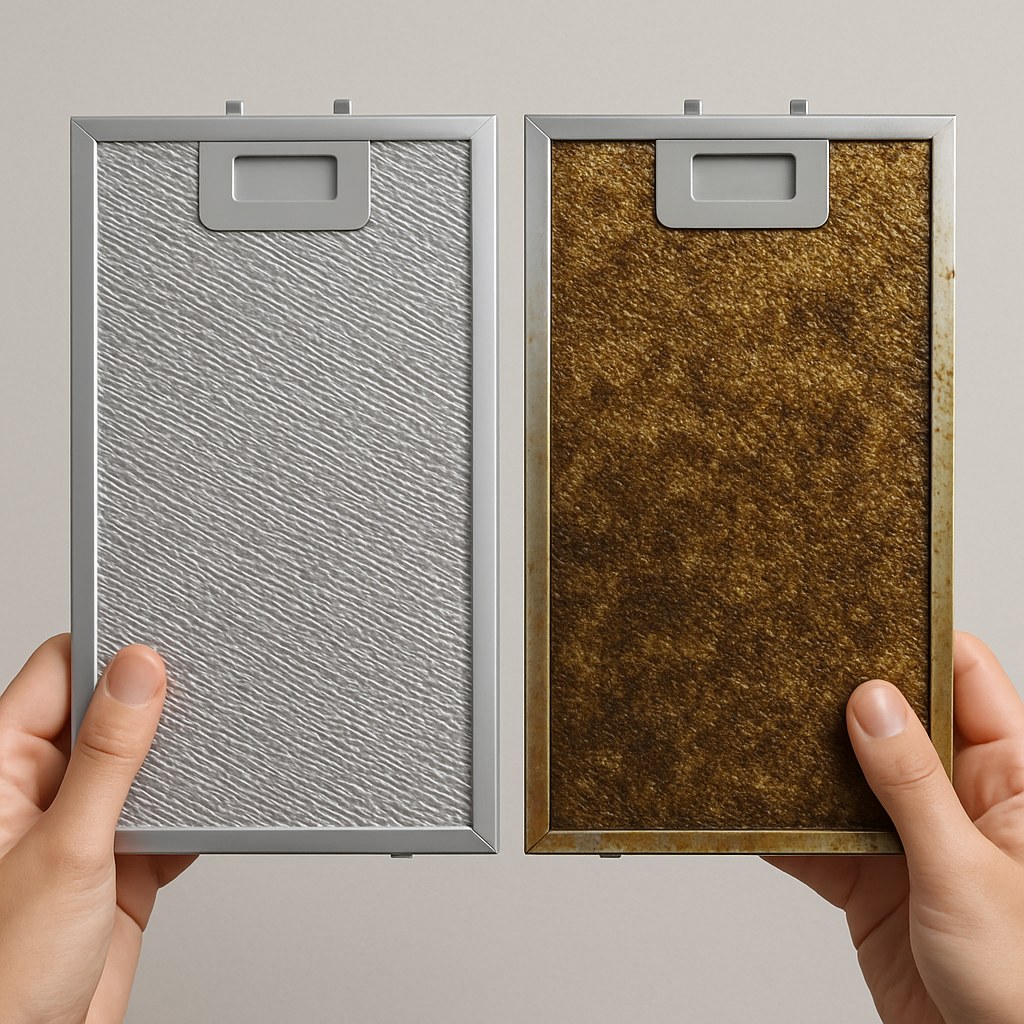
Replace a filter that is bent, torn, or loose. Match the model number, or take the old one and measure it.
If the Fan Runs but Barely Moves Air
Find out whether your hood is ducted or recirculating. A ducted hood has a flap on an outside wall or the roof. Go outside and see if the vent flap opens. If it does not, the duct may be blocked by grease or a nest. Do not climb to the roof to check. A hood that only recirculates air blows it back out near the top, and it needs its charcoal filter changed. If you have just remodeled, ask whether the duct was connected or the damper was left taped shut.
When It's Time to Call a Professional
- The fan is dead or hums with the lights working. Ask for an appliance technician.
- Nothing works and the breaker is fine. Ask for an electrician or the installer.
- You smell hot wiring or see scorch marks. Turn off the breaker first.
- The hood is under warranty.
With the power off, the technician checks the connector, the speed switch or control board, and the motor, then clears the fan wheel. A switch or connector is usually done in one visit. A motor or board may have to be ordered for your exact model. Have the model number, the age, and what still works ready. The label is usually inside the hood behind the filters. Then ask:
- Which part failed, and is it still made?
- What is the total with the visit, part, and labor?
- Can you check that air is reaching the outside?
For a basic hood that is more than a few years old, compare the repair with the price of replacing it. A built-in, wide, or custom hood is more often worth repairing. Thumbtack puts the national average for appliance repair at $129 to $329, and HomeGuide puts replacing a range hood at $300 to $850. If you rent or the duct is shared in a condo, report it first.
Cooking While It's Out
Use the back burners, keep lids on, and open a window. The EPA says kitchen fans that vent outdoors remove contaminants where they start and that opening windows helps too. Keep the heat moderate, and avoid long frying until the hood works. If you cook with gas, make sure your carbon monoxide alarm works.
Keep It Running
- Clean the metal filters every month or two, sooner if you fry.
- Turn the fan on before you start cooking, and leave it on for a few minutes after.
- Do not flambé under a hood with greasy filters.