

Updated Nov 23, 2026
How to Fix a Stuck Door: A Complete DIY Guide
Fix a swinging or sliding door that sticks: tighten hinges, deal with swelling or paint build-up, adjust the latch, or clean and adjust sliding rollers.
That grating sound. The shoulder-shove required to get it shut. A door that sticks, rubs, or refuses to latch properly is a common household headache that can happen to anyone. Whether it’s the bathroom door that swells up every summer or the patio door that’s become a workout to open, a stuck door is more than just an inconvenience—it can scrape paint, damage the frame, and drive you crazy.
Looking for more guidance? Take a look at our Repairs overview.
Most causes of a stuck door are simple to fix with a few basic tools. It is often a loose hinge, a little swelling from humidity, or a misaligned part. This guide covers swinging and sliding doors.
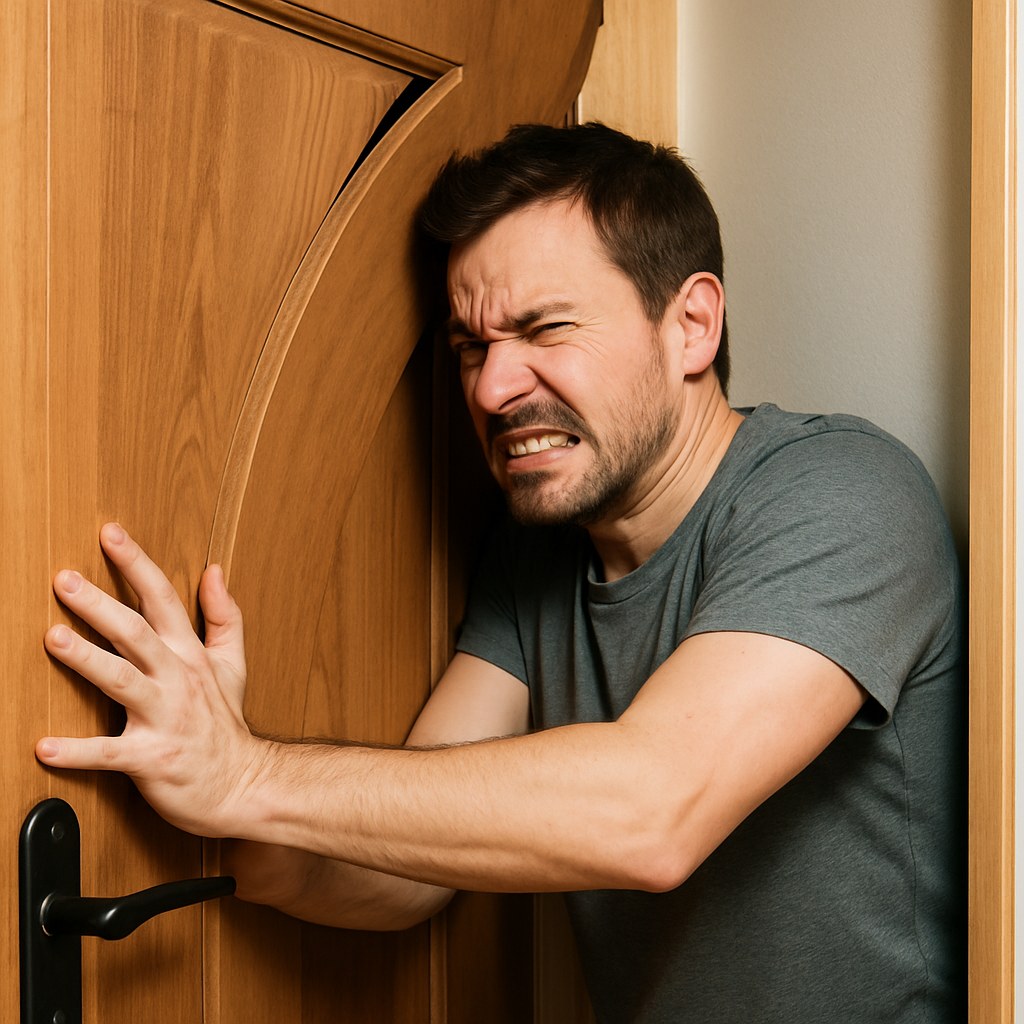
Why Do Doors Get Stuck in the First Place?
Before we grab our tools, it helps to understand what causes a door to stick. The culprit is usually one of these:
- Humidity: Wood is porous and absorbs moisture from the air. In humid months, this can cause the door to swell and rub against the frame.
- Loose Hinges: Over time, the screws holding your door's hinges can loosen. This causes the door to sag, making it bind against the frame, usually at the top.
- Foundation Settling: Homes naturally settle over the years, which can shift the door frame out of square and cause rubbing.
- Paint Build-Up: Too many layers of paint can create just enough thickness to make a door stick.
- Worn Parts: On sliding doors, worn-out rollers or a dirty track are the most frequent offenders.
Step 1: Identify Your Door Type
This might sound obvious, but the fix for a standard bedroom door is completely different from the fix for a sliding patio door.
- Swinging Door: This is your typical interior or exterior door that opens and closes on two or three hinges mounted along one side.
- Sliding Door: This type of door, common for closets or patios, moves along a track at the top, bottom, or both.
Once you know your door type, you can jump to the right section below.
How to Fix a Stuck Swinging Door
If your hinged door is giving you trouble, the key is to find exactly where it’s rubbing.
Locate the Sticking Point
Slowly close the door and watch carefully. Where does it first make contact with the frame? Is it near the top, the bottom, or along the side with the latch?
A great trick is the paper test. Slide a sheet of paper between the door and the frame as you close it. Where the paper gets pinched or stuck is your problem area. Once you’ve found it, you can move on to the right fix.
Problem: Door Rubs at the Top, Near the Hinge Side
This is almost always a sign that the top hinge is loose, causing the door to sag.
- Tighten the Hinge Screws: Open the door and use a Phillips screwdriver to tighten all the screws on the top hinge, both on the door and the frame. Sometimes, this is all it takes!
- The Stripped Screw Hole Trick: If a screw just spins without tightening, the wood is stripped. Here's an easy fix:
- Remove the loose screw completely.
- Dip a wooden toothpick or a small wood dowel in wood glue.
- Insert it into the screw hole and break it off flush.
- Let the glue dry for about 30 minutes, then drive the original screw back in. The new wood will give it something solid to grip.
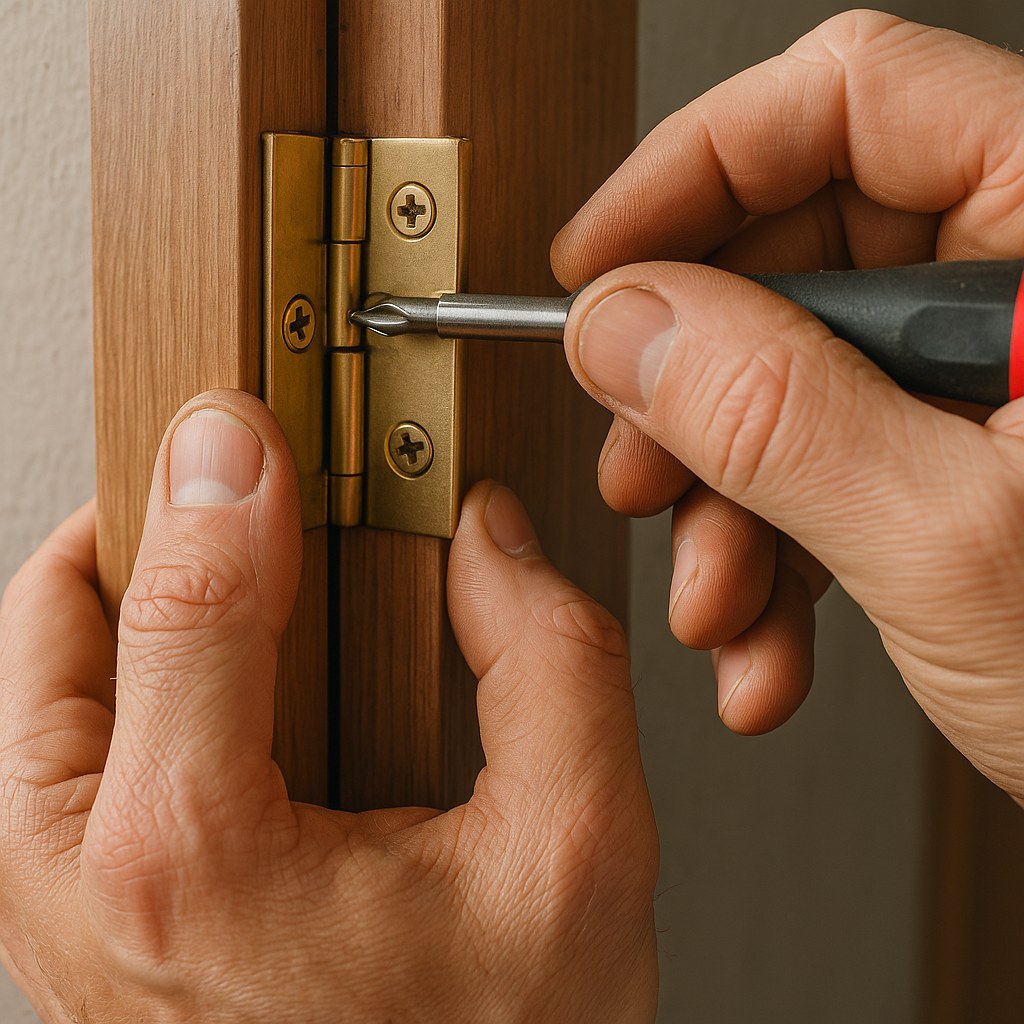
Problem: Door Rubs on the Latch Side or Bottom
If the door binds on the side opposite the hinges, the cause is likely swelling from humidity or too much paint.
- Check for Swelling: Look at the edge of the door. Does the wood grain look raised or feel soft? This indicates swelling. To fix it, aim a fan at the swollen edge for a few hours to dry it out. Once dry, seal the edge with a thin coat of varnish or wood sealer to prevent it from happening again.
- Check for Paint Build-Up: Run your finger along the edge. Can you feel thick drips or layers of paint? If so, you’ll need to remove the excess.
- Put on safety glasses. If the door was painted before 1978, the paint may contain lead, so don't dry-sand it; have it tested or call a pro.
- Use a utility knife to carefully score the line where the door and frame meet to break any paint seal.
- Wrap a piece of medium-grit sandpaper around a block of wood and sand down the thick spots on the door edge.
- Wipe away the dust and test the door.
Problem: The Door Latch Doesn't Catch
If the door closes but the latch bolt doesn't line up with the hole in the strike plate (the metal plate on the frame), a simple adjustment is needed.
- Loosen the Strike Plate: Use a screwdriver to slightly loosen the two screws on the strike plate.
- Reposition and Tighten: Nudge the plate up, down, or sideways until it aligns with the latch. Retighten the screws and test it.
- File if Necessary: If a small adjustment isn't enough, you can remove the strike plate and use a metal file to enlarge the opening slightly. Reinstall and test again.
Last Resort: Planing the Door
If you’ve tried everything and the door still sticks, you may need to shave a small amount of wood off the edge.
- Mark the rubbing area with a pencil.
- Wearing safety glasses, use a hand plane to shave off thin layers of wood, always moving in the direction of the wood grain.
- Take off a little at a time and test the door frequently. It's easy to take more off, but impossible to put it back on!
- Once the door closes smoothly, sand the edge and seal it with paint or varnish to protect it from moisture.
How to Fix a Stuck Sliding Door
Sliding doors operate on a completely different system. Here, the problem almost always lies with the track or the rollers.
Problem: The Door is Jerky or Hard to Move
This usually points to a dirty track. Over time, tracks collect dirt, dust, and pet hair, which can jam the rollers.
- Vacuum the Track: Use a vacuum with a crevice tool to suck up all the loose debris from the track.
- Wipe it Clean: Use a damp cloth to wipe down the inside of the track. An old toothbrush can help scrub out stubborn grime.
- Lubricate: Once the track is clean and dry, spray a light coat of silicone lubricant along its entire length. Do not use oil-based lubricants like WD-40, as they can attract more dirt.
- Slide the door back and forth a few times to spread the lubricant evenly.
Problem: The Door Drags or Seems Misaligned
Most sliding doors have adjustable rollers to ensure they sit level in the track.
- Find the Adjustment Screws: Look for small holes at the bottom corners of your sliding door. Inside, you'll find the adjustment screws.
- Adjust the Height: Insert a Phillips screwdriver and turn the screw. Usually, turning it clockwise raises that side of the door, and counter-clockwise lowers it.
- Adjust both sides until the door is level and slides without dragging.
Problem: The Rollers are Damaged
If cleaning and adjusting don't work, the rollers themselves might be cracked, rusted, or worn out. Replacing them is a bigger job but is very doable.
- Remove the Door: This almost always requires two people, and large glass doors are heavy and can shatter, so wear gloves. Slide the door open, lift it straight up into the top track, and then tilt the bottom out toward you to remove it. If the door is very large or you're unsure, call a pro.
- Access the Rollers: Lay the door on a pair of sawhorses. You’ll find the roller assemblies at the bottom corners.
- Replace the Rollers: Unscrew the old roller assembly, pull it out, and install the new one. You can find replacement rollers at most hardware stores; just be sure to get the right model for your door.
- Reinstall the Door: With your helper, carefully place the door back in the track.
Cost to Fix a Stuck Door: DIY vs. Hiring a Pro
- DIY Costs: Most of these fixes need only toothpicks, wood glue, sandpaper and silicone lubricant. Replacement sliding door rollers are a small parts purchase; match your door's make and model.
- Professional Costs: Thumbtack data puts the national average for door repair at $142 to $393, and most people pay around $236. A carpenter or handyman's price depends on whether it is a quick hinge adjustment or planing and rehanging the door. Ask what the quote covers, such as sealing the planed edge.
Don’t Get Stuck Again
Sealing exposed wood and keeping tracks clean helps a fixed door stay that way.