

Updated Nov 23, 2026
Thermostat Reading the Wrong Temperature? How to Fix It
Test a thermostat against a thermometer, then fix drafts, sun, dead batteries, settings, or sensors. Includes when to leave the wiring alone.
Put a separate thermometer next to the thermostat, out of direct sun, and wait 15 to 30 minutes. A difference of one or two degrees is normal. If it is more, the cause is usually where the thermostat sits, a low battery, a display setting, or a room sensor. A thermostat that reads right while the room feels wrong is a different problem.
Looking for more guidance? Take a look at our Repairs overview.
Test It First
- Use a basic digital thermometer, and check that the battery is good.
- Tape it beside the thermostat, not on an outside wall and not in the path of a vent.
- Turn off the fan and lamps nearby. Wait at least 15 minutes.
- Read both at the same time. Repeat once at night, when the sun is out of the way.
| Result | Likely cause | Next |
|---|---|---|
| Off by 1 to 2 degrees | Normal | Leave it |
| Off in the afternoon only | Sun or heat source | Shade or move it |
| Off all the time, same amount | Setting or offset | Adjust in settings |
| Reads higher in humid weather | Feels-like display | Turn it off |
| Off after you added a sensor | Sensor or averaging | Check the sensor |
| Dim, blank, or odd numbers | Low battery or power | Batteries, then wiring by a pro |
| Reads right, room is not | Airflow or equipment | See the guide below |
Fix the Location and Drafts
Sun, a lamp, a TV, an oven, a supply vent, a fireplace, or a cold outside wall can move the reading by several degrees.
- Keep lamps and electronics away from it.
- Close the blinds on that wall, or point the vent elsewhere.
- Feel for air coming out of the wall behind it. A draft up through the wall can cool the sensor. On a battery-powered, low-voltage thermostat, switch off the heating and cooling equipment at its breaker, lift the thermostat off its plate, and close the hole around the cable with a small piece of foam or putty. Do not touch the wires.
- If it is in a bad spot, ask an HVAC technician about moving it.
Check the Batteries and Settings
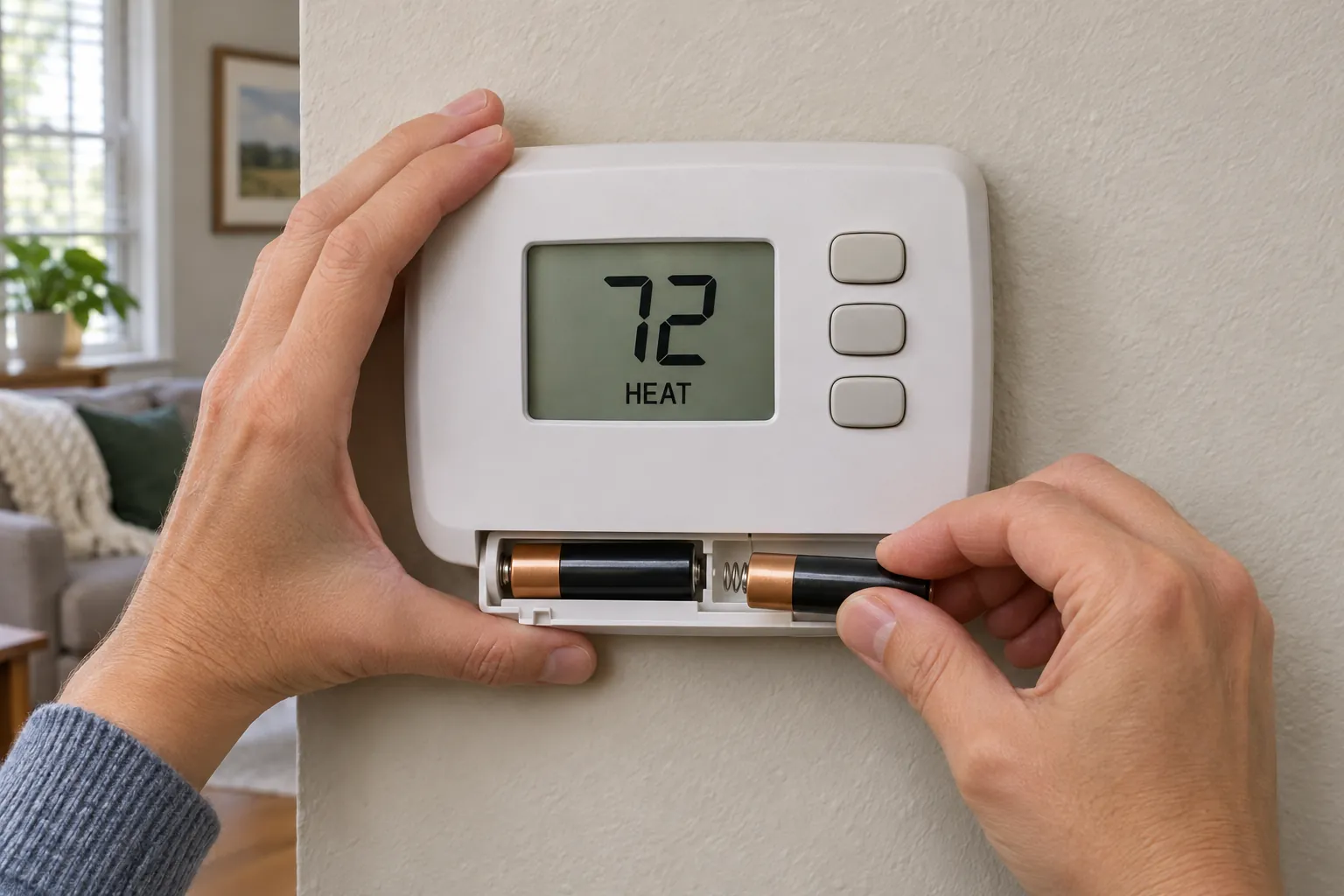
- Replace the batteries with a fresh set of the same type.
- Look for a temperature offset, calibration, or display correction in the menu. On one Honeywell Home line it can be set up to 3 degrees above or below the sensor reading. Set it to 0, test, then adjust to match your thermometer.
- Turn off feels-like temperature. Honeywell Home says it can make the indoor reading a few degrees warmer, most noticeably in humid weather.
- Check the schedule and holds. The set temperature may be right, but not the one you want.
- If you use room sensors, see which ones count. A sensor in a sunny bedroom can drag the average.
- Update the app or firmware, and restart the thermostat.
Old Dial Thermostats
Do not open or level one yourself. Some hold mercury, and opening the case can tip or break the bulb. The EPA says mercury thermostats are unlikely to leak while in use, and need proper disposal when replaced, through a household hazardous waste site or thermostat recycling program. A replacement is usually worth it, because old dials drift.
If the Thermostat Reads Right but the Room Is Wrong
The thermostat measures one place. A room can still be hot or cold because of a blocked vent, a dirty filter, sun on windows, or poor insulation. See the airflow guide below. If the system runs but the house never reaches the setting, call a technician.
What Does It Cost to Replace a Thermostat?
HomeGuide puts a replacement thermostat with professional installation at $140 to $350, and the labor alone at $80 to $200. A smart model costs more, and a wiring problem can add to the bill.
When to Call a Technician
- It is a line-voltage or baseboard thermostat.
- The reading jumps around, or the screen stays blank with new batteries.
- A wire looks loose, burned, or corroded.
- You have a heat pump, multi-stage, or zoned system and the settings do not help.
Tell them your readings, the time of day, the model, and what changed. Ask if the thermostat, the wiring, or the equipment is at fault before agreeing to a new one.