

Updated Nov 23, 2026
Damaged Insulation: What You Can Fix and What to Leave
See how to tell wet, moldy, chewed, or flattened insulation apart, which small repairs are safe, and what to leave for a pro, from vermiculite to wiring.
Fix the cause before the insulation. Wet, moldy, or animal-damaged insulation has to be removed and the source repaired first. A few gaps, flattened spots, or fallen batts that are dry and clean can often be fixed by the homeowner from a solid floor or hatch. Walls, wiring, and anything that might be vermiculite or asbestos are not do-it-yourself work.
Looking for more guidance? Take a look at our Repairs overview.
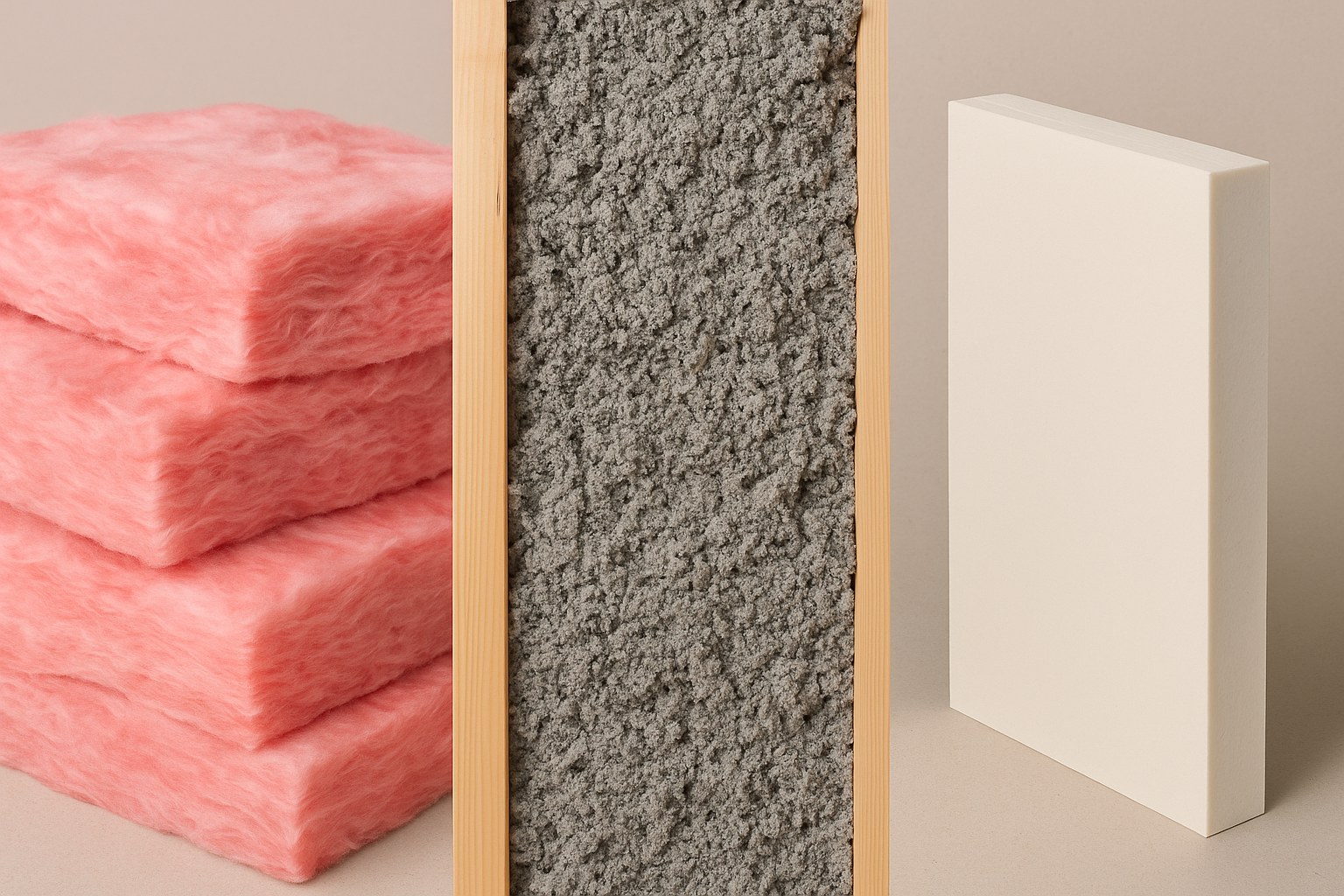
What Kind of Damage Is It?
| What you see | Likely cause | What to do |
|---|---|---|
| Damp, clumped, stained | Roof, pipe, or condensation leak | Fix the leak, remove, replace |
| Dark or fuzzy spots, musty smell | Mold | Stop. Find moisture |
| Tunnels, droppings, nests | Rodents or wildlife | Pest control, cleanup |
| Flat or thin in places | Settling, foot traffic, storage | Add matching insulation |
| Batts fallen in a crawl space | Broken supports | Re-support if dry |
| Pink or yellow, torn | Age or a tool | Patch with the same type |
| Gray-brown pebbles | Possible vermiculite | Leave it alone |
| Soft gray fluff near old wires | Cellulose | Check wiring first |
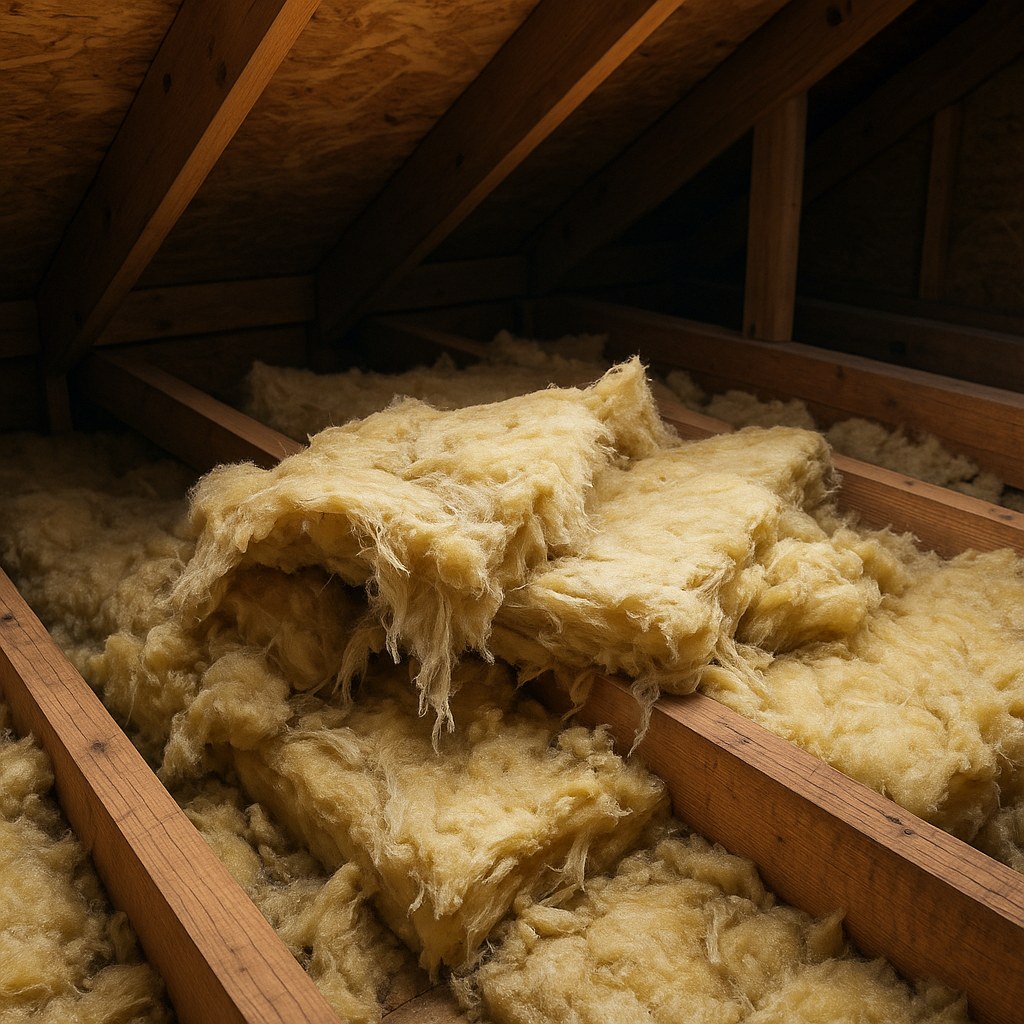
Check It From a Safe Place
- Look for clues indoors first: cold spots, drafts, stains, ice at the eaves, and higher bills.
- Put on an N95, goggles, gloves, and long sleeves.
- Open the attic hatch and look in with a bright light. Stay on the ladder. Do not walk between the joists, which is only drywall below.
- In a basement, look at what you can see from the floor.
- Take photos, and note the type and depth.
Do not remove outlet covers, pull back insulation around wires, or cut the wall.
Never Disturb These
- Vermiculite. The EPA says to leave it undisturbed, not to store boxes in an attic that contains it, and to use a professional asbestos contractor for work that would disturb it.
- Old pipe or boiler wrap that may contain asbestos.
- Insulation around recessed lights, fans, flues, and chimneys. Some need clear space. Ask an electrician or HVAC technician.
- Droppings and nests. The CDC says not to sweep or vacuum rodent droppings. Heavy contamination is a job for a professional.
- Wet or moldy insulation. The EPA says porous materials may have to be thrown away when they get moldy. Fix the leak first.
Small Repairs That Are Safe
Do these only if the insulation is dry, clean, and the area is free of wiring problems.
Fill a thin spot near the hatch
- Match what is there. Fiberglass with fiberglass, cellulose with cellulose.
- Work only from the hatch or a floored area.
- Cut a batt with a utility knife. Do not squash it into a tight space. Compressed batts insulate less.
- Lay unfaced batts on top. Keep any paper or foil facing toward the heated side in most cold climates, and ask locally in a hot, humid one.
- Keep insulation away from eave vents and any light or flue.
Support a fallen batt
- Wear gloves and a mask. Stay on the crawl space's dry, firm ground. Leave if there is standing water, droppings, or a gas smell.
- If the batt is dry, push it back between the joists, with the facing toward the heated floor.
- Hold it with wire hangers made for this. Do not staple into wiring, pipes, or ducts.
If it fell because it was wet, or the crawl space has no vapor barrier, call a contractor.
Foam board
Small gaps in foam board in a basement can be filled with foam-safe sealant. Do not use expanding foam near a flue, light, or electrical box.
When to Call a Contractor
- You see mold, moisture, pests, or wiring problems.
- More than a small area is missing or flat.
- The space is tight, hot, or hard to leave.
- Walls need insulation. Blowing it in can hit pipes and old wiring, and belongs to a pro.
Ask for a check of moisture and wiring first, the type and target R-value, how they protect vents and lights, and whether they will remove the old insulation. Ask for air sealing at the same time. The EPA estimates that homeowners save an average of 15% on heating and cooling by air sealing and adding insulation. Your result depends on your home.
What Does Insulation Work Cost?
Thumbtack puts the national average for installing insulation at $1,182 to $3,095. If old material has to come out first, Thumbtack lists machine removal at about $1 to $1.10 per square foot. Get the damage and the moisture source looked at before you pay to replace anything.