

Updated Nov 23, 2026
How to Restore Faded Siding: Vinyl, Wood, or Fiber Cement
Wash, refresh, or repaint faded siding by type, pick a paint color that won't warp vinyl, and spot when lead, asbestos, or rot means stop and call a pro.
Wash it first. A lot of "faded" siding is chalky or dirty, and a gentle wash brings back more color than people expect. If it still looks dull, vinyl and fiber cement can be repainted with the right paint, and wood can be refinished. You usually cannot restore color that the sun has bleached out of vinyl without painting it or replacing panels.
Looking for more guidance? Take a look at our Repairs overview.
| Siding | Try first | If it is still faded |
|---|---|---|
| Vinyl | Wash, then a restorer made for vinyl | Vinyl-safe paint, no darker than the original, or replace panels |
| Wood | Wash, find rot, refinish | Prime and repaint, or restain |
| Fiber cement | Rinse with a hose and soft brush | Repaint with exterior acrylic |
| Aluminum | Wash off chalk | Repaint with the maker's system |
| Old flat gray shingles or boards | Stop. May contain asbestos | Test before any work |
Why Siding Fades
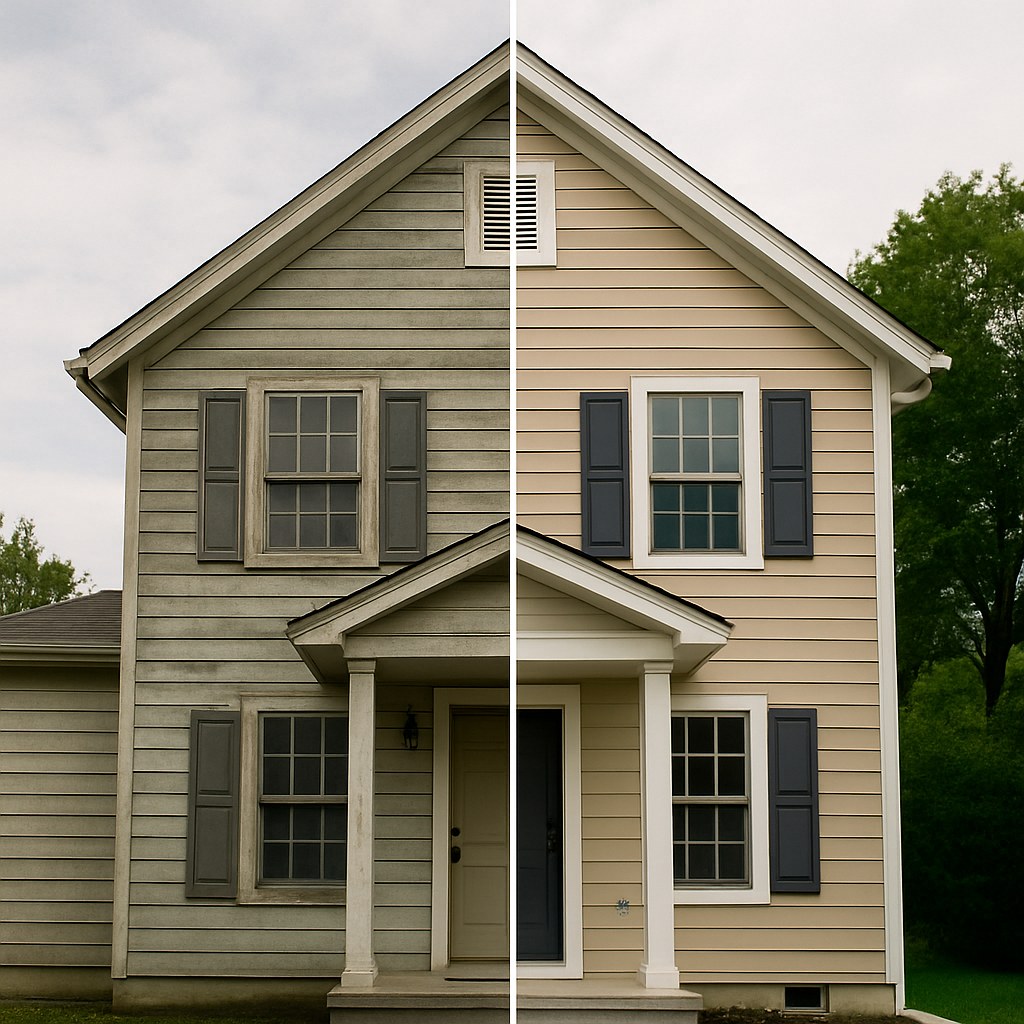
Sunlight breaks down the pigment in paint and plastic. The surface also oxidizes and leaves a chalky film, and weather and dirt dull it further. Chalk and dirt wash off. Lost pigment does not come back.
Identify Your Siding Safely
Look at a corner, an edge, or a spot near the ground. Do not cut, drill, or break a piece to find out.
-
Examine the Look and Feel:
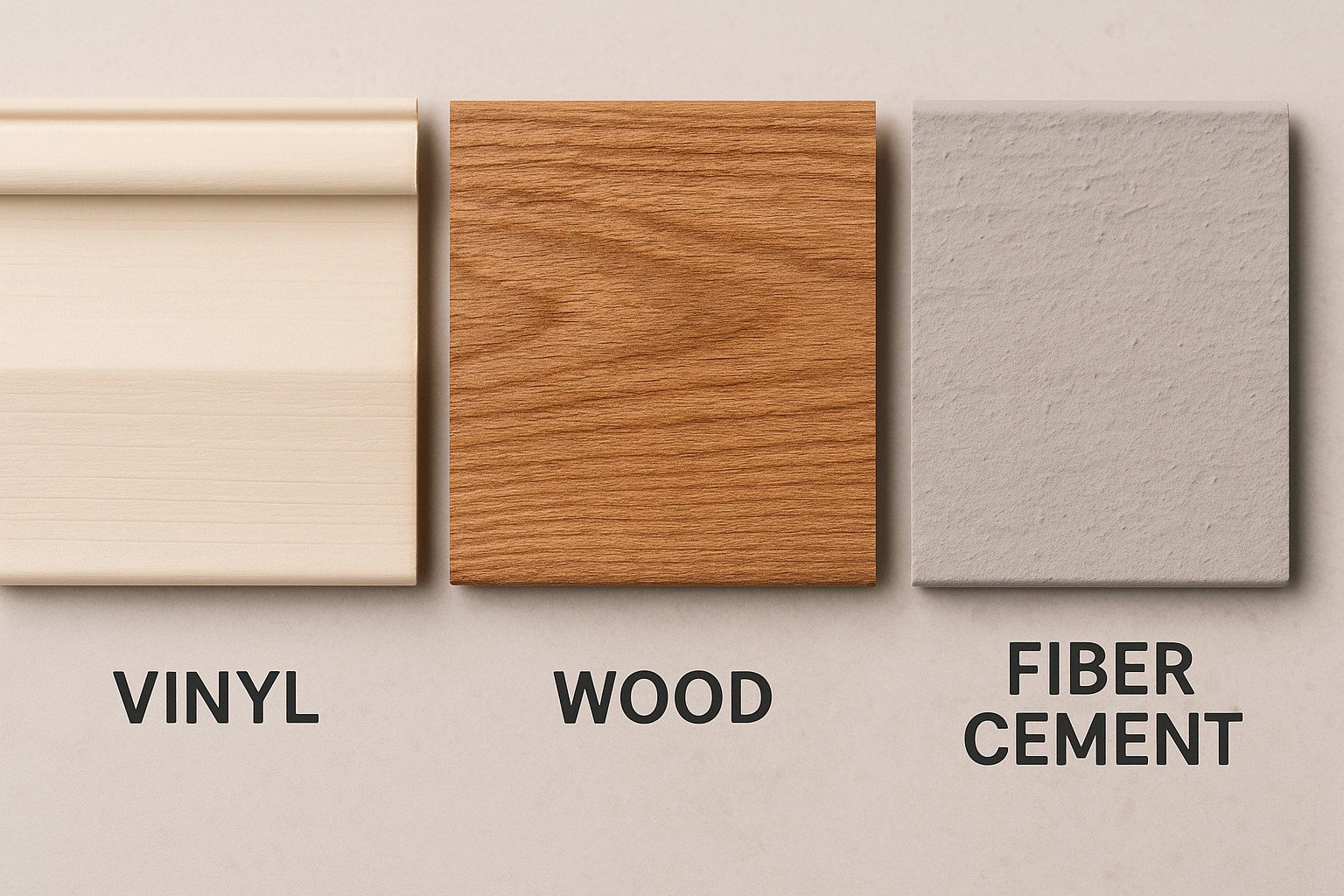
- Vinyl: Look at a panel edge or an area where the siding might be chipped. Vinyl is a plastic material and is often hollow on the inside. It typically has a molded, wood-grain texture, but it will feel like plastic.
- Wood: Wood siding will show a natural grain. It might be smooth or rough-sawn, but you should be able to identify it as a natural wood product. It will feel solid.
- Fiber Cement: Dense, heavy, and rigid, often with an embossed grain. Older cement shingles look similar and may contain asbestos. The EPA lists roofing and siding shingles among materials that may contain it.
-
Tap it lightly with a knuckle. Vinyl sounds hollow. Wood sounds solid. Fiber cement thuds. If it is a flat, gray, brittle shingle, do not tap or touch it. Have it tested.
-
Check for Damage:
- While you’re inspecting the material, take note of the siding’s overall condition. Are you just seeing color loss? Or are there other issues like a chalky residue, peeling paint, cracks, warping, or soft spots? Write down your observations.
Once you’ve identified your siding type, you can move on to the specific fix for your home.
How to Restore Faded Vinyl Siding
Vinyl fades, and you can often refresh it. You cannot scrub faded color back into it.
Assess the Condition
First, determine the extent of the issue. Is the color just a bit dull, or is there more going on?
- Check for Chalking: Rub your hand over a panel. If a white, chalky powder comes off, that’s oxidation. This is a normal sign of aging and can usually be cleaned off.
- Inspect for Damage: Look closely for any cracks, holes, or warping. If the vinyl is brittle and physically damaged, cleaning or painting won't fix the underlying problem, and you may need to replace those specific panels.
If the panels are sound, you have two options.
Option 1: Clean and restore
What You'll Need:
- Safety glasses and rubber gloves
- Garden hose
- Vinyl-safe siding cleaner
- Soft-bristle brush
- A restorer made for vinyl siding. Follow its label
- Microfiber cloths
Step-by-Step Instructions:
- Gear up with glasses and gloves, and cover plants.
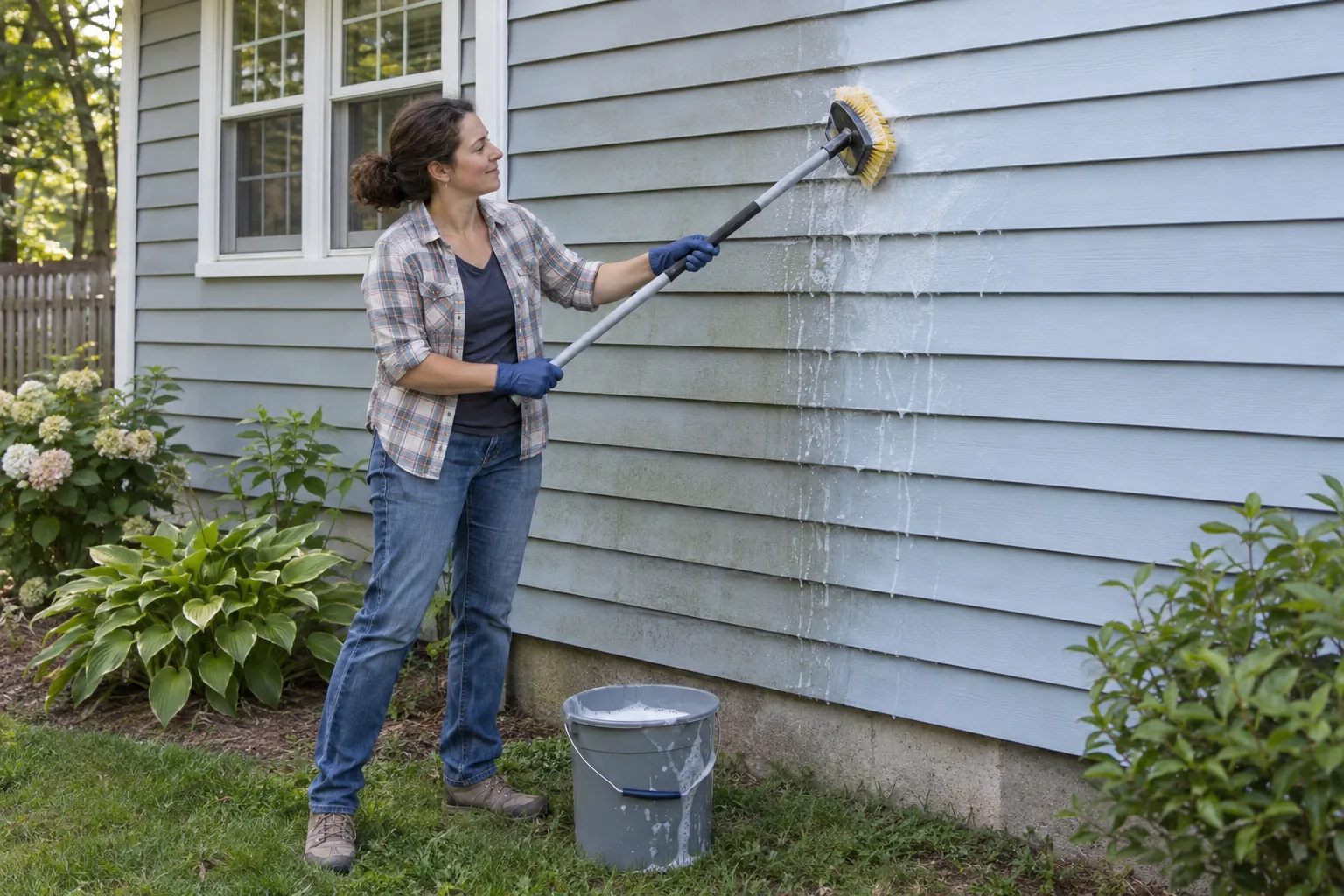
- Apply cleaner from the bottom up, with a garden hose. Keep water out of vents, outlets, and gaps. Do not use a pressure washer.
- Let it Sit: Allow the cleaner to dwell on the surface for about 10 minutes, but don’t let it dry.
- Scrub Gently: Use the soft-bristle brush to gently scrub away stubborn dirt and chalky residue.
- Rinse Thoroughly: Rinse the siding completely with plain water, this time working from the top down.
- Dry Completely: Let the siding air dry for at least an hour.
- Apply Restorer: Apply a thin coat of the vinyl restorer with a microfiber cloth. Work in long, even strokes, completing one panel at a time to ensure a uniform finish.
Try a hidden panel first. Restorers darken and even out the color for a while, and you will need to reapply them.
Option 2: Paint it
Painting is the way to change the color. Sherwin-Williams says a color darker than the original can cause warping, and sells vinyl-safe colors for some darker shades. Check your siding warranty before you start.
What You'll Need:
- Safety glasses, rubber gloves, and an N95 respirator
- Cleaning supplies (from the previous guide)
- Plastic sheeting and painter’s tape
- Vinyl-safe exterior paint (choose a color no darker than the original to prevent warping)
- Paintbrush and a smooth-surface paint roller
Step-by-Step Instructions:
- Clean Thoroughly: Follow steps 1-6 from the cleaning guide above. It's crucial that the surface is perfectly clean. Allow the siding to dry for a full 24 hours.
- Mask and Cover: Use plastic sheeting and painter's tape to protect windows, doors, trim, and nearby shrubs.
- Cut in with a brush around edges. Paint in shade, in mild weather, and follow the can for temperature.
- Roll the Paint: Working from top to bottom, apply a thin, even coat of paint with your roller.
- Apply a second coat after the time on the label.
- Remove tape as the label says, and keep it dry until cured.
How to Refinish Faded Wood Siding
Wood siding offers a classic look but requires more maintenance. Fading is often accompanied by peeling paint or stain.
Assess the Condition
- Check for Rot: Gently press your finger into several areas. If the wood feels soft or spongy, you likely have rot, which needs to be repaired or replaced by a professional carpenter before you proceed.
- Look for Peeling: Note any areas where the paint or stain is flaking, peeling, or cracking.
- Inspect for Gaps: Check for any gaps between boards or structural issues that need addressing.
If the wood is solid and the issue is purely cosmetic, you're ready to refinish it.
Repaint or restain wood siding
If the house was built before 1978, test for lead before you scrape. The EPA says to keep surfaces damp, use wet-sanding, and consider a lead-safe certified contractor.
What You'll Need:
- Safety glasses, N95 mask, and work gloves
- Drop cloths
- Paint scraper
- Medium-grit sandpaper
- Exterior wood primer
- Exterior paint or wood stain
- Paintbrushes
Step-by-Step Instructions:
- Protect the Area: Lay drop cloths below your work area to protect your foundation and landscaping.
- Scrape loose paint only where a lead test is negative or the house is newer.
- Sand bare spots and edges until smooth, wearing the mask.
- Wipe off the dust and let it dry.
- Prime the Wood: Apply a single coat of high-quality exterior wood primer to any bare wood areas. This seals the wood and ensures the topcoat adheres properly. Let it dry as the label says.
- Apply the First Coat: Using a paintbrush, apply your first coat of exterior paint or stain, always working in the direction of the wood grain.
- Apply a second coat after the time on the label.
- Keep it dry while it cures.
How to Refresh Faded Fiber Cement Siding
Fiber cement holds up well, but its finish can fade or chalk. James Hardie says to rinse with a low-pressure hose and a soft brush, and not to use a pressure washer, and that its siding can be repainted.
Assess the Condition
- Inspect for Damage: Look for any cracks, chips, or delamination (where layers are separating). Do not sand, saw, or drill fiber cement. Call a professional for cracks.
- Check the Finish: A light, chalky film is normal weathering. As long as the factory finish is still bonded and not peeling, you're clear to paint.
Repaint fiber cement
What You'll Need:
- Safety glasses, N95 mask, and work gloves
- Hose and general-purpose cleaner
- Soft-bristle brush
- Painter’s tape and plastic sheeting
- Exterior acrylic paint approved for fiber cement
- Smooth-surface paint roller and paintbrushes
Step-by-Step Instructions:
- Wash the Siding: Clean the panels thoroughly with a cleaner, a brush, and a hose. Rinse well and let it dry for a full 24 hours.
- Mask Everything: Tape off all windows, doors, and trim.
- Roll the Paint: Apply the first coat of paint with a roller, working from top to bottom.
- Back-Brush for Coverage: Immediately after rolling a section, use a paintbrush to work the paint into any grooves or textured areas.
- Apply a second coat after the time on the label.
- Remove the masking and let it cure.
Wash, Paint, or Replace?
- Wash when the color comes back after a small test patch.
- Paint when panels are sound but dull, and you plan to stay long enough to repaint later. Painted vinyl will need repainting.
- Replace when panels are cracked, brittle, or wavy. Faded panels also cannot be matched one at a time, so ask whether a pro can swap panels from a hidden wall.
- Call for help for anything above a low ladder, near power lines, or with lead, asbestos, or rot.
Ask painters for prep steps in writing, the product and sheen, the weather limits, and the warranty. Ask siding companies for a full replacement quote and a repair quote so you can compare.
What Does It Cost to Refresh Faded Siding?
Washing mildew and chalk off first is the cheapest step: Thumbtack puts power washing a building's siding at $252 to $518. If the siding is past saving, Thumbtack's national average for a full siding installation is $2,230 to $9,766. A few damaged panels are a smaller job, and Thumbtack lists discolored siding repair at $480 to $1,993.