

Updated Nov 23, 2026
How to Fix a Sprinkler Head Spraying the Wrong Way
Aim a sprinkler head back at the grass: adjust a rotor or spray nozzle, clear a clog, straighten a tilted head, and fix one shooting straight up.
Run the zone and watch where each head goes. If it sprays the wrong way but looks healthy, adjust its direction. If it sprays a weak, uneven, or sideways stream, the nozzle is clogged or cracked. If it leans, set it straight. If it shoots straight up, the nozzle is missing. Use the adjustment for your type: spray heads turn at the top, and rotors are set from a fixed edge.
Looking for more guidance? Take a look at our Repairs overview.
Work with that zone off at the controller, then run it to test. Most fixes take under half an hour a head.
| What the water does | Likely cause | Fix |
|---|---|---|
| Sprays the sidewalk or house | Wrong direction or arc | Aim or shorten the arc |
| Straight up, no pattern | Nozzle missing | Fit a matching nozzle |
| Weak or lopsided | Clog | Clean the nozzle and screen |
| Sprays low or sideways | Head tilted or sunken | Straighten and raise |
| Blocked partway | Grass or plants | Trim |
| Only one head misbehaves | That head | Fix it |
| All heads in the zone weak | Leak or pressure | Call a pro |
| Water bubbling at the base | Broken head or pipe | Shut off, call |
The EPA says a system with problems can lose up to 25,000 gallons of water and $280 over a six-month season. One head is only part of that.
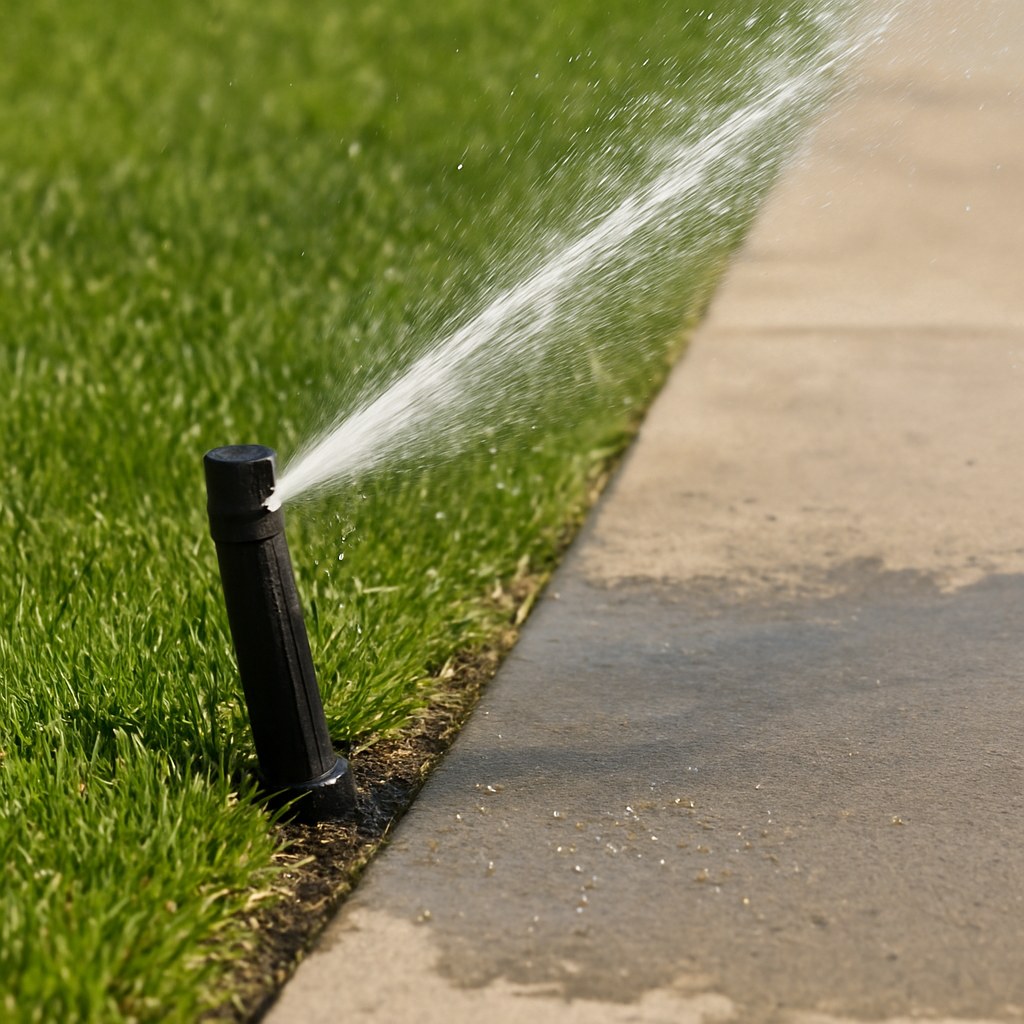
Why Are My Sprinklers Spraying the Wrong Way?
- The direction or arc got knocked. Mowers, feet, dogs, and curious children all turn heads.
- The head is tilted or sunken. Soil settles, tires press it down, and grass builds up around it. A leaning head throws too far on one side and short on the other.
- The nozzle is clogged. Grit, clippings, or a bit of pipe shaving blocks one part of the fan. This is common right after a pipe repair.
- The nozzle is the wrong one. A half-circle nozzle in a corner will always water the driveway.
- Something is in the way. Tall grass, a shrub, or a planter splits the stream.
- The pressure is too high. The spray turns to mist and drifts with the wind.
- The gears are worn. A rotor that stays stuck on one side, or spins past its stops, may be done.
Step 1: Shut It Down and See What You're Working With
- Turn the controller to Off so the zone cannot start while you work.
- Clear grass and mulch from around the head.
- Use the manual or test setting, or the app, to run one zone for a minute or two. Mark each bad head with a flag.
- Turn it off again before you touch anything.
What you'll need: a small flathead screwdriver, the adjustment key for your brand, a trowel, a thin wire, and a replacement nozzle if one is cracked. The key is a few dollars at an irrigation counter. Bring a photo of the top of the head.
Know Which Head You Have
- Spray head. Pops up and sprays a fixed fan. Many have a ring or a small screw at the top. Turning the ring or nozzle changes direction and arc. A screw sets the distance.
- Rotor. A single stream that turns side to side. It has a fixed edge, then a socket or slot on top for the arc, and one for the distance.
- Rotating nozzle. Small streams that turn. Follow the maker's card.
- Fixed nozzle. A spray head with a set pattern, such as a quarter, half, or full circle. You can aim it, but to change the pattern you change the nozzle.
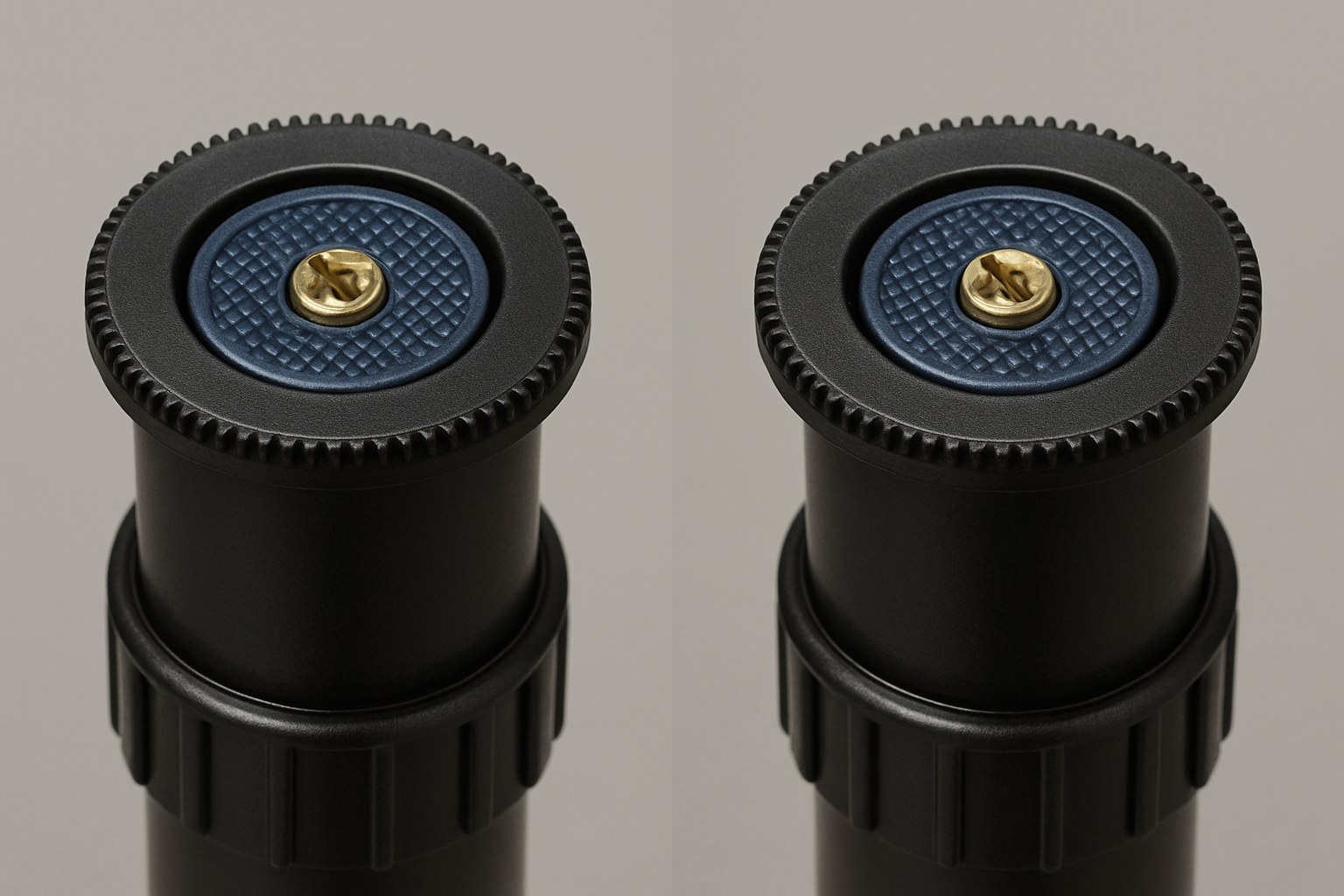
If you cannot tell, look for a brand name on the top, then find its adjustment sheet.
Adjust a Spray Head
- Turn the zone off. Pull up the stem and hold it. A clamp or a helper makes this easier, because the spring pulls hard.
- Turn the top of the head to point it where you want. Rain Bird says to rotate the head to set the direction, and on variable-arc nozzles, turn the top to change the pattern.
- Use the small screw to shorten or lengthen the throw. Turning it all the way in can shut the spray off, so go a quarter turn at a time.
- Let go and run the zone. Adjust a little at a time.
On many pop-ups the whole stem clicks around in the body like a ratchet. If the pattern is right but points the wrong way, turn the stem and leave the nozzle alone.
Adjust a Rotor
- Turn the zone off. Pull up the stem and hold it.
- Turn the turret by hand until it stops at the fixed edge. Rain Bird's 5000 sheet says to turn left to the stop, and turn right first if it does not move easily. Do not force it. Some brands fix the right side instead, so check the sheet for yours.
- Aim that edge at the edge of the lawn. If it points wrong even at the stop, the body has to turn. Unscrew the cap, lift out the insides, turn them, and set them back.
- Hold it there and turn the arc screw: clockwise adds arc, counterclockwise takes it away. Check yours.
- Turn the radius screw clockwise to shorten the stream.
- Run the zone, and fine tune. Let it sweep both ways twice before you decide.
Getting the fixed edge right first is the step people miss. If you change the arc before you aim the fixed side, the stream keeps landing on the driveway.
Clear a Clogged Nozzle
- Turn off the zone. Unscrew the nozzle and the small screen below it. If it is tight, use pliers very gently.
- Rinse both. Poke out grit with a thin wire, gently.
- Look for cracks or worn slots. Replace with the same pattern and radius. The number is often printed on top.
- Open the zone for a few seconds with the nozzle off to flush dirt. Stand clear.
- Put it back hand-tight and test.
If heads clog again and again, grit is getting in. Suspect a cracked pipe or a missing screen.
Straighten a Tilted or Sunken Head

- Turn the zone off. Dig carefully with a trowel around the head, not under the pipe.
- Straighten it. If the fitting feels loose or leaks, stop and call.
- Pack soil firmly and set the top level with the grass.
- Trim grass and plants that block the stream. Grass clippings in the cap keep it down.
Loosen only the soil right around the head. Before any deeper digging, have buried lines marked through your state's 811 service.
On a slope, set the head square to the slope and not to the sky, so it throws evenly up and down. If the head sits too low, a short riser under it or a taller pop-up brings it level.
If It Shoots Straight Up
The nozzle is likely gone or the head was cut. Turn the zone off, find the old nozzle nearby, and fit a matching one. If the stem is broken, replace the head. If it keeps popping off, pressure may be too high, and a pressure regulator is a pro job.
When to Call a Pro
- The whole zone is weak, or water pools.
- A pipe or valve leaks, or the controller is at fault.
- You cannot stop a zone from running. Shut the valve at the main, and call.
- The backflow device leaks. Leave it alone.
- A rotor will not turn or hold its arc. Worn gears mean a new head.
Ask if they check every zone, and get the parts listed. Mark heads you adjusted so you can check them after the first mowing.
Thumbtack puts the national average for sprinkler repair at $151 to $534. HomeGuide lists replacing a single head at $130 to $275, and each extra head in the same visit at $30 to $75.
Keep Them Aimed
Run every zone for a minute once a month in watering season, and again after aeration or a new mowing crew. Edge around each head so grass cannot grow over it. If an association or landlord runs the system, send a photo and the zone number.
Why Does My Sprinkler Keep Spraying the House?
Often the fixed edge was never set, or the radius is too long for the space. Shorten the throw first, then the arc. If the bed along the wall is narrow, a side-strip nozzle or drip line suits it better. Water hitting siding every morning is worth stopping.