

Updated Nov 23, 2026
How to Fix Worn Wood or Concrete Stairs
Refinish worn wood treads or patch small chips in concrete stairs without making them slippery, and tell worn finish from a tread or stair that is unsafe.
If the finish is worn but the tread is solid, sand it, recoat it, and add a non-slip strip or anti-skid finish. If a tread is cracked, soft, or moves, do not refinish it. Fix the structure first. For concrete, small surface chips can be patched, but a broken edge, wide crack, or loose tread needs a pro.
Looking for more guidance? Take a look at our Repairs overview.
Glossy finish makes stairs slippery, so do not skip the non-slip step.
| What you find | What to do |
|---|---|
| Dull or scratched wood, solid | Sand, refinish, add grip |
| Dented or dished tread, solid | Fill or cap, or replace the tread |
| Squeak, no movement | See the squeak guide |
| Cracked, soft, or moving tread | Carpenter |
| Concrete chip on the face | Patch |
| Broken concrete nosing or wide crack | Mason or pro |
| Carpet worn at the nose | Replace it, or add a secure runner |
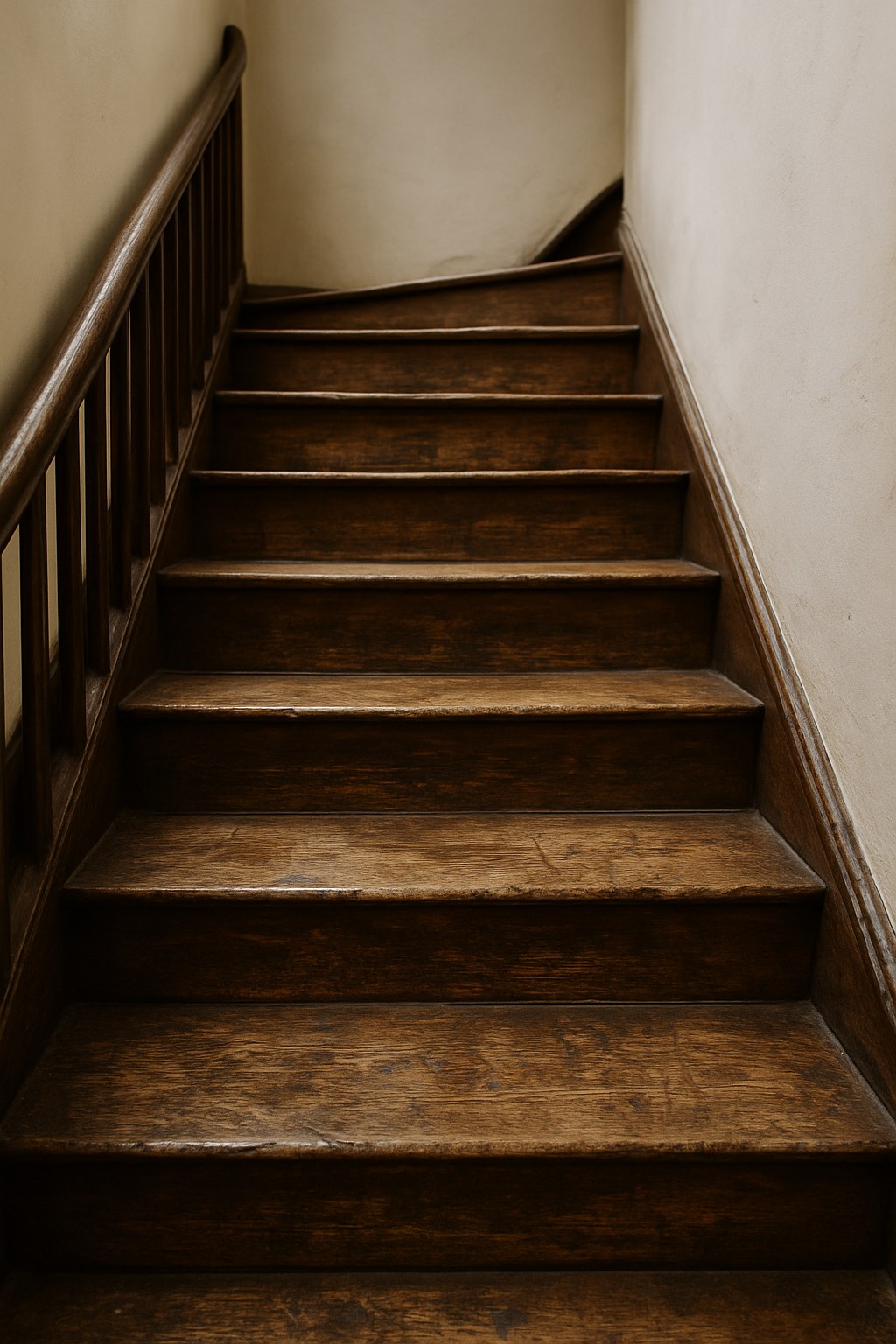
Check That the Stair Is Sound
- Look from the Bottom: Stand at the base of your staircase and look up along its length. Do you see any obvious sagging or bowing in the middle? This could indicate a problem with the stringers, the diagonal boards that support the treads and risers.
- The Slow Walk Test: Walk slowly up and down the stairs, putting your weight on the center and then on the sides of each step. Do any of the treads feel "spongy," soft, or like they're moving under your feet? Listen for any loud creaks or groans that sound more serious than a simple squeak.
- Inspect for Cracks and Rot: Examine each tread and riser closely. Look for cracks in the wood or concrete. Use your tape measure to check the width of any cracks you find.
Stop and call a carpenter or mason if:
- A tread feels spongy, loose, or unstable.
- A crack runs through a tread, or is wide enough to catch a coin.
- The front edge of a tread is broken, loose, or rounded over.
- Wood is dark, soft, or crumbly.
- The staircase sags or shakes.
InterNACHI lists treads that are cracked, uneven, worn, loose, or poorly supported, and worn or damaged nosing, as defects. If yours are, fix that first.
Refinish Worn Wood Treads
Do this only where the wood is sound and thick enough to sand.
What you need
- Tools: Random-orbit sander, shop vacuum, painter's tape, putty knife, brush.
- Materials: Sandpaper (80, 120, and 220-grit), safety goggles, dust mask, gloves, tack cloth or damp rags, water-based polyurethane, wood filler (optional).
What to do
Work on every other tread, or close off the stairs and use another way up. Keep the sander off the risers if they are painted, and test paint for lead first. The EPA says to keep surfaces damp and use wet-sanding in homes from before 1978. If it tests positive, do not machine-sand.
- Prep the Area: Start by thoroughly cleaning your stairs. Then, apply painter's tape along the walls, baseboards, and risers (if you're only refinishing the treads) to protect them from the sander and finish.
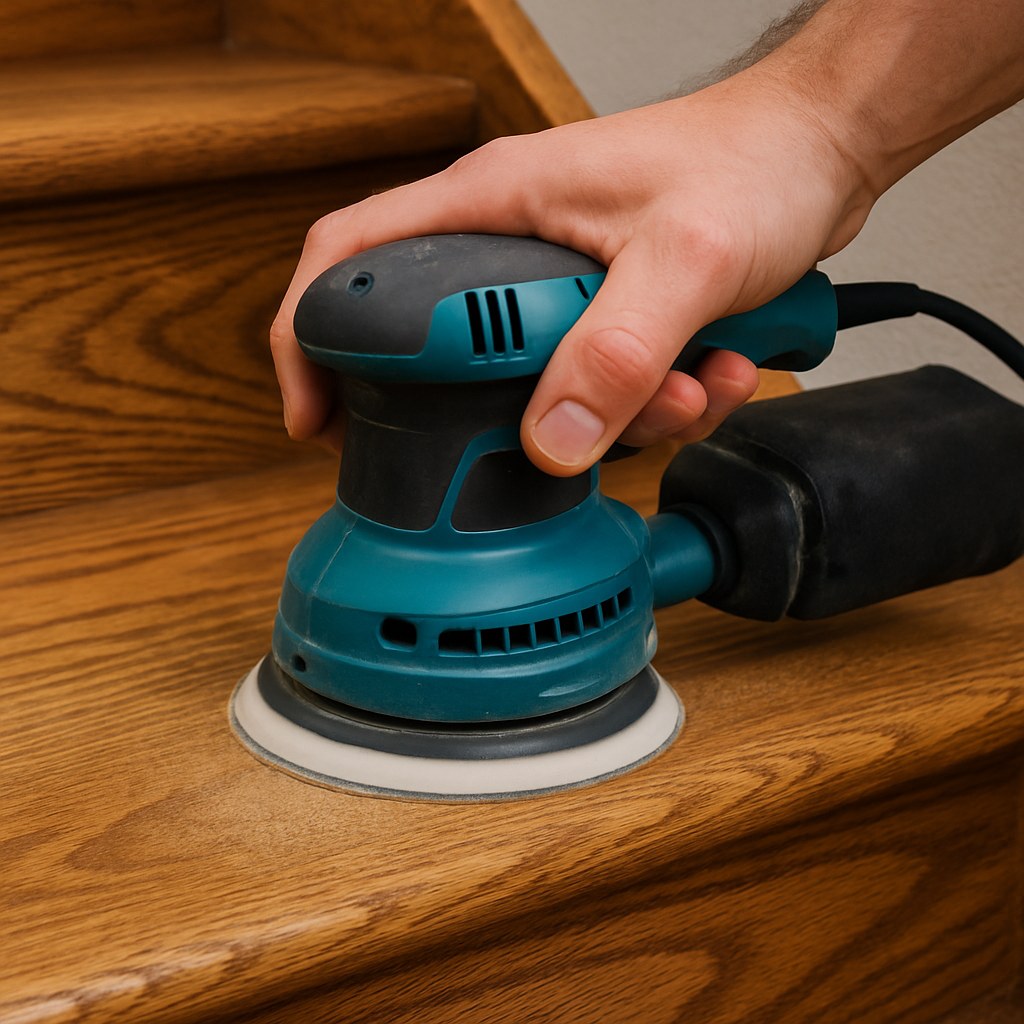
- The First Sand (80-Grit): Put on your safety goggles and dust mask. Fit your random-orbit sander with 80-grit sandpaper. This coarse grit is for removing the old finish and surface-level imperfections. Sand each tread evenly and with the grain. Veneer or thin treads can wear through, so stop at the first sign.
- Clean Up: This part is messy. Use a shop vacuum to suck up all the sanding dust from the stairs and surrounding areas. Afterward, wipe each tread with a damp cloth or tack cloth to pick up any remaining fine dust.
- The Second Sand (120-Grit): Switch to 120-grit sandpaper. This will smooth out the surface left by the coarser grit. Sand each tread again, and then repeat the vacuuming and wiping process. A perfectly clean surface is essential for a flawless finish.
- Apply the first coat of floor-grade water-based polyurethane. Stir, do not shake. Choose a satin or matte sheen, because gloss is more slippery, and add anti-skid powder if the product allows. Using a quality brush, apply a thin, even coat to each tread, starting from the top and working your way down. Follow the direction of the wood grain.
- Dry and Lightly Sand Again (220-Grit): Let the first coat dry completely. Follow the label. The grain may feel raised. Lightly sand the treads by hand with 220-grit sandpaper to knock down this texture. Wipe away the dust.
- Apply the Final Coat: Apply a second thin coat of polyurethane. Let it dry for the time on the label before anyone walks on it. Then add non-slip strips at the front of each tread. Check them often for lifting.
Patch Small Chips in a Concrete Stair
Use this for shallow chips on the flat part of a tread, where no edge is broken. A broken front edge, a crack that runs through, or a stair that has sunk needs a mason, because a thin patch will pop off.
What you need
- Tools: Stiff wire brush, broom, small bucket, putty knife.
- Materials: Safety goggles, gloves, spray bottle with water, concrete patch compound.
What to do
Do this in dry weather and the temperature range on the bag.
- Prep the Damaged Area: Put on safety glasses, gloves, and a dust mask. Use a stiff wire brush to scrub away any loose concrete, dirt, or debris from the chipped area. A clean surface is crucial for the patch to bond properly. Sweep the area clean.
- Dampen the Surface: Lightly mist the damaged spot with water from a spray bottle. You want the surface to be damp, but with no standing water. This prevents the dry concrete from sucking the moisture out of the patch mix too quickly, which can cause a weak bond.
- Mix the Patching Compound: In a small bucket, mix the concrete patch compound according to the package directions. Only mix as much as you can use within 10-15 minutes, as it begins to harden quickly.
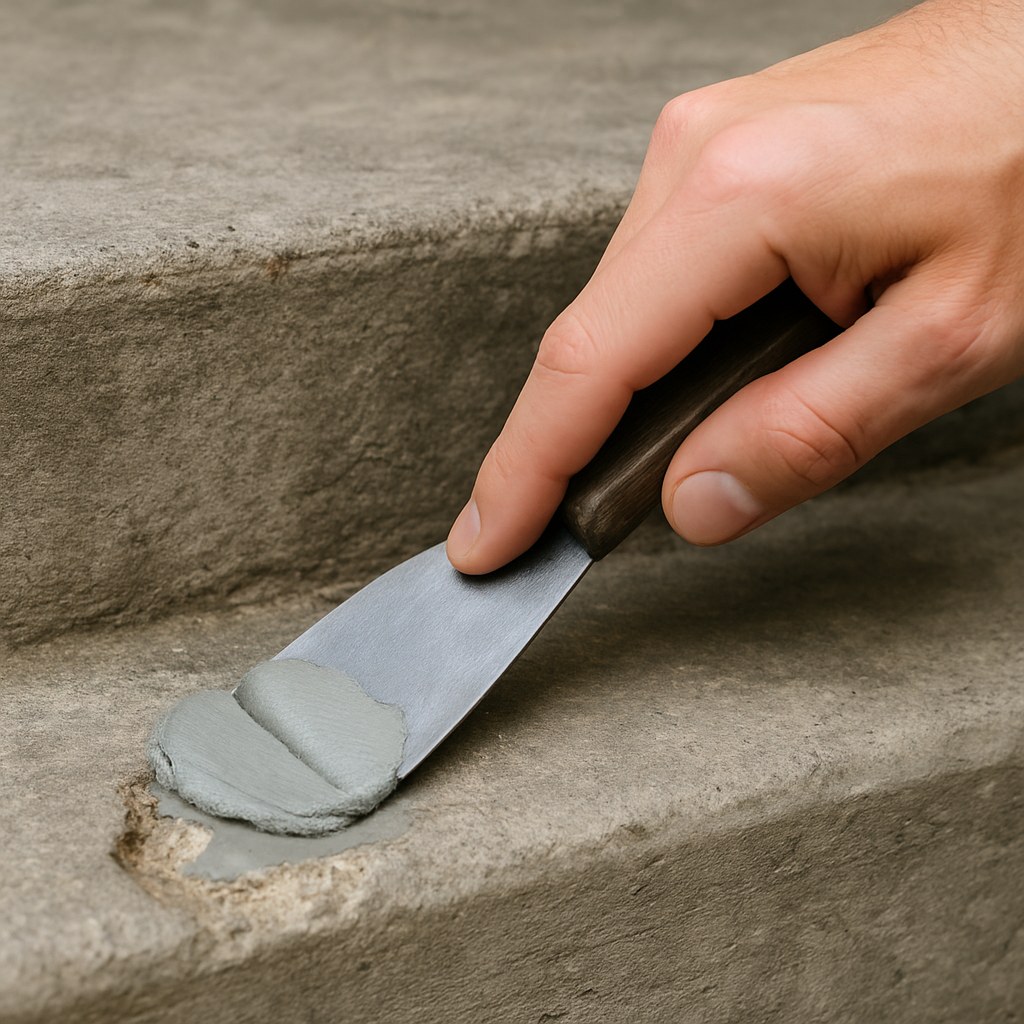
- Apply and Smooth: Scoop up some of the compound with your putty knife and press it firmly into the chip or spall. Overfill it slightly. Then, use the flat edge of the putty knife to smooth the patch, making it flush with the surrounding concrete surface.
- Let It Cure: Keep people off until it has cured as the label says. Sand down any lip, because an uneven edge is a trip hazard. Add a textured, weatherproof strip if the concrete is smooth.
Make Stairs Safer While You Are at It
- Put a non-slip strip on every tread, or a fixed runner.
- Make sure there is a handrail, and it is firm. See the railing guide below.
- Use bright light at both ends.
- Repair loose carpet, or take it off.
Ask a pro for a full quote if several treads are worn, a finish has peeled, or the stairs feel springy. Ask whether replacing treads costs less than refinishing.
What Does It Cost to Fix Worn Stairs?
Thumbtack puts the national average for a staircase remodel at $984 to $3,530, and its carpenter data lists stair work at $644 to $2,462. For worn concrete steps, Thumbtack puts the national average for concrete step repair at $768 to $2,785. A few worn treads sit well below a remodel, so describe exactly which steps you want fixed when you ask for a quote.