

Updated Nov 23, 2026
How to Replace an Electrical Outlet: A Step-by-Step Guide
Swap a worn outlet for the same type with the breaker off and a tester, and know the wiring, locations, and damage that need an electrician.
You can replace a worn outlet with the same type yourself if you turn off the breaker, prove it is off with a tester, and find ordinary wiring in the box. Move one wire at a time to the matching screw on the new outlet.
Looking for more guidance? Take a look at our Repairs overview.
Stop if the box doesn't look ordinary. Scorching, aluminum wire, missing ground, a broken tab, or extra wires mean the job belongs to an electrician. So does changing the type of outlet.
Check your local rules first. Some places and many rental or condo buildings require a permit or a licensed electrician.
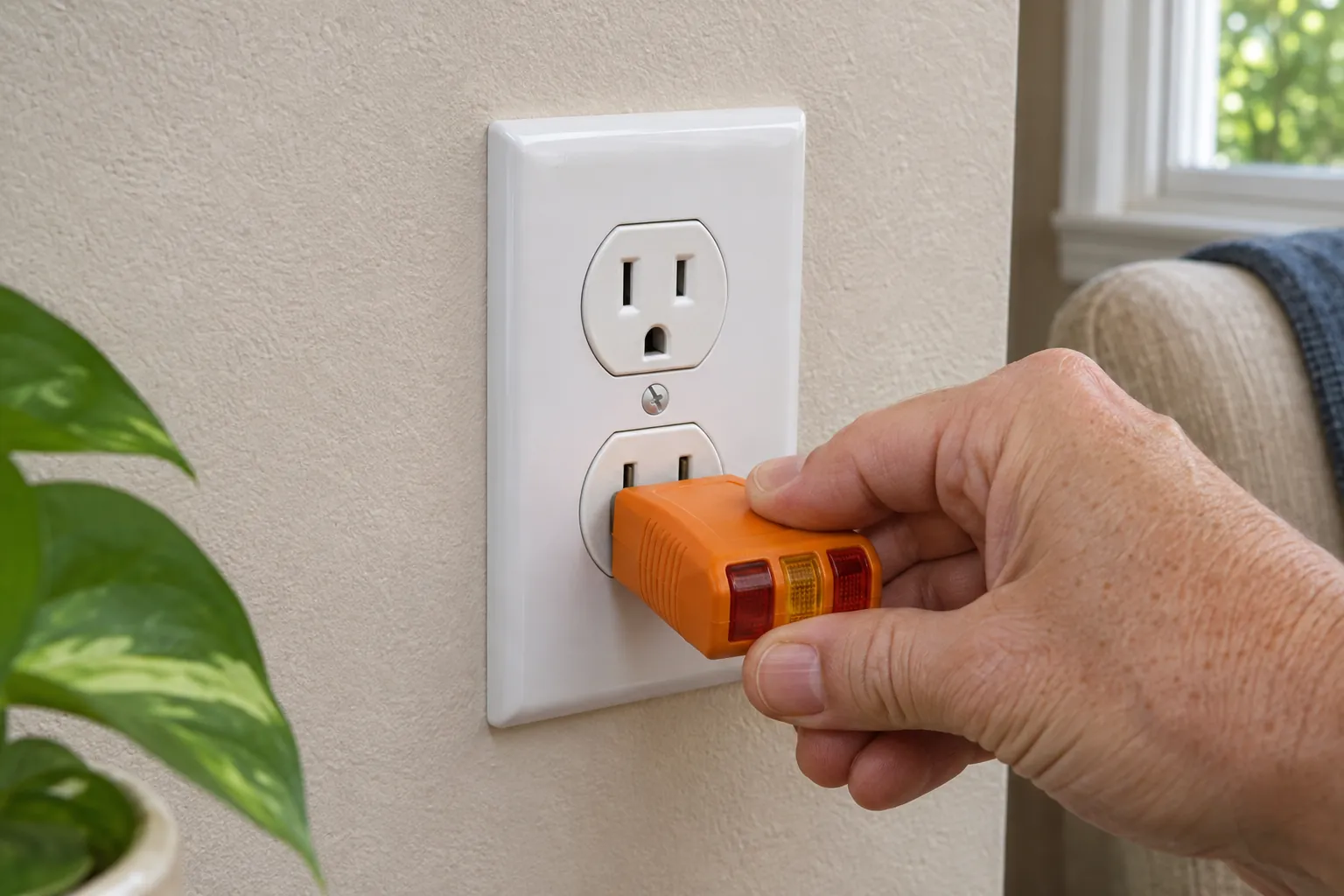
Why Replace an Electrical Outlet?
Good reasons to replace one yourself:
- Plugs won't stay in. The Consumer Product Safety Commission lists plugs that pull out easily as a warning sign.
- The face is cracked, painted over, or worn.
Call an electrician instead if the outlet has no power, or if you see burn marks, arcing, a burning smell, or blackened areas. Those can point to the wiring, and a new outlet won't fix it.
Types of Electrical Outlets
Match the one you have. These are the types you may come across:
- Standard Outlets (Duplex Receptacles): The most common, with two plug-in slots. Match the rating, 15 or 20 amps, to the old outlet. Never put a 20-amp outlet on a 15-amp breaker.
- GFCI Outlets (Ground Fault Circuit Interrupter): They shut off power when they sense current leaking, to prevent shock. The electrical code has called for them outdoors, and in bathrooms, garages, kitchens, basements, and laundry areas over the years.
- AFCI Outlets (Arc Fault Circuit Interrupter): They protect against arcing that can start fires. Newer homes may need them in bedrooms and living areas.
- USB Outlets: These have built-in charging ports and are deeper, so they may not fit an old box.
- Smart Outlets: These connect to Wi-Fi or Bluetooth.
- Tamper-Resistant Outlets: These have shutters that help keep children from pushing things into the slots. Choose one for a replacement.
Replacing an outlet can trigger the current code for that location. If you need GFCI, AFCI, USB, or smart, or the old outlet has only two slots, ask an electrician. CPSC says that if you are in doubt about a GFCI, to contact a qualified electrician and not attempt it yourself.
How to Replace an Electrical Outlet
Tools and Materials Needed:
- Screwdriver (flathead and Phillips) with insulated handles
- Voltage tester, required. Check it on an outlet you know works before and after you test.
- Needle-nose pliers
- New outlet with the same amp rating and slots, listed by a testing lab such as UL
- Flashlight, and safety glasses
Step 1: Turn Off the Power
Never work on an outlet while the power is on.
- Unplug everything from both halves.
- Find your electrical panel. Open the door only. Never remove the metal cover behind it.
- Find the breaker for that outlet and push it fully to off. Put tape over it so no one turns it on.
- Test. Check the tester on an outlet you know is live. Test every slot of both halves of this outlet, with the tester's leads or prongs fully in. Then check the tester again.
A lamp that stays off is not proof, because the two halves can be on different circuits. Klein says to test its non-contact tester on a known live circuit before and after each use. A plug-in or two-lead tester is better here. If anything shows voltage, stop and call an electrician.
After you pull the outlet out, test the wires again before touching them.
Step 2: Remove the Old Outlet
- Remove the cover plate. Look with a flashlight for scorching, moisture, or loose parts. If you see any, put the cover back, leave the breaker off, and call.
- Remove the two screws that hold the outlet to the box. Pull it out gently by its metal ears. Keep fingers off the wires and side screws.
- Test the wires again. If anything shows voltage, stop.
- Look before you disconnect. Stop and call an electrician if you
see:
- Dull gray wire that may be aluminum. CPSC says homes wired with aluminum before 1972 are much more likely to have dangerous connections at outlets.
- Brittle, scorched, or nicked insulation.
- No ground wire, or a ground wire that isn't connected.
- A broken tab between the screws on either side. That means the two halves are wired separately.
- More than two wires on one side, or wires pushed into the back.
- A red wire, or colors you can't account for.
- Take a photo from both sides.
- Loosen one screw at a time and move one wire at a time to the new outlet. Don't cut or twist more than you have to.
Step 3: Install the New Outlet
- Match each wire to the same place it came from:
- Black (hot) to a brass screw.
- White (neutral) to a silver screw.
- Green or bare copper (ground) to the green screw.
- Hook the wire clockwise around the screw so tightening pulls it in. Use the screws, not the push-in holes in the back.
- Tighten firmly to the torque printed on the outlet or its sheet. Tug each wire. None should move.
- Fold the wires back neatly and push the outlet in straight. Don't force it. If it won't fit, stop.
- Screw the outlet in, level and snug against the wall. Then attach the cover plate.
Step 4: Restore Power & Test the Outlet
- Turn the breaker on. If it trips, leave it off and call an electrician.
- Plug in a small lamp on each half.
- Works, firm, cool, and quiet: You're done. Feel the cover after an hour of use. It should be cool.
- Doesn't work, is loose, buzzes, or gets warm: Turn the breaker off and call an electrician. Don't rewire it by trial and error.
- Check that other outlets on that circuit still work.

How Much Does It Cost to Replace an Electrical Outlet?
Thumbtack says outlet materials run $3 to $50 each depending on the type. The tester is usually the bigger cost, and it is not the place to save.
If you hire an electrician, Thumbtack data puts the national average for outlet repair at $146 to $394 and for installation at $253 to $711. Ask for a price per outlet and the minimum charge for a visit. Having several worn outlets replaced at once usually costs less per outlet. Ask whether any location needs GFCI or AFCI protection, and whether a permit is needed.
When to Call an Electrician
Call if:
- You see damage, burning, moisture, or old wiring.
- The new outlet doesn't work, or the breaker trips.
- You need a GFCI or AFCI, or the outlet is near water.
- The outlet serves a large appliance.
- You can't prove the power is off.
- You have any doubt. Reassemble the cover, leave the breaker off, and call.