

Mar 6, 2026
My Garden Isn't Getting Enough Sunlight: Diagnosis and Fixes
Is your garden stuck in the shade? Learn how to map your sunlight, safely trim blocking branches, or adapt your space for shade-tolerant plants.
There are few things more frustrating for a gardener than watching plants struggle. You water them, you feed them, but they remain small, pale, or stunted. Often, the culprit isn't your brown thumb—it’s simply a lack of light.
Looking for more guidance? Take a look at our Repairs overview.
Sunlight patterns change throughout the year and even over the years as trees grow and neighbors build fences. If your garden isn't thriving, don't worry. This is a very common issue for homeowners, and you have several options before you need to give up on your green space. You might be able to reclaim the light, move the garden, or simply embrace the shade with different plants.
Here is how to diagnose the problem and decide on the best path forward.
Signs Your Garden is Light-Starved
Before you start cutting branches or moving heavy planters, look for the tell-tale signs that your plants are craving more sun:
- Leggy growth: Plants look tall, thin, and weak as they stretch desperately toward the light.
- Leaning: The entire plant is tilting noticeably in one direction (usually away from the shade).
- Lack of blooms or fruit: Vegetable plants (like tomatoes or peppers) produce plenty of green leaves but very few actual vegetables.
- Soil stays wet: If the soil is still soggy days after rain or watering, the sun isn't hitting it long enough to evaporate the moisture.
Step 1: Map Your Sunlight
You need hard data before you make changes. We often overestimate how much sun an area gets because we usually look at it during the brightest part of the day.
The "One Day" Sun Test Pick a day when you are home (like a Saturday) and the sky is relatively clear.
- 7:00 AM - 8:00 AM: Go out to your garden. Stick a landscape stake or a stick in the center of the bed.
- Every Hour: Go back outside. Note in a notebook or on your phone whether the garden is in full sun, dappled shade (light filtering through leaves), or full shade.
- Calculate: At the end of the day (around 6:00 PM), tally the hours.
The Golden Rule: Most vegetable gardens and sun-loving flowers need at least 6 hours of direct sunlight per day.
If you are getting 6+ hours, your sunlight is adequate, and your plant issues are likely due to soil or water. If you are getting fewer than 6 hours, you need to intervene.
Step 2: Identify the Obstruction
Stand in your garden and look south and west (the directions most sun comes from in the US). What is blocking the light?
- Trees and Shrubs: These are often fixable.
- Structures (Fences, Your House, Neighbor’s Garage): These are permanent.
Scenario A: Trees are blocking the sun
If a tree is the problem, you might be able to trim it back to let the light through.
Safety Check: Look at the branches casting the shadow.
- Are they 2 inches or less in diameter?
- Can you reach them easily with an 8-foot ladder?
- Are they away from power lines?
If YES: It is generally safe to trim these yourself. If NO: Do not attempt this. Large limbs are heavy and dangerous. Call a certified arborist.
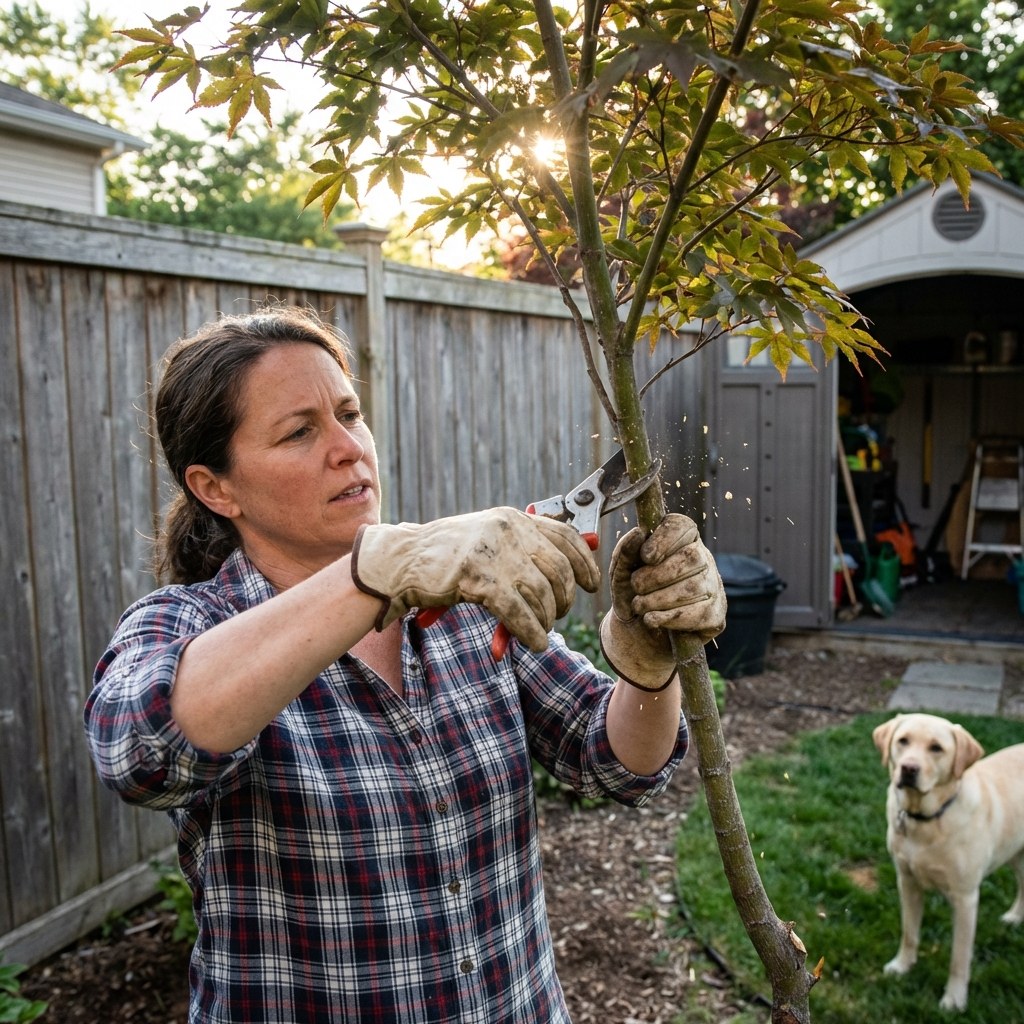
How to Trim for Light (DIY):
- Wear safety glasses and work gloves.
- Set up your ladder on firm, level ground. Never stand on the top rung.
- Using hand pruners or loppers, cut the offending branches.
- Technique: Cut just outside the "branch collar" (the swollen area where the branch meets the trunk). Don't leave a long stub, but don't cut flush against the trunk either.
- Re-check your sun levels the next day.
Scenario B: Structures are blocking the sun
If your house or a fence is casting the shadow, you can't trim the obstacle. You have two choices: Move the garden or Change the plants.
Option 1: Relocate If you have movable planters, fabric grow bags, or a small raised bed, relocation is your best bet.
- Use your compass app to find a spot that faces South or West.
- Repeat the "Sun Test" in that new spot to confirm it gets 6+ hours of light.
- If the spot is good, move your containers. (Tip: Empty the soil into a wheelbarrow first to make the pots lighter).
Option 2: Adapt to the Shade If you cannot move the garden bed (perhaps it is an in-ground bed or a heavy permanent structure), stop fighting nature and work with it. Many plants love the cool relief of shade.
- Vegetables: Swap tomatoes and peppers for leafy greens like spinach, kale, lettuce, and arugula. These actually prefer partial shade and will taste sweeter without the scorching afternoon sun.
- Ornamentals: Plant hostas, ferns, hydrangeas, or bleeding hearts.
- Brighten the Soil: Mix in compost to lighten the soil texture (shade soil stays wetter, so drainage is key). You can also use light-colored mulch or white marble chips to reflect ambient light back up onto the leaves.
When to Call a Professional
While trimming small branches is a great Saturday project, know your limits.
- Call an Arborist: If the branches are thick (over 2 inches), very high up, or near power lines.
- Call a Landscape Professional: If you have severe drainage issues in the shade or need help redesigning a dark yard with hardscaping.
Recap: Time and Cost
- Sun Mapping: Free (requires 1 day of periodic checking).
- DIY Tree Trimming: $20–$50 for pruners; 30–60 minutes.
- Garden Relocation: Free (just labor); 1–2 hours.
- Shade Adaptation: $30–$100 for new plants and compost; 1 hour.
- Professional Arborist: $300–$1,000+ depending on tree size.
Fixing a sunlight issue is often more about observation than heavy labor. By taking the time to track the sun and understand your yard's unique patterns, you can make sure your plants—whether they are sun-worshippers or shade-lovers—have exactly what they need to thrive.
If you want to keep track of your garden’s progress or need reminders on when to check your sun exposure as the seasons change, download the Casa app. Casa helps you organize your home maintenance tasks so you can enjoy your outdoor spaces without the stress.