

Updated Nov 23, 2026
Why Your Dishwasher Won't Dry Dishes and How to Fix It
Get dry dishes with rinse aid, better loading, and the right cycle, and learn when a heating element, fan, or control needs a technician.
There are few kitchen frustrations more annoying than opening your dishwasher after a full cycle, expecting sparkling, dry dishes, only to find them soaking wet and covered in water spots. You're left with the tedious task of towel-drying everything you just "cleaned." It’s a common problem, but the good news is that you can often fix it yourself without calling for an expensive repair.
Looking for more guidance? Take a look at our Repairs overview.
A dishwasher that won't dry properly isn't just an inconvenience; it can also be a sign of an underlying issue that could get worse over time. Whether your dishes are just a little damp or completely drenched, we're here to walk you through the troubleshooting process.
Let’s dive into why your dishwasher might be leaving you with a puddle and what you can do about it.

Why Are My Dishes Still Wet? Common Causes for Poor Drying
Before we start tinkering, it’s helpful to understand what might be going wrong. A dishwasher's drying performance depends on a combination of heat, airflow, and a little bit of science. Here are the most common culprits behind wet dishes:
- Improper Loading: This is the number one cause of wet dishes. If items are overcrowded, nested together, or flipped upside down, water pools inside them and prevents air from circulating effectively.
- No Rinse Aid: This magic liquid is essential for modern dishwashers. Rinse aid works by breaking the surface tension of water, causing it to sheet off dishes rather than forming droplets. Without it, those droplets are left behind to air-dry, leaving spots and moisture.
- Wrong Cycle Selection: If you’re using a "Quick Wash" or "Eco" cycle, it may skip the heated dry phase to save energy. These cycles often rely on residual heat from the wash, which isn't always enough to get everything completely dry, especially plastics.
- Unloading the Wrong Rack First: Heat rises. When you open the door and pull out the bottom rack first, the water that has collected on the top rack can drip down onto your otherwise dry dishes below. Always unload the bottom rack last.
- A Faulty Heating Element: Many dishwashers use an exposed heating element at the bottom of the tub (like the ones in an oven) to heat the water and then dry the dishes. If this element is broken or burned out, your dishwasher won't be able to generate the heat needed for proper drying.
- A Malfunctioning Vent or Fan System: Other dishwashers, particularly European brands, use a condensation drying system. They use a final hot rinse to heat the dishes, and then a fan pulls the moist, hot air out through a vent, causing the water to condense and drain away. If the fan or vent is broken or blocked, that humid air gets trapped inside.
Now that you have an idea of what could be wrong, let's get our hands dirty and figure out how to fix it.
A Step-by-Step Guide to Fixing a Dishwasher That Won't Dry
Start with the easiest fixes. Most people do not need more than these.
Part 1: The Basic Checks for Better Drying
These simple steps resolve the issue for most people. Let's run a single, optimized cycle to see if we can fix the problem without any tools.
Difficulty: Easy
Time: About 2 hours (mostly waiting for the cycle to finish)
- Fill the Rinse Aid Dispenser: Open your dishwasher door and locate the rinse aid dispenser. It’s usually a small, circular cap next to the detergent compartment. If it’s empty, fill it up with a quality rinse aid until it reaches the full line. This is the single most effective thing you can do for better drying.
- Select a Heated Dry Cycle: Choose a "Normal" or "Heavy" wash cycle and make sure to select the "Heated Dry," "Max Dry," or "Extra Dry" option. Check that the corresponding light on the control panel is illuminated.
- Load the Dishwasher for Airflow: This is crucial. Place larger plates and pans along the sides and back of the bottom rack, facing inward. Angle bowls downward so water can't pool in them. Keep plastics on the top rack, as the heating element at the bottom can warp them. Most importantly, leave space between items so hot air can circulate freely.
- Check the Vent: Make sure no tall plates or cutting boards are blocking the vent, which is usually located on the inside of the door.
- Run Hot Water at the Sink: Before you press start, turn on the hot water at your kitchen sink and let it run for a minute until it's hot. This ensures your dishwasher starts its cycle with hot water right away, which improves both cleaning and drying performance.
- Wait Before Opening: Once the cycle is completely finished, wait at least 10-15 minutes before opening the door. This allows the residual steam to dissipate and the dishes to cool, preventing condensation from reforming.
After following these steps, check your dishes. If they are now dry, congratulations! You’ve solved the problem. If they're still noticeably wet, it's time to investigate the dishwasher's hardware.
Part 2: What's Your Dishwasher's Drying System?
To diagnose the problem further, you first need to know what kind of drying system your dishwasher uses. There are two main types.
- Open the dishwasher door and pull out the lower dish rack completely.
- Look at the bottom of the dishwasher's tub.
- Do you see a thick, curved metal rod? That's an exposed heating element. If you have this, your dishwasher uses heat to actively dry the dishes.
- If you don't see one, your dishwasher likely uses a condensation or fan-assisted system, which relies on a vent and fan to pull moist air out.
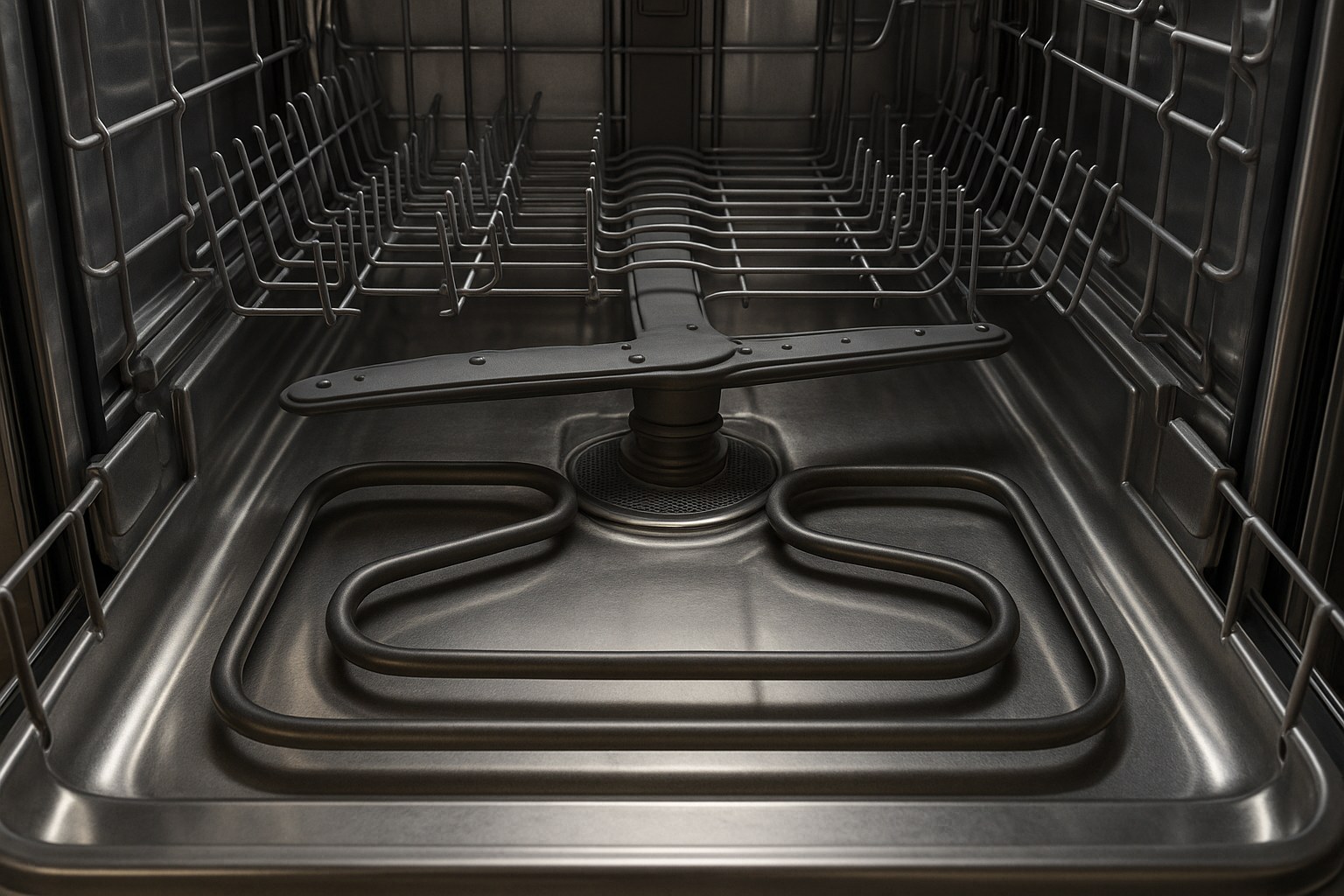
Part 3: Check the Element and Vent Without Taking Anything Apart
Let the dishwasher cool completely first.
- Look at the element. If you have an exposed one, look for cracks, blisters, or a break. If you see damage, turn off the dishwasher's breaker and call a technician.
- Clean the vent. Wipe the slots on the inside of the door with a damp cloth. Check that nothing tall blocks them.
- Run a cycle with heated dry. If there is no warmth or air movement near the vent during the dry phase, the element, fan, or control probably needs service.
Do not remove the kick plate, disconnect wires, or test parts with a meter. The wiring behind the panel carries household current, and a leak can put water in the same space.
When to Call a Professional
Call an appliance technician if the basic checks did not help, the element is damaged, the fan is silent, or the dishwasher trips its breaker, smells hot, or leaks. Turn off the breaker in those last three cases. Give the model number, the cycle you used, and whether dishes come out hot or cold.
Ask what the diagnosis costs and whether it comes off the repair. Compare the estimate with a replacement if the machine is old.

What Does It Cost to Fix a Dishwasher That Won't Dry?
Thumbtack puts the national average for dishwasher repair at $117 to $300. Ask whether the diagnosis fee comes off the repair, and compare the estimate with a replacement if the machine is old.