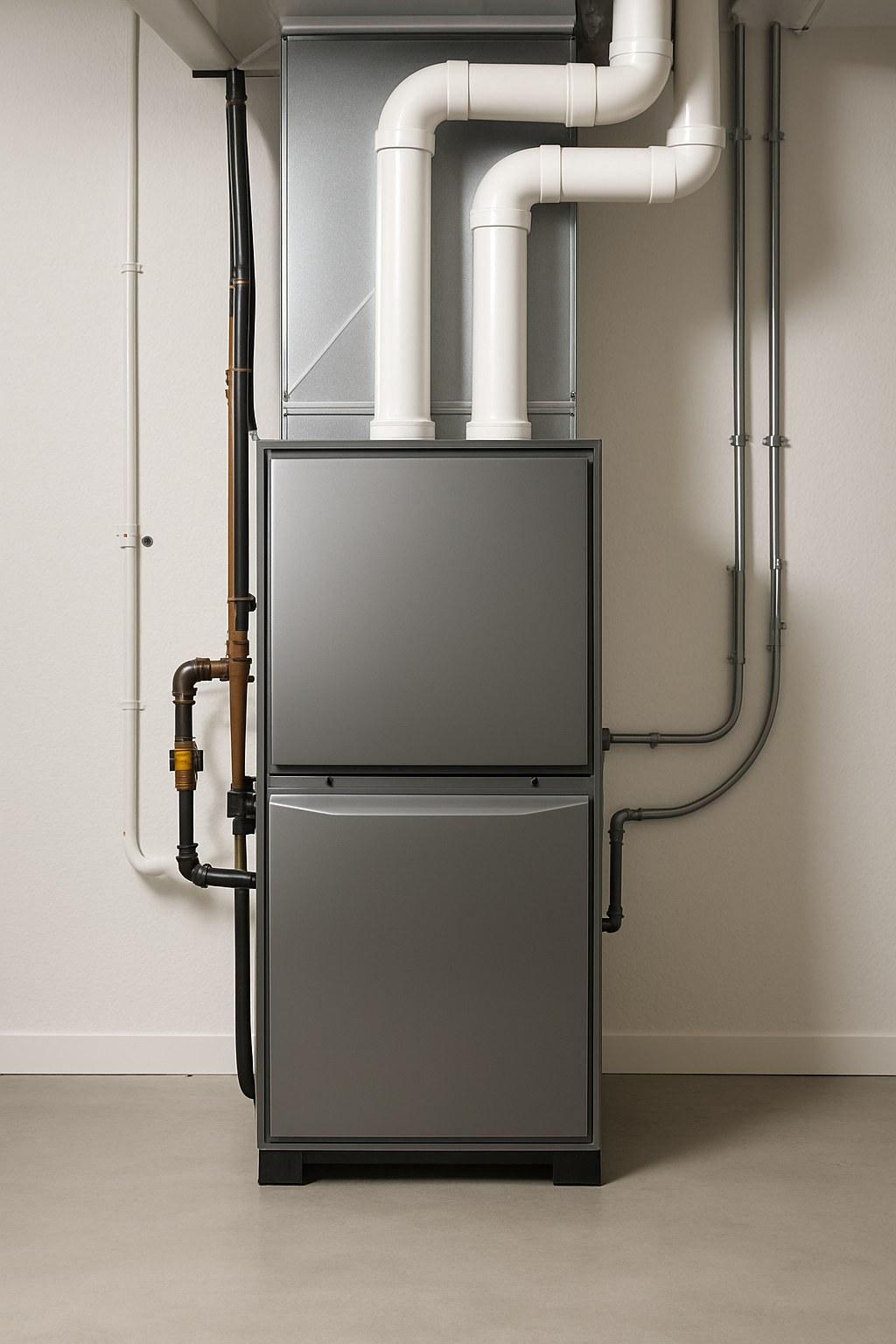
Understanding what these sounds mean is the first step toward a quieter, more efficient heating system. Most radiator noises are caused by air, water, or steam moving improperly through the pipes and fins.
This guide will help you decipher those sounds. We’ll walk through how to identify your type of heating system and then pinpoint the cause of the noise, so you can make the right adjustments with confidence.
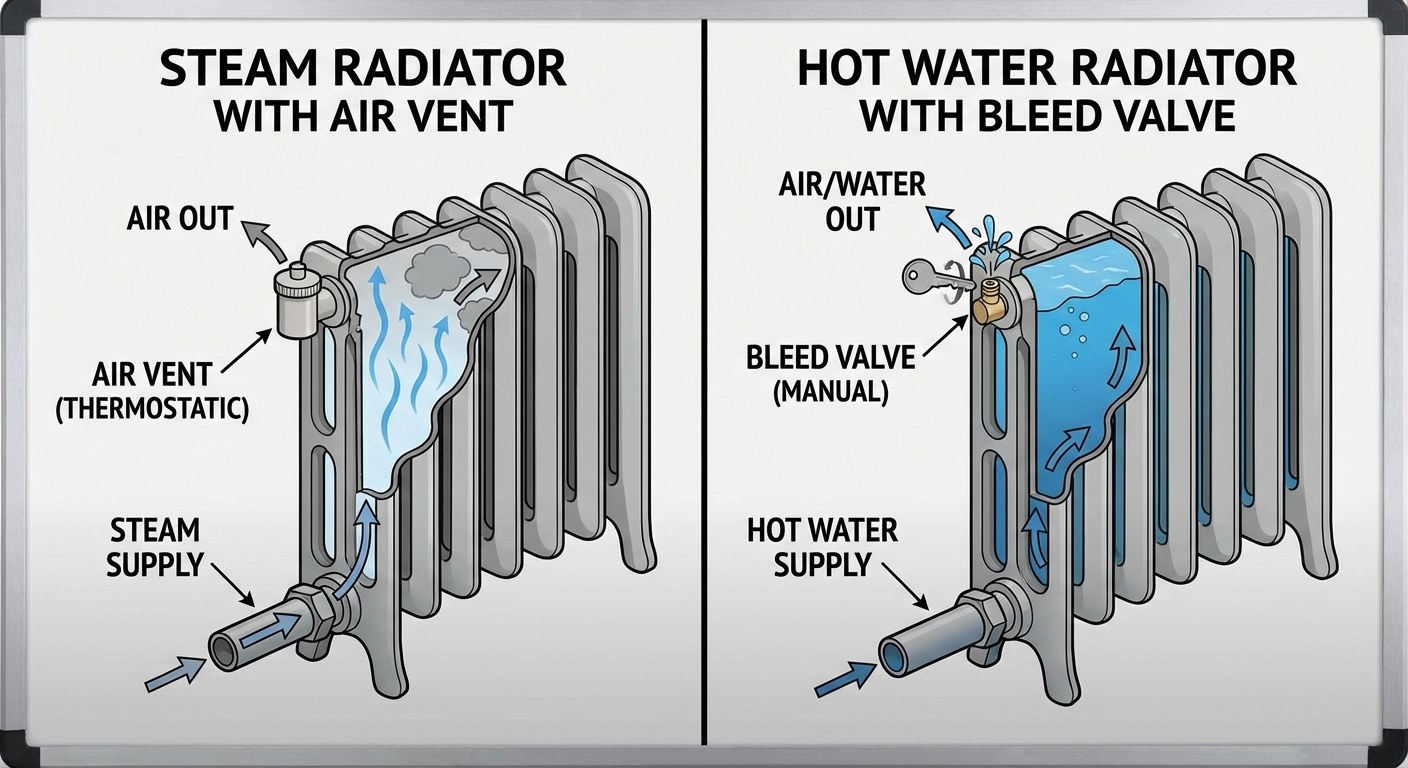 Image Alt: A diagram comparing the key parts of a steam radiator and a hot water radiator.
First Step: Is Your System Steam or Hot Water?
Before you can fix the noise, you need to know what kind of system you have. Steam and hot water radiators work differently and require different solutions. Here’s how to tell them apart:
- Look for an Air Vent: Steam radiators almost always have a small, upright air vent, usually made of metal, on the side opposite the intake pipe. Hot water radiators do not have these. Instead, they have a small bleed valve, which you operate with a special key.
- Check the Pipes: A steam system typically has one large pipe going into the radiator. Hot water systems usually have two smaller pipes (one for water in, one for water out).
- Examine the Boiler: Look for labels on your boiler in the basement or utility room. It will often be marked as "steam" or "hot water."
Once you’ve identified your system, you can match the noise you’re hearing to the correct solution below.
Troubleshooting Noises in Steam Radiators
Steam systems are common in older homes and operate by sending steam through pipes to heat the radiators.
Banging or Hammering
A loud banging sound, often called a "water hammer," is the most common complaint with steam radiators.
-
What it means: This happens when steam hits cooler water that has pooled in the pipes or the radiator itself. The steam rapidly condenses, creating a vacuum that slams water against the pipe walls. The cause is almost always improper drainage.
-
Safe to try yourself:
- Check the radiator valve. The main intake valve should be either fully open or fully closed. A partially open valve can restrict the flow of water (called condensate) back to the boiler, causing it to pool. Turn the valve fully counter-clockwise to open it.
- Check the radiator’s slope. The radiator needs to be slightly angled down toward the intake pipe so that water can drain out easily. Place a level on top of the radiator. If it's perfectly flat or tilted away from the pipe, you'll need to adjust it.
- Shim the radiator. Carefully lift the feet on the end opposite the pipe and slide thin wood shims underneath until the level shows a slight downward pitch toward the pipe. This small adjustment allows gravity to do its job.
-
When to call a professional: If the banging continues after these adjustments, the issue might be with the slope of the pipes in your walls or basement, which is a job for an HVAC professional.
Hissing
-
What it means: A gentle hiss is normal; it’s the sound of air escaping through the air vent as steam enters the radiator. However, a constant, loud hiss or spitting water suggests the vent is faulty or clogged and isn't closing when it should.
-
Safe to try yourself:
- Turn off the heat at your thermostat and wait for the radiator to cool down completely.
- Use an adjustable wrench to unscrew the old air vent.
- Take the old vent to a hardware store to find an exact replacement.
- Screw the new vent on by hand, then tighten it gently with the wrench.
- Turn the heat back on. The new vent should now hiss quietly as the radiator fills and then fall silent.
-
When to call a professional: If a new vent doesn’t solve the problem, your boiler's pressure might be set too high. Adjusting boiler pressure is not a DIY task and should be handled by a qualified technician.
Troubleshooting Noises in Hot Water Radiators
Hot water systems (also called hydronic systems) circulate hot water through a closed loop of pipes and radiators.
Gurgling or Sloshing
- What it means: This is the classic sign of trapped air in the radiator. Because air rises, it collects at the highest points in the system—the tops of your radiators—preventing water from filling them completely. This can also lead to cold spots on the radiator.
- Safe to try yourself: The solution is to "bleed" the radiator to release the trapped air.
- Turn off your heating system and wait for the radiators to cool down.
- Place an old towel and a small bowl under the bleed valve, which is usually located at the top corner of the radiator.
- Insert a radiator key (available at any hardware store) into the valve’s square notch.
- Slowly turn the key counter-clockwise. You’ll hear a hissing sound as the trapped air escapes.
- Keep the key turned until the hissing stops and a steady stream of water begins to flow out.
- Quickly turn the key clockwise to close the valve.
- After bleeding your radiators, check the pressure gauge on your boiler. It should typically read between 1 and 1.5 bar (or 12-15 psi). If it's low, you may need to add more water to the system according to your manufacturer's instructions.
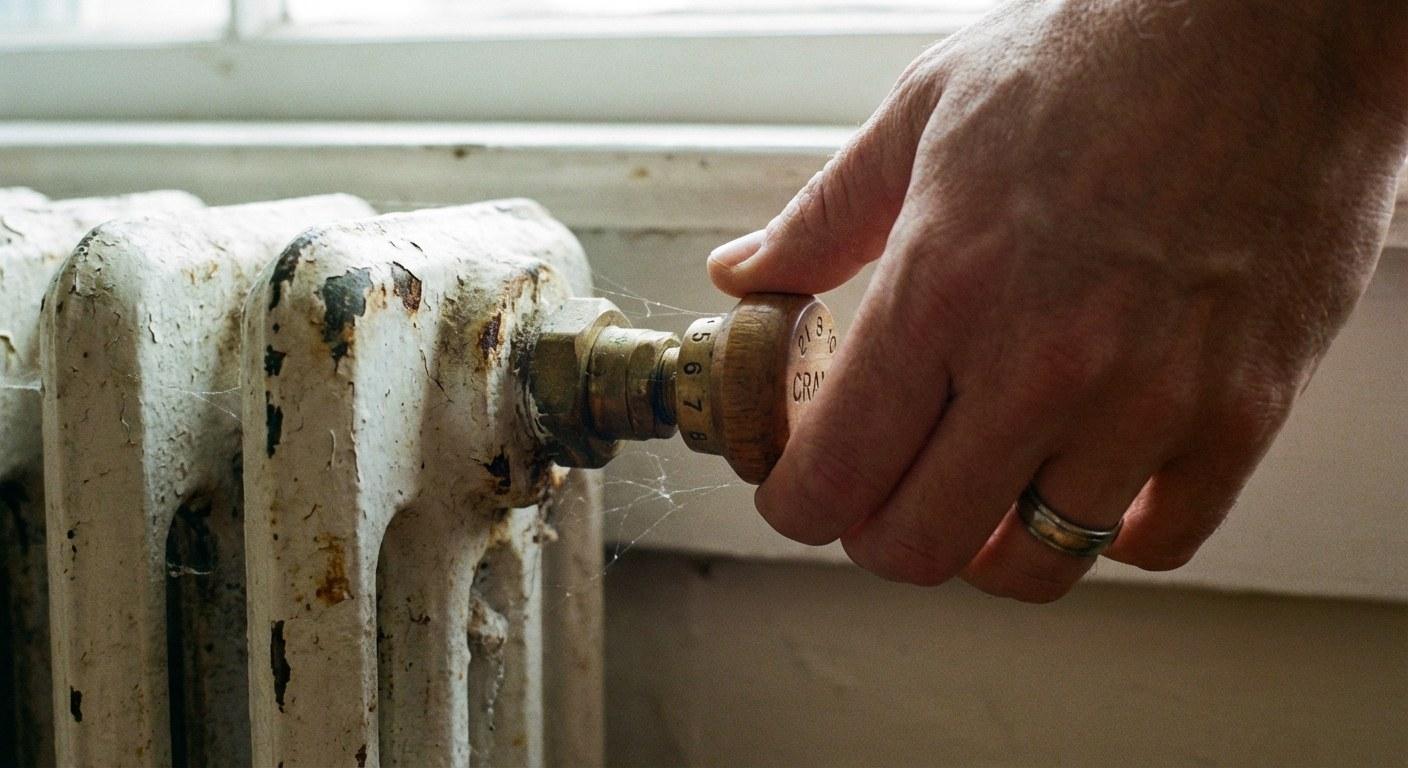
 Image Alt: A homeowner carefully bleeding a hot water radiator, catching a small amount of water in a cloth.
- When to call a professional: If you frequently have to bleed your radiators, there may be a leak somewhere in your system or an issue with the expansion tank. If bleeding doesn't solve the gurgling, you could have sludge buildup that requires a professional system flush.
A Noise Both Systems Can Make: Clicking and Popping
-
What it means: These sounds are usually due to thermal expansion. As the metal pipes and radiator heat up, they expand; as they cool, they contract. The clicking you hear is the sound of the pipes or the radiator itself rubbing against floors, walls, or mounting brackets.
-
Safe to try yourself:
- Check the brackets. Make sure the radiator’s mounting brackets are snug but not overly tight.
- Add padding. You can often quiet the noise by sliding small pieces of felt or rubber between the radiator and its wall mounts to create a cushion.
- Lubricate pipe openings. Where pipes pass through walls or floors, a small application of silicone lubricant spray can reduce friction noise.
-
When to call a professional: If the sounds are very loud and these simple fixes don’t help, it's worth having a professional check to ensure the pipes have adequate room to expand and contract.
Your Path to a Quieter Home
Dealing with a noisy radiator is a manageable task once you know what to listen for. By identifying your system and the specific sound it’s making, you can often perform a simple fix in under 30 minutes. Keeping a home maintenance log in an app like Casa can help you remember when you last bled the radiators or made other adjustments.
If you’ve tried these steps and the noise continues, or if you’re ever uncomfortable performing a repair, don’t hesitate to contact a qualified HVAC technician.
Ready to take control of your home maintenance? Download the Casa app today. Get straightforward guidance for DIY tasks, track your repairs, and connect with trusted professionals when you need one.