Updated Nov 23, 2026
How to Fix a Dishwasher That Is Not Cleaning Dishes
Dishes still dirty? Check loading, filter, spray arms, water temperature, and detergent in order, and know when a dishwasher needs a technician.
Check these in order: are dishes blocking the spray arms, is the filter clogged, are the spray arm holes blocked, is the water hot, and is the detergent fresh and right for your water? Most dishwashers that leave food or film behind have one of those problems, and you can fix each in under an hour with no special tools.
Looking for more guidance? Take a look at our Maintenance overview.

Why Is My Dishwasher Not Cleaning Properly? Common Causes
- Improper Loading: Overcrowded racks or something blocking a spray arm keeps water off the dishes.
- Clogged Spray Arms: The arms that spray water can get blocked with food debris, preventing water from reaching all your dishes.
- Dirty Filters: A clogged filter means dirty water is being recirculated onto your dishes instead of being drained away.
- Low Water Temperature: GE says the water heater should deliver at least 120°F to the dishwasher so detergent dissolves and works.
- Detergent or Hard Water: Old, wrong, or too little detergent leaves film and grit.
- Appliance Age: Pumps and seals wear, and parts for older models get harder to find.
| What you see | Try first |
|---|---|
| Food bits on everything | Filter, then spray arms |
| Only one rack is dirty | That rack's spray arm, or a blocked arm |
| Sandy grit | Filter, water temperature, detergent |
| White film or cloudy glasses | Rinse aid and detergent amount for hard water |
| Greasy dishes | Water temperature, detergent |
| Water left in the bottom | Filter, drain hose, or a drain problem |
First Things First: How Old Is Your Dishwasher?
The steps below are free at any age. If the machine is older than about ten years and they don't help, compare the price of a repair with a replacement.
How to Check Your Dishwasher's Age:
- Find the Data Plate: Open the dishwasher door and look for a sticker or metal plate, usually along the edge of the door or on the inner frame of the tub.
- Locate the Manufacture Date: The plate should list the model number, serial number, and often, the manufacture date.
- Decode the Serial Number (If Needed): If there's no clear date, you can often determine the age from the serial number. A quick search for your brand's serial number format online will usually give you the answer.
- Write down the model number: You'll need it for the manual, a part, or a service call.
Step-by-Step Guide to a Cleaner Dishwasher
We'll start with the simplest fixes and work our way to the more involved ones.
Step 1: Master Your Loading Technique
If water and detergent can't reach every surface, your dishes won't get clean.
- Scrape First: Scrape off food. You don't need to rinse.
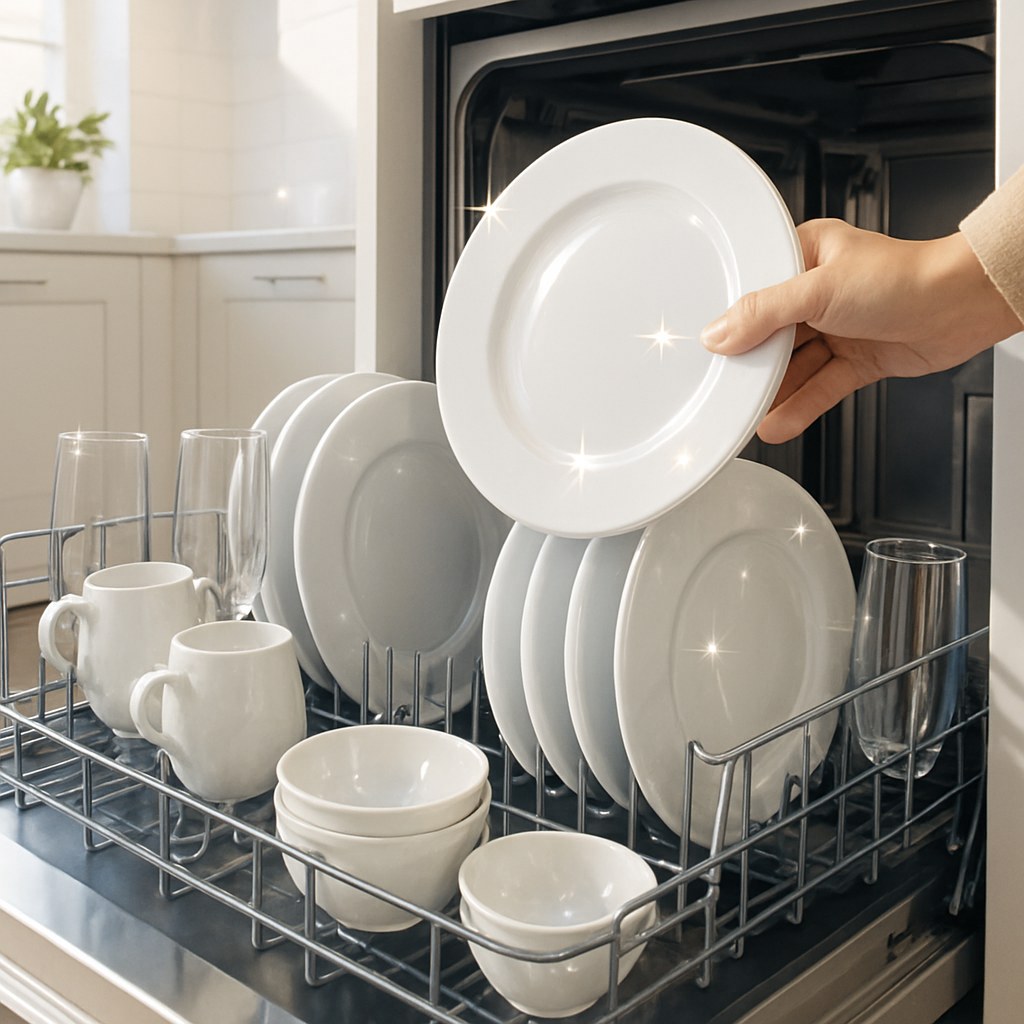
- Don't Overcrowd: Give your dishes some breathing room. Stacking plates on top of each other or cramming in too many items will block the water flow.
- Face Dishes Inward: Place plates, bowls, and dirty pans on the bottom rack with the soiled side facing the center, toward the spray arm.
- Top Rack for Cups and Glasses: Place glasses, cups, and small bowls upside down on the top rack, nestled between the tines so they don't move around.
- Check for Blockages: Before you start a cycle, give the upper and lower spray arms a gentle spin with your hand. If they hit a tall panhandle or a bulky utensil, rearrange the items until the arms can spin freely.
- Utensil Smarts: Mix up your silverware in the utensil basket, so spoons don't "nest" together and block water. Load knives and anything sharp with the points down.
Run a normal cycle. If your dishes come out clean, you've found it. If not, keep going.
Step 2: Inspect and Clean the Spray Arms
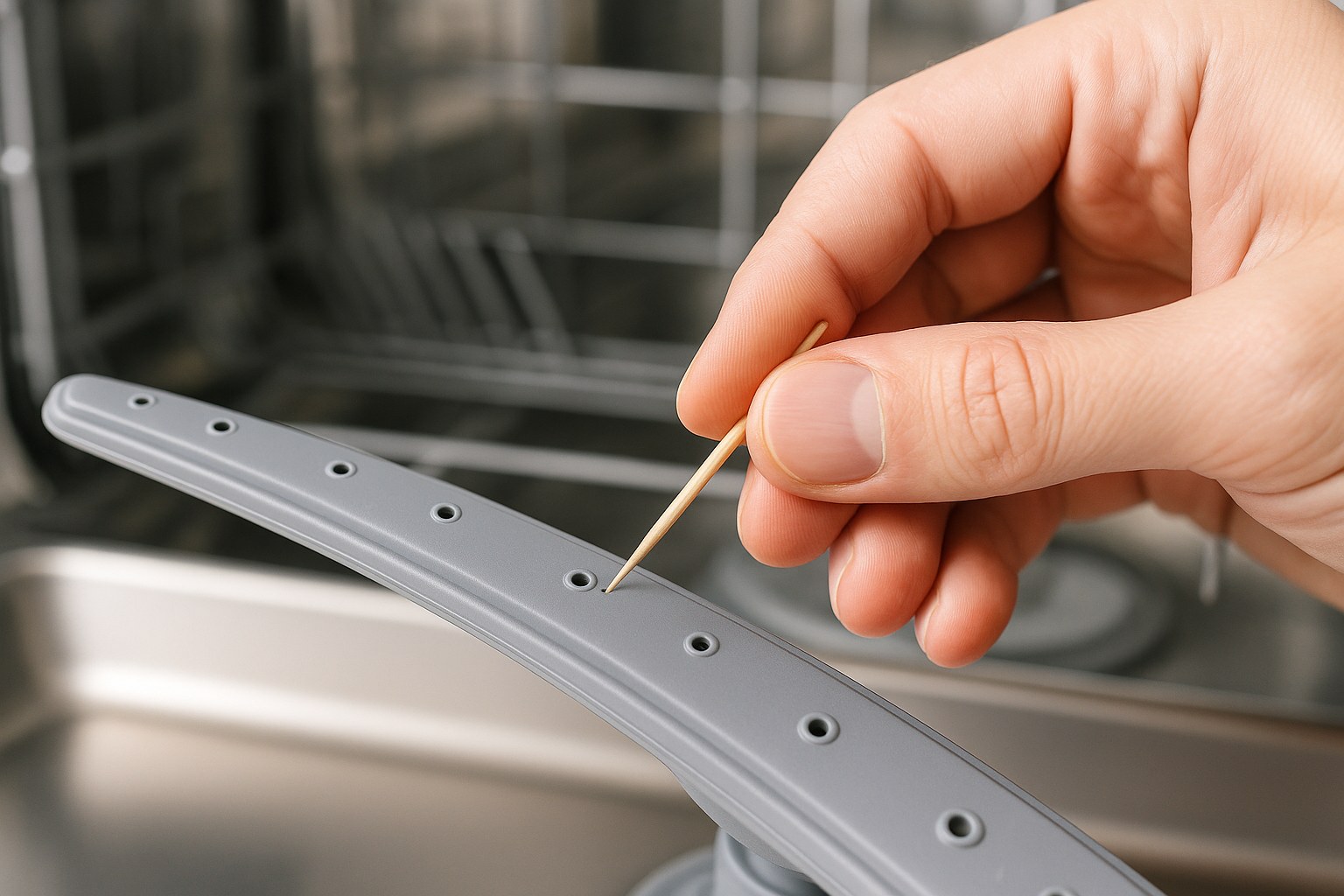
The spray arms are responsible for shooting pressurized jets of water to clean your dishes. Over time, the small holes in these arms can become clogged with food particles or mineral deposits from hard water.
How to Clean Your Spray Arms:
- Power Down: Turn the dishwasher off at the circuit breaker, and let the inside cool if it has just run.
- Remove the Racks: Take out the bottom rack completely. For the top rack, you may need to pull it out and press release tabs on the rails to remove it.
- Remove the Spray Arms:
- The lower arm usually lifts off or unscrews counter-clockwise.
- The upper arm is typically held in place by a clip or locking nut.
- Clear the Blockages: Hold the arms under warm running water. Use a toothpick or small brush to gently clear the spray holes. Don't widen them.
- Give Them a Vinegar Soak: For stubborn mineral buildup, soak the arms in a sink or basin filled with white vinegar for 15-20 minutes. The acid will help dissolve the deposits.
- Rinse and Reinstall: Rinse the arms thoroughly with water and reinstall them, making sure they are securely in place.
- Restore Power and Test: Put the racks back in, restore power, and run another cycle.
If the dishes are still dirty, check the filter.
Step 3: Clean the Dishwasher Filter
The filter catches food. When it clogs, dirty water gets sloshed back onto your dishes. GE says removable filters should be cleaned once a month. Some older dishwashers grind food instead and have no filter to clean.
How to Clean Your Dishwasher Filter:
- Locate the Filter: Remove the bottom rack. You'll find the filter assembly on the floor of the dishwasher tub, usually a cylindrical piece that twists to unlock.
- Remove the Filters: Most models have two parts: a cylindrical upper filter and a flat coarse filter underneath it. Twist the upper filter (usually counter-clockwise) and lift it out, then lift out the coarse filter.
- Wash the Filters: Rinse both filters under warm running water. Use a soft brush and a little dish soap to gently scrub away any greasy residue or stuck-on food. Avoid using abrasive sponges, which can damage the fine mesh.
- Clean the Filter Well: With the power off, wipe the area where they sit with a damp cloth. Look before you reach in, since broken glass collects there.
- Reassemble: Place the coarse filter back first, ensuring it lies flat. Then, insert the upper filter and twist it clockwise until it locks firmly into place. You should feel or hear it click. An improperly seated filter won't work correctly.
Once the filter is clean and locked in, run a wash cycle and check the results.
Step 4: Check Your Water Temperature
If your water isn't hot enough, detergent won't dissolve and grease won't lift. Aim for 120°F (49°C) at the tap.
How to Check and Adjust Water Temperature:
- Run the Tap: Before starting the dishwasher, run the hot water at the kitchen sink until it's as hot as it gets. Use the machine's added-heat option if it has one.
- Measure the Temperature: Use a meat or digital thermometer to check the temperature of the water coming from the tap.
- Adjust if Necessary: If the water is cooler than 120°F, see why your water heater temperature is wrong. Don't set it above 120°F to fix a dishwasher, because hotter water can scald. On an electric heater, the thermostat is behind a panel with live wiring, so leave that to a professional.
Step 5: Check the Detergent and Rinse Aid
- Use dishwasher detergent only. GE says not to use liquid dish detergents that aren't made for automatic dishwashers. They foam over.
- Make sure it's fresh. Old or damp powder and stuck-together pods don't dissolve well.
- Match the amount to your water. Hard water needs more, soft water less. Your water utility can tell you how hard yours is.
- Fill the rinse aid. It helps water sheet off, which cuts spots and film.
- Check the dispenser. If it's still shut or caked at the end, something may be blocking the door, or the latch needs service.
When It’s Time to Call a Professional
If none of that helps, the cause may be a water inlet valve, heating element, pump, or sensor. Call a technician, and ask for the visit fee first. Call sooner if it leaks, trips the breaker, or smells like burning. Turn it off at the breaker and leave it off. Thumbtack puts the national average for dishwasher repair at $117 to $300.