

Updated Nov 23, 2026
How to Get Rid of Pool and Spa Algae
Clear green pool or spa water safely: test, balance, brush, shock by the label, and clean the filter, plus the chemical rules that keep you out of trouble.
Keep everyone out, test the water, bring the pH into range, brush every surface, shock with chlorine in the amount on the label, and run the pump while you keep the filter clean. A light green tint can clear in a day or two. A heavy bloom takes longer. For a small spa with thick algae, draining and scrubbing is quicker.
Looking for more guidance? Take a look at our Maintenance overview.
Nobody swims until the water is clear to the bottom and the chlorine and pH are back in range. In green water you can't see a person in trouble.
Why Do I Have Algae in My Pool or Spa Anyway?
Algae are tiny plant-like organisms that grow when conditions suit them:
- Low Sanitizer Levels: Chlorine (or another sanitizer) is the first line of defense against algae. When levels drop too low, algae can multiply rapidly.
- Poor Water Chemistry: A pH or alkalinity that is off makes your sanitizer less effective.
- Inadequate Filtration and Circulation: If your pump isn't running long enough each day, or your filter is dirty, still water lets algae settle and spread.
- Warm Weather and Sunlight: Algae love sunshine and warm temperatures, which is why blooms are more common in the summer months.
- Contaminants: Phosphates and nitrates, introduced by things like leaves, dirt, fertilizer runoff, or even swimmers, act as food for algae.
Pool Chemical Safety
Most of the danger in this job is in the chemicals. The CDC's advice, in short:
- Read the whole label before every use, and wear the goggles, gloves, and mask it calls for.
- Never mix different pool chemicals with each other or anything else. That includes two kinds of chlorine, and chlorine with acid. Use a clean, dry scoop for each one.
- If the label says to pre-dissolve, add the chemical to the water. Never add water to the chemical, because it can react violently.
- Work outdoors or with good airflow, open one container at a time, and close it before you open the next.
- Keep chemicals locked up, dry, and away from children and pets.
Add one product at a time with the pump running, and wait as long as the label says before the next.
Step 1: Initial Assessment and Preparation
- Keep people out: Close the gate or cover, and tell everyone the water is off limits.
- Power Down: Turn off your pool or spa pump, heater, and any water features like waterfalls or fountains. That lets debris settle while you skim.
- Remove Covers and Debris: Take off your pool or spa cover and set it aside. Use a skimmer net to remove any large floating debris like leaves, twigs, or bugs. Leaves use up chlorine. Never reach into a pump or drain, and don't go into water you can't see the bottom of.
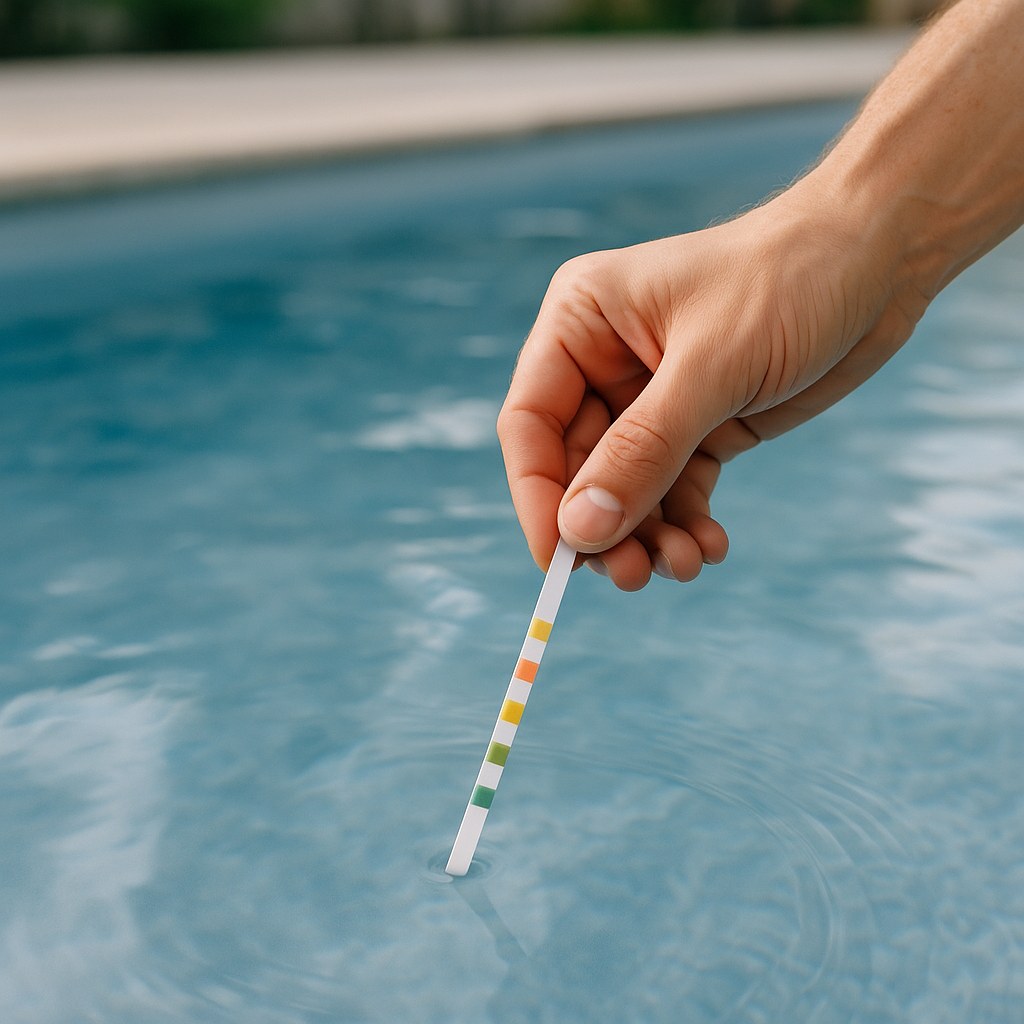
- Test Your Water: Use fresh pool or spa test strips or a drop kit. Dip one about 18 inches (or elbow-deep) into the water, away from any jets or skimmers. Read the results for pH, sanitizer (chlorine/bromine), and total alkalinity.
- Write It Down: Jot down the readings and the volume of your pool or spa in gallons. Every dose depends on it.
The CDC recommends pH 7.0 to 7.8, at least 1 ppm chlorine in pools, and at least 3 ppm in hot tubs. If your pool uses cyanuric acid (stabilizer), they say to keep chlorine at 2 ppm or more, and not to use it in hot tubs at all.
Step 2: How Bad Is It?
- Light bloom: Green tint or a few slimy patches, and you can still see the bottom. Treat it in the water.
- Heavy bloom: You can't see the bottom, or algae lifts off in mats when you brush. It takes more chlorine, more brushing, and more filter cleaning. A spa in this state is best drained.
- Not sure it's algae: A pool store can test a sample, often for free.
Step 3: How to Treat Pool Algae
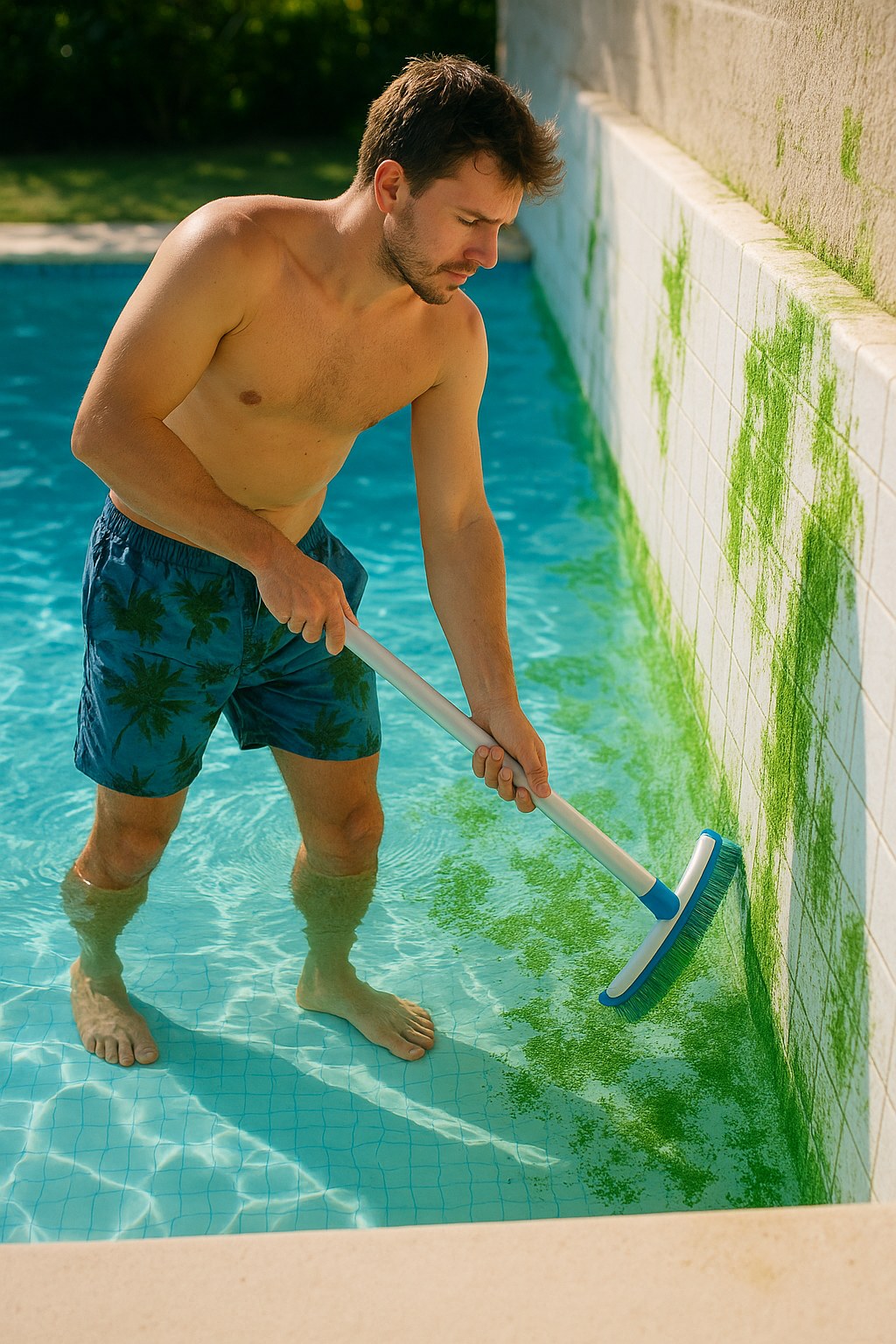
Treating a Light Algae Bloom in Your Pool
- Balance the pH: Bring it into the range above, using one product as its label says. Chlorine works poorly when pH is high.
- Run the Pump: Run it continuously until the water is clear.
- Brush Vigorously: Brush the walls, floor, steps, and corners from the deck.
- Shock the Pool: At dusk, so the sun doesn't burn it off, add the dose of chlorine shock on the label for your volume. Follow the label on whether to pre-dissolve it, since granules can bleach a vinyl liner. If you have a saltwater pool, use the "boost" or "super-chlorinate" function as the manual says.
- Clean the Filter: After about 12 hours, rinse a cartridge or backwash a sand or D.E. filter. Turn the pump off and release the pressure first, as the filter's manual says. See how to clean your pool filter.
- Retest: Test after 24 hours. Repeat the shock if it's still green and chlorine has dropped.
- Algaecide if needed: Use one made for your pool, when its label says the chlorine level is low enough. High chlorine can break many of them down.
Tackling a Heavy Algae Infestation in Your Pool
This can take several days.
- Skim and Clean the Filter First: Take out as many leaves as you can reach from the deck, then clean the filter.
- Run the Pump: Switch it to run continuously. If it struggles, clean the filter again.
- Balance Your pH: Bring it to about 7.2 to 7.4, so the shock works well.
- Brush: Brush the entire surface, twice a day while you treat it.
- Shock for Algae: Use the dose the label gives for algae or green water, which is higher than a routine dose. Repeat as the label allows until the green is gone. For saltwater pools, run the boost function as the manual says.
- Clean the Filter Again: The water will turn cloudy blue or white as algae dies. Clean the filter each time the pressure climbs.
- Retest and Adjust: Test daily. When the water is clear and chlorine has come down, adjust pH and alkalinity.
If you still can't see the bottom after several days, call a pool company. A pool that is very dark, or that has sat for a season, may need to be drained, and a pool can crack or float out of the ground if it's drained at the wrong time, so leave that to them.
Step 4: How to Treat Spa and Hot Tub Algae
Clearing a Light Algae Problem in Your Spa
- Cover Off, Jets On: Open the cover and run the jets to circulate the water.
- Brush the Shell: Use a spa brush to scrub all surfaces, breaking up any visible algae.
- Shock the Spa: Add a spa shock labeled for hot tubs in the dose for your volume. Keep your face away from the water.
- Ventilate: Leave the cover off for as long as the label says, so gas doesn't collect under it. If the spa is indoors, open windows and run a fan.
- Clean the Filter: Turn the spa off, take out the cartridge, and rinse it with a hose.
- Retest and Balance: Test after several hours, and adjust sanitizer and pH. Nobody gets in until both are in range. If a light bloom comes back within a week, drain and clean it.
Heavy-Duty Algae Removal for Your Spa (Drain and Clean)
If your spa water is thick with algae, the fastest and most effective solution is to drain, clean, and start fresh.
- Drain the Spa: Turn off the spa's breaker and leave it off until the spa is full again, since running the heater dry can ruin it. Let the chlorine drop first, then drain it where your town allows, not into a storm drain.
- Scrub Down: Once empty, spray the interior with a spa surface cleaner. Use a non-abrasive brush or sponge to scrub every inch of the shell, including the jet nozzles and filter compartment.
- Rinse and Drain: Rinse the entire shell thoroughly with a hose, directing the dirty water toward the drain.
- Deep Clean the Filter: Soak the cartridge in a filter cleaner as its label says, by itself, then rinse until the water runs clear. Replace it if it's frayed or old.
- Refill: Close the drain valve and reinstall the filter. Refill the spa with fresh water to the recommended level.
- Start Up and Sanitize: Turn the power back on when the spa is full. Add a startup dose of spa sanitizer, run the jets with the cover off, and test until the water is in range.
What Does a Pool Pro Charge for Algae?
Thumbtack data puts pool maintenance visits that deal with algae at $149 to $417. Visits for green or cloudy water run $163 to $453, compared with $117 to $313 for clear water. If the pool has to be drained, expect more: jobs that need draining run $173 to $493. Ask your pro whether draining is truly needed.
When to Call a Professional
Call a pool company if the algae keeps coming back, if you see black spots stuck to the plaster (black algae), if the pump or filter isn't moving water, or if the pump trips its breaker. Don't reset it more than once. Ask for their water test results, what they'll add, and how many visits the price covers.
Leave the area and call 911 if chemicals have been mixed or are smoking, or if anyone has trouble breathing. For a splash or a mild exposure, rinse with water and call Poison Control at 1-800-222-1222.
Your Algae-Free Future
Keep the sanitizer in range, run the pump daily, clean the filter on schedule, brush the walls weekly, and check the water after storms and parties. Casa can remind you when each one is due.