

Updated Nov 23, 2026
How to Remove Almost Any Carpet Stain
Match the fix to your carpet and your stain. Step-by-step methods for greasy, watery, and dye stains on wool and synthetic carpet, and what to skip.
Blot, don't rub. Soak up as much as you can with a white cloth, work from the outside in, and start with a teaspoon of dish soap in a cup of cool water. If that doesn't do it, the next step depends on what the carpet is made of and whether the stain is watery, greasy, or a dye. Rinse with plain water and blot dry at the end.
Looking for more guidance? Take a look at our Maintenance overview.
The Rules of Carpet Stain Removal
These apply to every stain.
- Act Fast: The sooner you tackle a stain, the easier it is to remove. A fresh, damp stain hasn't had time to set deep into the carpet fibers and bond with them chemically.
- Blot, Don't Rub: Rubbing and scrubbing can untwist carpet fibers, causing them to look fuzzy and worn. It also spreads the stain, making it larger. Always use a clean cloth to gently blot, absorbing the liquid from the outside of the stain toward the center.
- Test Your Cleaner: Before applying any cleaning solution to the stain itself, test it on an inconspicuous area of your carpet—like inside a closet or under a sofa. Apply a small amount, wait a few minutes, and blot with a white cloth to ensure it doesn't cause discoloration or damage.
- Work from the Outside In: When blotting and cleaning, always start at the outer edge of the stain and work your way toward the middle. This keeps it from spreading.
- One Cleaner at a Time: Rinse and blot before you try something else. Never mix cleaners, especially anything with bleach, ammonia, vinegar, or peroxide.
- Use Little Liquid: Damp cloths, not puddles. Water in the padding leads to smells and mold.
Step 1: Identify Your Carpet's Fiber
Natural fibers like wool are delicate and can be damaged by harsh chemicals or high heat, while synthetic fibers like polyester and nylon are much more resilient. Using the wrong treatment can permanently damage your carpet.
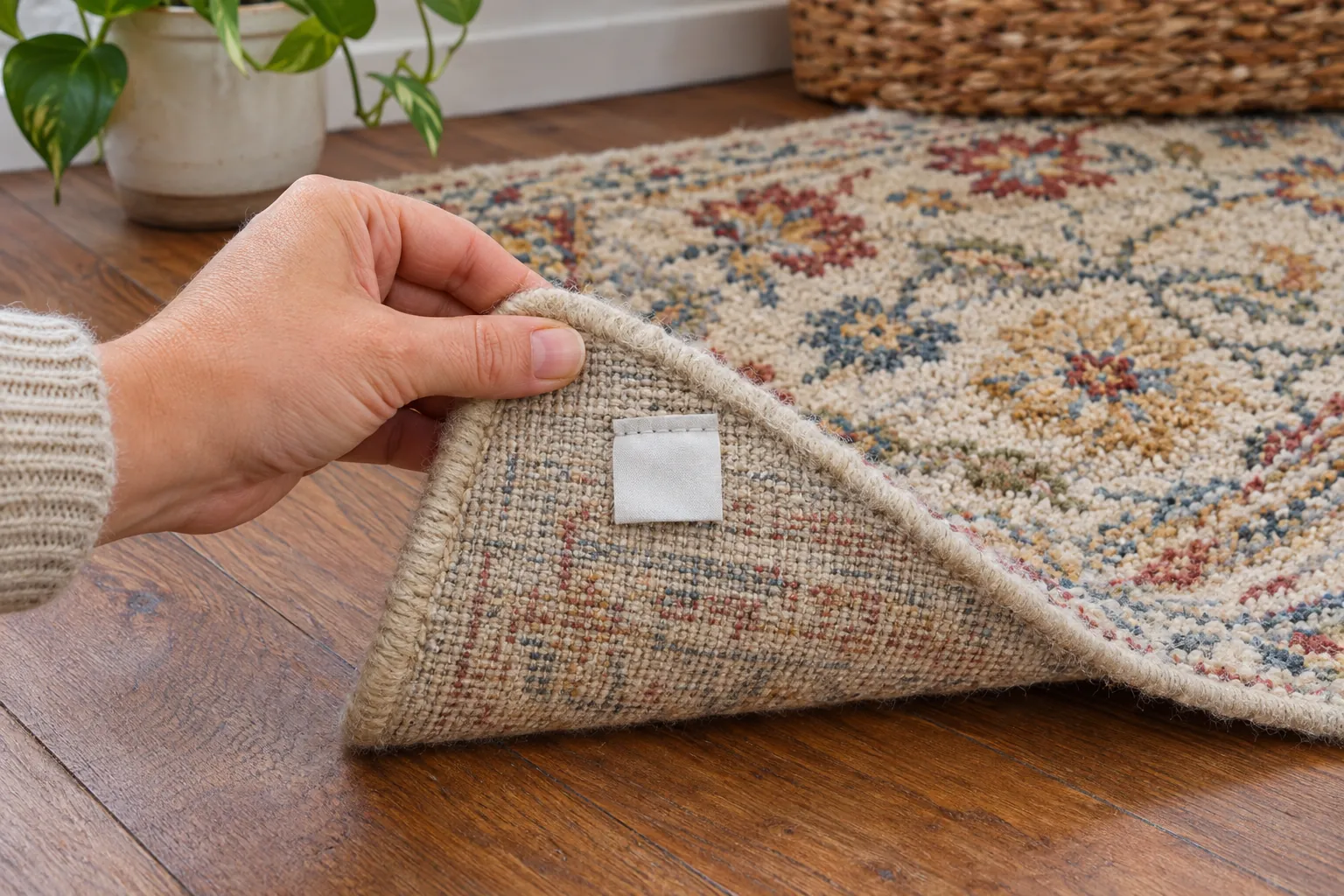
Here’s how to figure out what you’re working with:
- Check the Tag: If you have an area rug, or if your wall-to-wall carpet was recently installed, look for a manufacturer's tag on the underside. It will often list the material, such as “100% Wool,” “Nylon,” or “Polyester.”
- Check the Paperwork: Home purchase papers, a leftover roll, or the installer's invoice often name the carpet.
- Look and Feel: Most wall-to-wall carpet in U.S. homes is synthetic. Wool feels springy and slightly coarse, and is often in rugs. Jute and sisal look like rope or straw.
- Ask: A flooring store can usually tell from a small fiber. If you still aren't sure, treat it as wool and use the gentlest method.
Step 2: Determine the Type of Stain
Stains generally fall into three categories. Identifying which one you have will dictate your cleaning method.
- Water-Based Stains: These are the most common and include things like mud, latex paint, milk, berries, and most food spills (like coffee or juice).
- Oil-Based Stains: These are greasy and include cooking oil, butter, makeup (lipstick, foundation), and motor grease.
- Dye or Ink-Based Stains: These are often the toughest and include wine, ink, hair dye, and artificial food coloring.
A simple touch test with a clean white cloth can help you figure it out. If the spot feels slick or greasy, it’s likely oil-based. If it feels damp, it’s water-based. If color immediately transfers to your cloth with a light touch, you're likely dealing with a dye.
How to Remove Stains on Natural Fiber Carpets (Wool, Jute)
Natural fibers are beautiful but require a gentle touch. Always use cool water and avoid aggressive scrubbing.
Treating Oil-Based Stains (Grease, Makeup)
- For Fresh Stains:
- Immediately sprinkle a generous layer of baking soda over the stain to absorb the oil.
- Let it sit for about 15 minutes.
- Vacuum up the powder with your vacuum's hose attachment.
- Mix one tablespoon of mild dish soap into one cup of warm water. Dampen a microfiber cloth with the solution.
- Gently blot the stain from the outside in.
- Use a dry section of the cloth to blot the area until it's nearly dry.
- For Set-In Stains:
- Scrape off what you can with a dull spoon.
- Dampen a white cloth with a small amount of dry-cleaning solvent labeled for wool, following the label. Open the windows, keep flames and pilot lights away, and don't pour it on the carpet, since it can loosen the backing.
- Blot gently, moving to a clean part of the cloth as it picks up grease.
- Blot with a cloth dipped in cool water, then blot dry with a towel.
Treating Dye or Ink Stains (Wine, Ink)
- For Fresh Stains:
- Blot immediately with a dry white cloth to absorb as much of the liquid as possible.
- Mix equal parts white vinegar and cool water.
- Dampen a clean cloth in the solution and dab the stain. Don't oversaturate the carpet.
- Blot with a dry cloth. Repeat this process a few times. If the stain persists, it's best to call a professional, as further treatment can damage wool fibers.
- For Set-In Stains:
- Try the vinegar and water mix above once more.
- If color still shows, stop and call a carpet cleaner who works with wool. Bleach, including oxygen bleach, can damage wool and strip its dye.
Treating Water-Based Stains (Coffee, Mud)
- For Fresh Stains:
- Blot with a dry microfiber cloth to remove excess moisture.
- Mix one teaspoon of dish soap in a cup of cool water.
- Dampen a cloth with the solution and blot the stain from the edges inward.
- Rinse by blotting with a water-dampened cloth, then blot dry with a towel.
- For Set-In Stains:
- Lightly spray the stain with a mix of one part white vinegar to two parts cool water.
- Lay a damp microfiber cloth over the spot and place a heavy object on top for 15 minutes.
- Remove the object and blot the area dry.
How to Remove Stains on Synthetic Fiber Carpets (Nylon, Polyester)
Synthetic carpets are workhorses and can handle more robust cleaning methods.

Treating Oil-Based Stains (Grease, Makeup)
- For Fresh Stains:
- Sprinkle with baking soda, wait 15 minutes, and vacuum it up.
- Apply a few drops of dish soap directly to the remaining stain.
- Add a splash of warm water and gently agitate the area with a soft-bristle brush to create a lather.
- Blot with a dry microfiber cloth to lift the soap and stain.
- For Set-In Stains:
- Apply a small amount of dry-cleaning solvent to a clean cloth, with windows open and no flames nearby.
- Blot the stain from the outside in, rotating the cloth as it picks up the grease.
- Rinse by blotting with a cloth dampened with warm water, then blot dry.
Treating Dye or Ink Stains (Wine, Ink)
- For Fresh Stains:
- After blotting up the excess, dampen a white microfiber cloth with rubbing alcohol, away from any flame.
- Lightly dab the stain. You should see the ink or dye transfer to the cloth. Use clean sections of the cloth to avoid reapplying the stain.
- Repeat until the stain is gone, then blot with a water-dampened cloth to rinse.
- For Set-In Stains:
- Test for colorfastness in a hidden spot. Peroxide can bleach carpet. Mix one part 3% hydrogen peroxide with two parts cool water.
- If the test spot is fine, apply the solution to the stain with a cloth.
- Let it sit for about 10 minutes.
- Blot with a dry cloth, then rinse by blotting with a cool, damp cloth.
Treating Water-Based Stains (Coffee, Mud)
- For Fresh Stains:
- This method is simple: blot up the excess liquid.
- Mix a teaspoon of dish soap in a cup of warm water.
- Use a cloth to apply the solution, blotting gently.
- Rinse by blotting with a cloth dipped in plain warm water and then blot dry.
- For Set-In Stains:
- Lightly spray the stain with a 1:1 mixture of white vinegar and warm water.
- Cover the stain with a damp microfiber cloth.
- Put something heavy and waterproof on top for 15 minutes, so the cloth draws the stain up. Skip the iron, since synthetic fibers can melt and heat can set a stain.
- Rinse by blotting with a damp cloth, then blot dry.
What Does Professional Carpet Cleaning Cost?
Thumbtack puts the national average for carpet cleaning at $147 to $288. Some companies set a minimum charge, so a single stain can cost the same as a few rooms.
When a DIY Fix Isn't Enough: Calling a Professional
Old dye stains and large spills that soaked into the padding often need a carpet cleaner. Tell them what spilled, what you've already used, and what the carpet is made of, and ask whether they guarantee the spot or just the cleaning. If the smell is the bigger problem, see how to get rid of carpet smells.