

Updated Nov 23, 2026
How to Remove Stains From Any Patio Surface
Remove oil, rust, mildew, and leaf stains from concrete, stone, pavers, or tile, with the right cleaner for each and the mixes to avoid.
Identify the surface before you pick a cleaner. A product that works on concrete can etch limestone. Start with water, mild soap, and a nylon brush, then move to one cleaner labeled for both your stain and your material.
Looking for more guidance? Take a look at our Maintenance overview.

Stain and Surface Guide
| Stain | Concrete or pavers | Natural stone | Tile |
|---|---|---|---|
| Fresh grease or oil | Cat litter, then degreaser | Absorb, then poultice for stone | Dish soap |
| Old oil | Degreaser, may lighten only | Stone poultice or a pro | Degreaser for tile |
| Rust | Rust remover for that surface | Stone professional | Rust remover for tile |
| Mildew or algae | Soap, then oxygen cleaner | Cleaner labeled for stone | Soap, then oxygen cleaner |
| Leaves | Oxygen cleaner, sun | Often fades outdoors | Soap |
| White powder | Dry brush, then find the moisture | Dry brush, find the moisture | Same |
| Paint | Find out what kind first | Professional | Plastic scraper |
The Natural Stone Institute explains that oil needs to be dissolved or drawn out with a poultice, that outdoor leaf stains often bleach out in sun and rain, and that deep rust may be permanent. It also warns never to mix bleach and ammonia.
Step by Step
- Sweep loose leaves while they are damp.
- Keep children and pets away. Wet the plants at the edge.
- Put on waterproof gloves, eye protection, and shoes with grip.
- Test your cleaner in a hidden corner and let it dry.
- For oil, cover it with cat litter first. Wait, sweep, and bag it.
- Apply one cleaner as the label says. Do not let it dry.
- Scrub with a nylon brush. Skip wire brushes, which leave rust and scratches.
- Rinse with low pressure toward grass, if the label allows. Keep it out of storm drains. The EPA says not to rinse spills into a storm drain.
- Let it dry a full day before you judge it.
- Rinse thoroughly and wait before trying a different product.
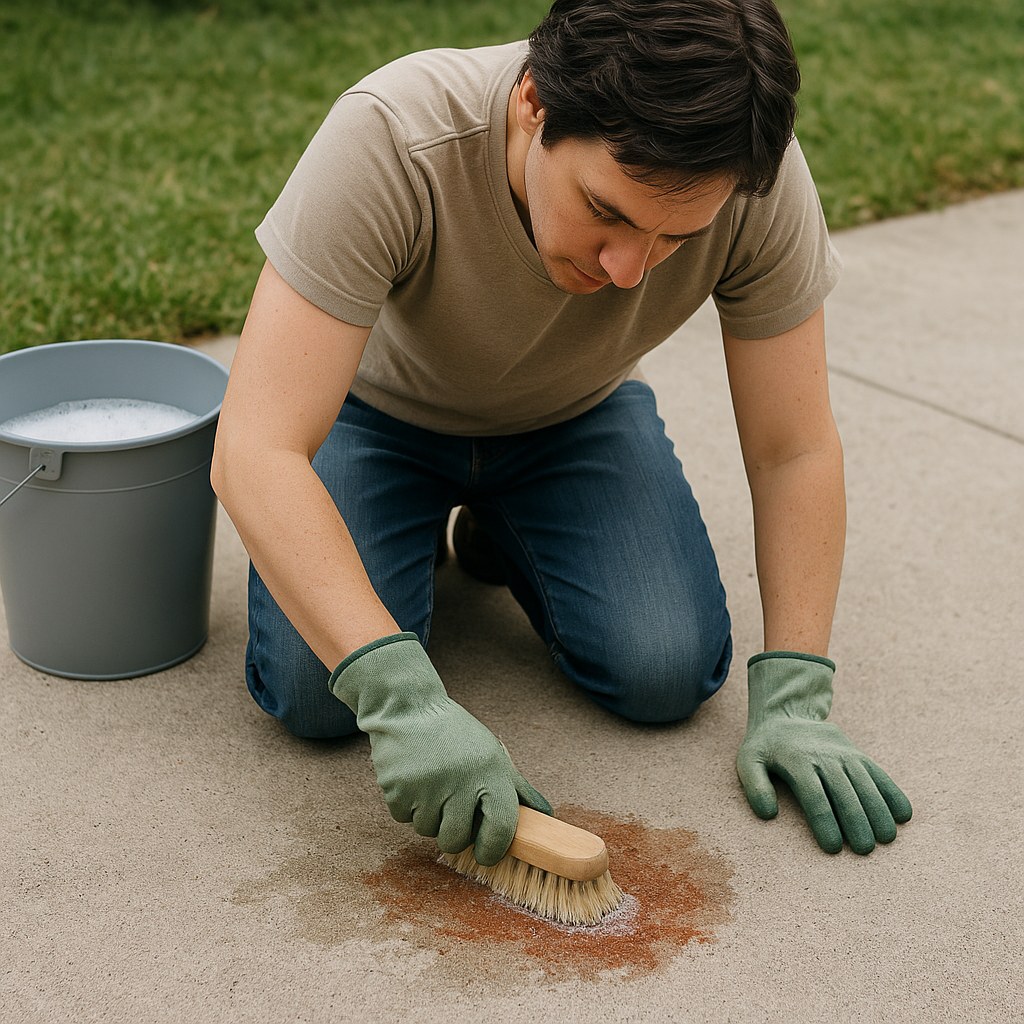
Rust Needs Extra Care
Many rust removers are strong acids. They can burn skin, harm plants, and damage stone, and they must never touch bleach. Read the label for the exact acid. Do not use products with hydrofluoric acid or ammonium bifluoride at home. The federal toxic substances agency says weaker hydrofluoric acid solutions may cause almost no pain at first and serious injury 12 to 24 hours later. If any gets on you, rinse with water, call Poison Control at 800-222-1222, and get medical help.
Fix the source as well: metal furniture feet, fertilizer pellets, or sprinkler water high in iron.
Pressure Washing
Use it only if the surface maker allows it. Start with a wide tip and low pressure in a corner. The CDC says never to aim it at people, to use a working GFCI, and to keep a gas washer at least 20 feet from doors, windows, and vents.
What Does Professional Cleaning Cost?
Thumbtack data puts the national average for pressure washing a patio at $223 to $481, and the overall national average for pressure washing at $217 to $459. Rust and oil stains may need extra treatment, so describe the stains when you ask for a quote.
When to Stop
Call a stone or hardscape professional if the stone is marble, limestone, or travertine, the stain is deep rust, the surface is sealed or colored, or two tries have not helped. Repeated scrubbing can do more damage than the stain.