

Updated Nov 23, 2026
Dead or Diseased Tree Limbs: What Is Safe to Cut
Spot dead and diseased limbs, know which small ones you can prune from the ground, and hire an arborist for anything high, heavy, or near wires.
Cut only small dead limbs that you can reach with both feet on the ground, using hand pruners or loppers, with no wires nearby. Everything else belongs to a certified arborist or your utility. Dead wood is brittle. It can break without warning and fall in a direction you did not plan.
Looking for more guidance? Take a look at our Maintenance overview.
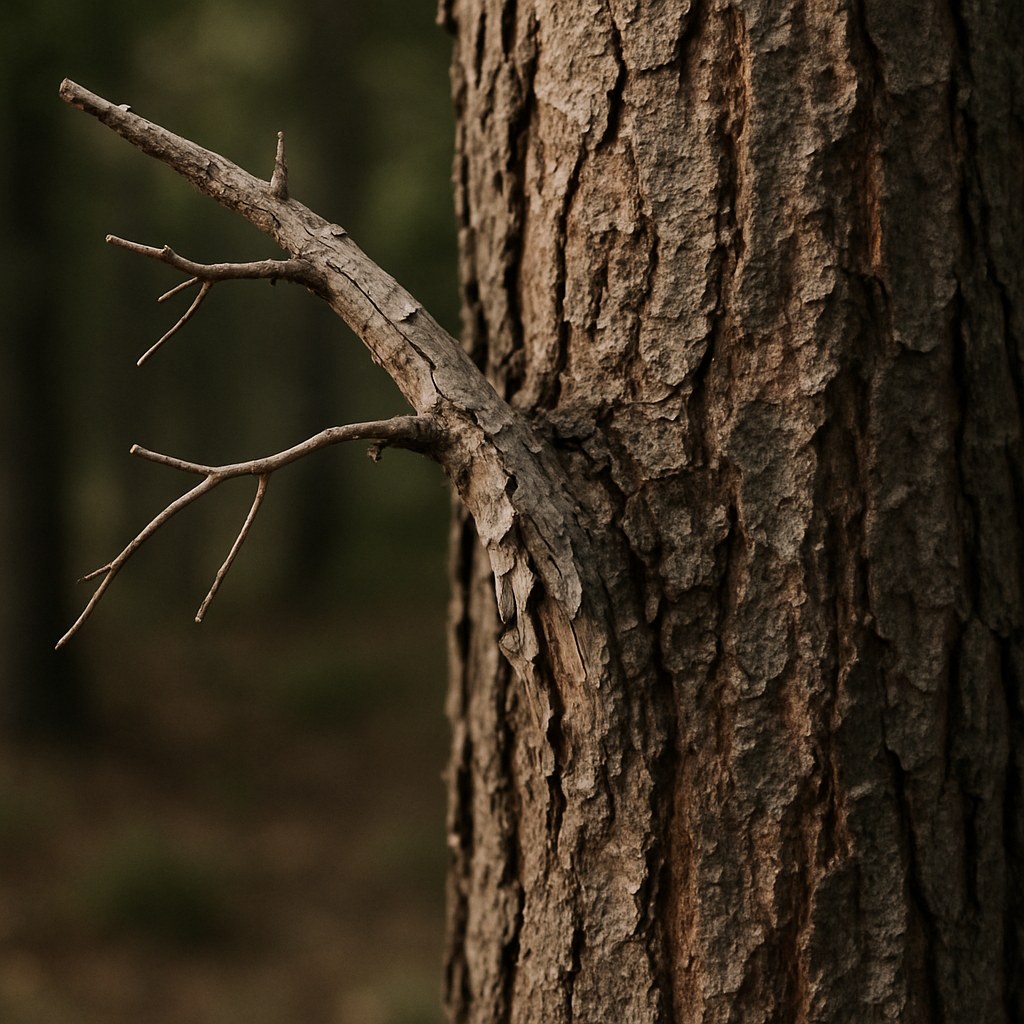
Is It Dead or Diseased?
| Sign | What it may mean |
|---|---|
| No buds or leaves when the rest of the tree has them | Dead limb |
| Bark falling off, twig snaps dry | Dead limb |
| Leaves still hanging in winter on one branch | Limb died in the growing season |
| Sunken or oozing bark | Canker. Ask an arborist |
| Mushrooms on the trunk or at the base | Decay. Ask soon |
| Deep crack where a limb joins | Possible failure. Keep clear |
| Sudden wilting of a whole tree | Disease or root damage. Ask quickly |
Look from the ground. Binoculars help. Do not stand under limbs that worry you.
Who Should Cut It
| Limb | Who |
|---|---|
| Pencil to thumb size, waist to shoulder height | You |
| Larger, higher, or heavy | Arborist |
| Near any wire | Utility |
| Over a house, car, or walkway | Arborist |
| Broken and hanging after a storm | Arborist. Keep people away |
| Whole dead tree | Arborist |
The International Society of Arboriculture says tree work should be done only by those trained and equipped for it. The University of Minnesota Extension says never to use a chainsaw above your shoulders or on a ladder, not to prune near utility wires, and to leave large trees to professionals.
How to Cut a Small Dead Limb
Do this only within the limits above.
- Look up and around for wires, hanging branches, and nests.
- Put on gloves, eye protection, and sturdy shoes. Keep people and pets back.
- Clean the blades. Use rubbing alcohol if disease is possible, and again between trees.
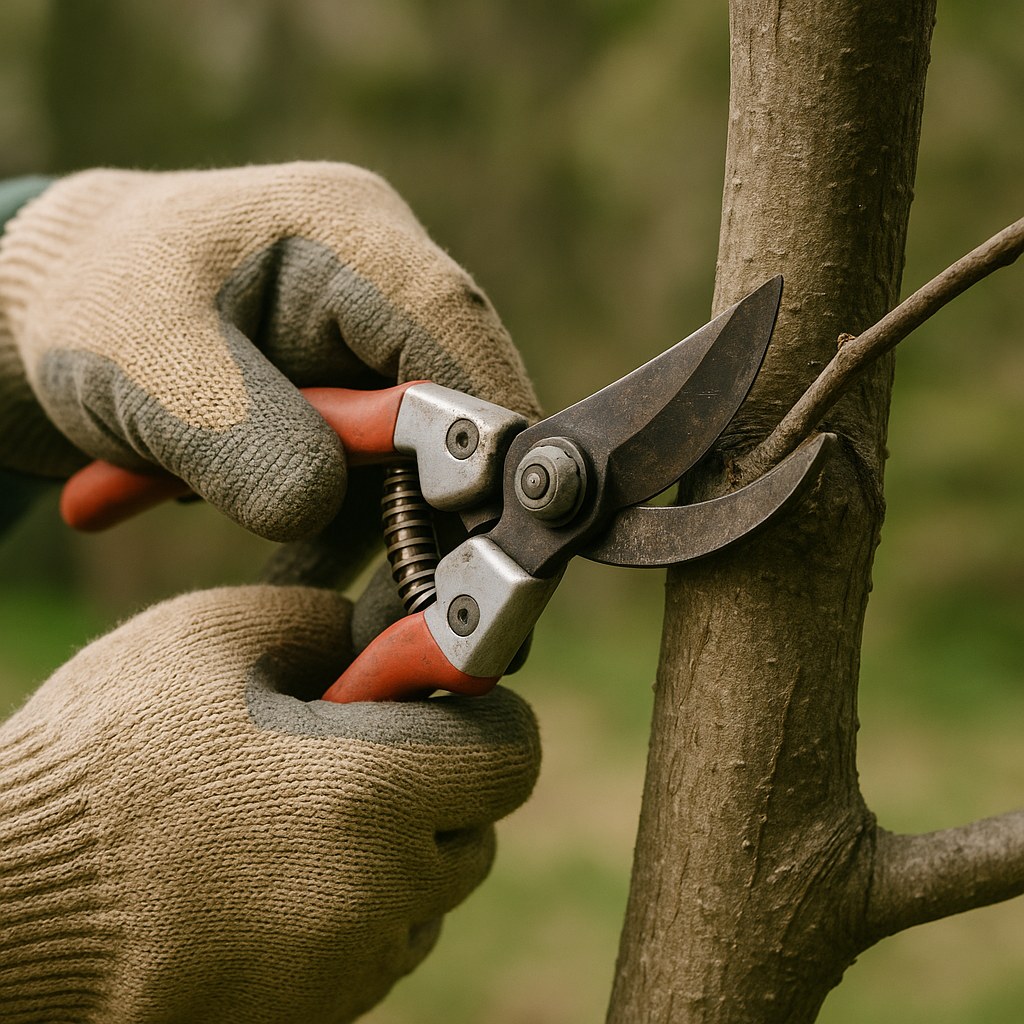
- Find the collar, the slightly swollen ring where the limb joins.
- Cut just outside the collar with pruners or loppers. Do not leave a long stub or cut flush. If living bark has grown out along a dead limb, cut just beyond it, as the ISA pruning guide shows.
- Leave the cut bare. The ISA says wound dressings do not speed healing. Oak wilt areas are an exception, so ask locally.
- Bag diseased wood if your extension office advises it.
If a limb will not cut with loppers, it is too big for this method. Stop rather than switching to a saw overhead.
Timing
Dead wood can come off any time. Live cuts are different. In Minnesota the Extension warns not to prune oaks from April through October because of oak wilt. Ask your local extension office about your trees.
Hiring an Arborist
- Verify the ISA certification number.
- Get proof of liability and workers' compensation insurance.
- Ask for a written scope and whether they will identify the disease.
- Say no to topping and to climbing spikes on a tree you are keeping.
- If wires are near, ask the utility first and check that the crew is qualified.
Thumbtack data puts the national average for hiring an arborist at $278 to $1,054, and tree trimming at $402 to $1,158. For a single branch, HomeGuide puts a small or medium one at $75 to $250 and a large limb over 10 feet at $150 to $850.