

Updated Nov 23, 2026
Hiring a General Contractor for a Bathroom Remodel
Decide whether you need a general contractor, write a scope that gets comparable bids, ask the right questions, and sign a contract that protects you.
Write down what you want done before you call anyone. Then get at least three written bids on that same description, check licenses and insurance yourself, and choose the contractor whose bid is the most complete and whose answers are the clearest. Price comes after that.
Looking for more guidance? Take a look at our Improvements overview.
A bathroom needs a plumber, an electrician, a tile setter, and a carpenter, in order, in a room that barely fits one of them. You are mostly hiring someone to run that sequence well.
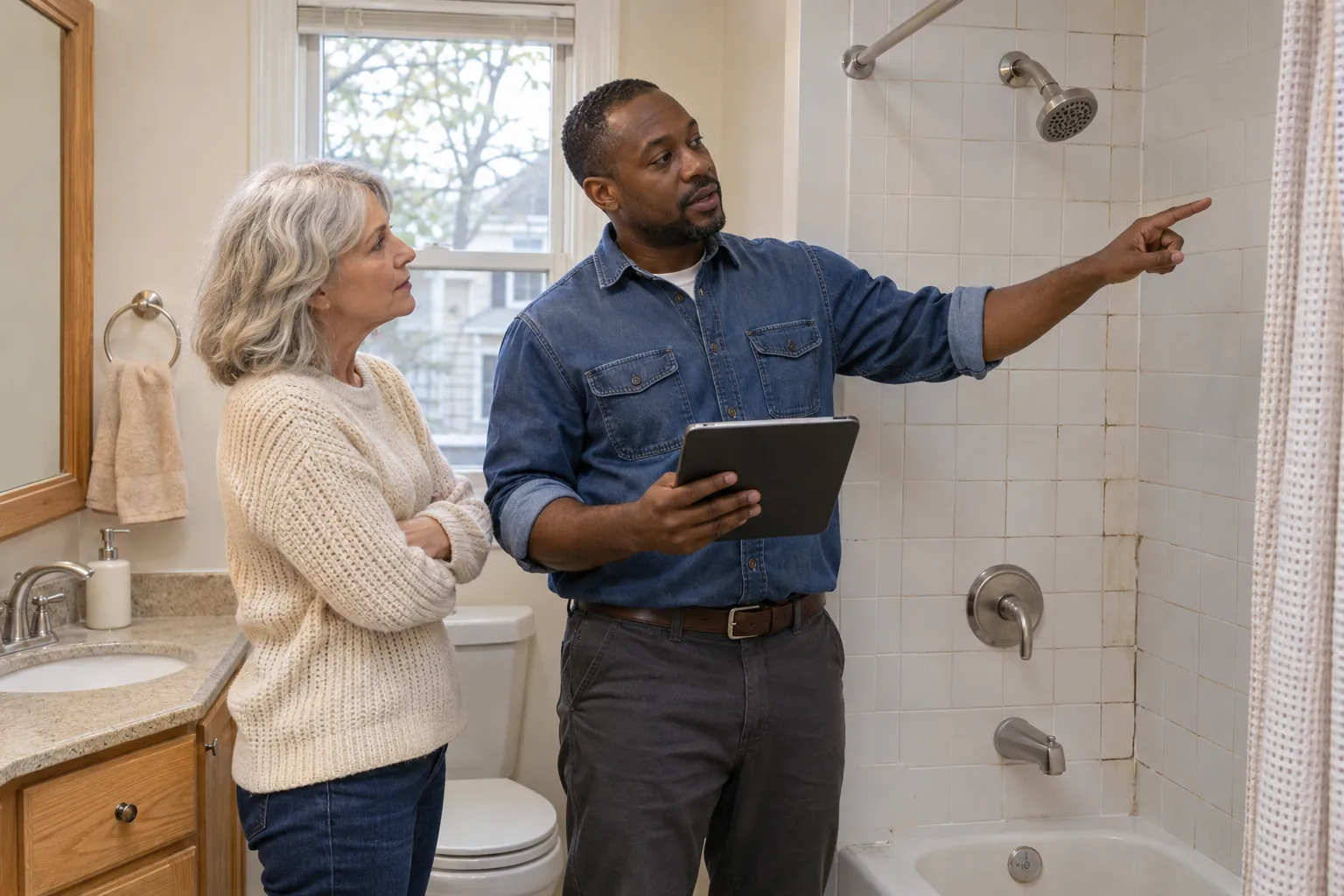
Do You Need a General Contractor?
| Your project | Who to call |
|---|---|
| Paint, mirror, hardware | You, or a handyperson |
| New vanity, toilet, or faucet in the same spot | A plumber or a handyperson allowed to do that work where you live |
| New tub or shower with tile, same layout | A bathroom remodeler or general contractor |
| Moved fixtures or walls, structural repair | A general contractor, with a designer or engineer if needed |
Managing the trades yourself can save the contractor's markup, which Thumbtack says can be 10% to 30%. It only works if you can be home, you know the order, and you have someone to call when the plumber finds a rotten joist. You may also become responsible for more than you expect. California's contractor board explains that when you sign a permit as an owner-builder, you take on full responsibility for the project, and you can be considered an employer if you hire unlicensed help.
Write the Scope
One page is enough. Send the same page to everyone.
- Layout: which fixtures stay put, which move
- Demolition: down to the studs, or less
- Shower or tub: one-piece, panels, or tile, with sizes
- Waterproofing: ask them to name the system they propose
- Fixtures: models if you have chosen them, allowances if you have not
- Ventilation: a fan ducted outdoors
- Electrical: outlets, lights, heated floor, any new circuit
- Floor and walls: material, and where each one stops
- Not included: hallway floor, painting the bedroom, and so on
If you are still deciding what belongs on that page, start with planning a bathroom remodel.
Find Three You Would Let In
Ask neighbors with a bathroom you have actually seen, your local building supply store, and any tradesperson you already trust. Look for recent bathrooms, since a good deck builder may not be a good tile contractor. Casa can also research contractors near you and ask for quotes. You decide who to hire.
Before the first visit, look up each license on your state or local site. The FTC advises considering only contractors who are licensed and insured, and checking rather than taking their word for it. Not every state licenses general contractors, so ask your building department what applies to you. Request certificates for liability insurance and workers' compensation straight from the insurer.
Questions That Sort People Out
- How will you waterproof this shower, and will you test it before tile goes on?
- What do you usually find behind walls like these, and what does that add?
- Which parts are subcontracted, and are those people licensed?
- Who will be here every day, and who do I call?
- Which permits does this need, and will you pull them?
- How do you contain dust and protect the floors on the way in?
- How many days will we be without a toilet? Without a shower?
- What is not in this price?
- May I call two recent bathroom clients?
You are listening for specifics. Someone who can explain their waterproofing in plain language has thought about the rest of the room too. Pay attention to how quickly they answer you now, when they are still trying to win the job.
Compare the Bids
Put the bids side by side and mark each line as included, excluded, or unclear. A low number often means missing waterproofing, disposal, permits, or realistic allowances. The FTC suggests asking for an explanation when bids differ widely, and not simply taking the cheapest. Our guide to comparing contractor quotes walks through the math with an example.
For a sense of scale, here is what a complete remodel averages nationally. Thumbtack's ranges by size come from Xactware and include labor and materials. The 2025 Cost vs. Value report prices one specific midrange job.
| Bathroom | National average |
|---|---|
| Half bath, 18 square feet | $5,809 to $9,604 |
| Full bath, 40 square feet | $9,809 to $18,640 |
| Primary bath, 100 square feet | $19,974 to $59,433 |
| Midrange remodel of a 5-by-7-foot bath | $26,138 |
Local bids can land well above or below these. Tile, moved fixtures, and what turns up behind the old tub account for much of the difference.
Permits
Let the contractor pull the permit. Being asked to handle it yourself is on the FTC's list of warning signs. With the contractor named on it, the person doing the work is the one answering to the inspector.
What needs a permit varies. In Fairfax County, Virginia, bathroom remodels and relocated fixtures do, while replacing a vanity does not.
Sign Something Specific
The FTC says to get a written contract with the contractor's name, address, phone, and license number, an estimated start and completion date, any promises made out loud, and no blank spaces. For a bathroom, add:
- The scope page, with brands, models, and allowances
- The waterproofing system by name
- Who buys, stores, and checks materials
- Payments tied to finished work, such as "rough plumbing passed inspection"
- A rule that changes are priced and signed before the work happens
- Cleanup, disposal, and working hours
- Labor and material warranties
- Lien releases with each payment
Paying
Keep the deposit small. Some states cap it. California limits a down payment to $1,000 or 10 percent, whichever is less. Our payment schedule guide covers other states and includes a sample schedule for a bathroom. Hold the last payment until the punch list and final inspection are done.
Walk Away If
- They want the whole price up front, or cash only
- They will not put the scope in writing
- They suggest skipping the permit, or using yours
- They cannot show current insurance
- They need an answer today
- They bring the lender with them
Once Work Starts
Have materials on site first. Agree on one way to communicate and one daily check-in. Take photos of the open walls, with a tape measure in the frame, so you will know where every pipe is later.
At the end, run every tap, fill the tub, flush, turn on the fan, check under the vanity with a flashlight, and look at the ceiling below. Collect manuals, warranties, the final inspection, and the leftover tile.
If the house was built before 1978, ask for proof of lead-safe certification before anyone disturbs paint.