

Updated Nov 23, 2026
Damp, Discolored Wall: Find the Cause First
Work out where a damp wall's water comes from, limit damage safely, and know when a stain is just paint and when drywall or mold needs a pro.
Find and stop the water before you paint. A stain that stays the same size may be an old leak. One that grows after rain points outside, and one that grows after showers or laundry points to plumbing. Once the source is fixed and the wall is dry, a firm wall may only need primer and paint. Soft or moldy drywall usually needs to be replaced.
Looking for more guidance? Take a look at our Repairs overview.
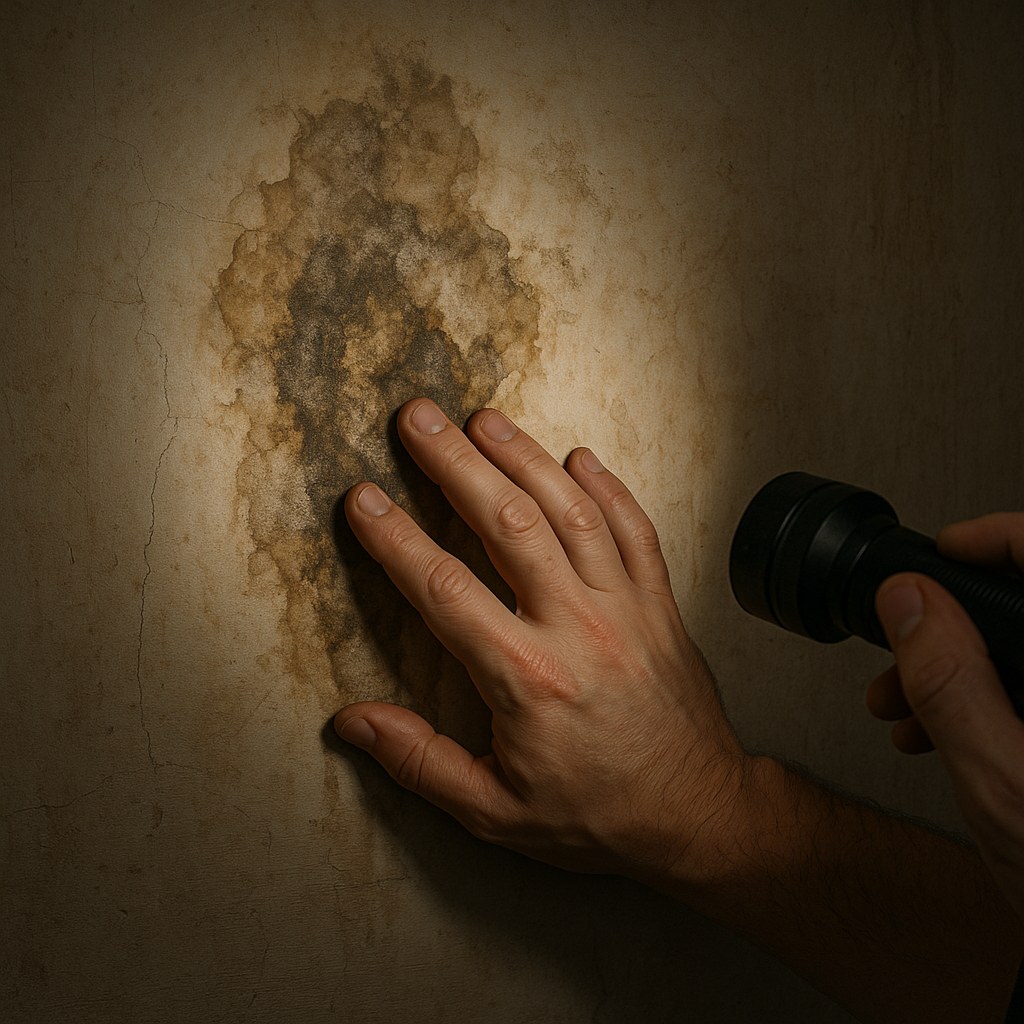
Where Is It Coming From?
| Pattern | Likely source | Who to call |
|---|---|---|
| Grows after rain, upper wall | Roof, gutter, or siding | Roofer or siding contractor |
| Below a window | Failed seal or flashing | Window or siding contractor |
| Below a bathroom, any weather | Plumbing or shower | Plumber |
| Low on a basement wall | Outside drainage or groundwater | Drainage contractor |
| Corners of cold outside walls in winter | Condensation | Ventilation and insulation help |
| Near the AC or furnace | Condensate drain | HVAC technician |
| Near the water heater or laundry | Supply, drain, or hose | Plumber |
To check for a hidden plumbing leak, turn off every fixture and look at the water meter. If it moves after 30 minutes with no water in use, call a plumber.
What to Do Today
- Stay away from wet electricity. If water is near outlets or lights, do not touch them. Turn off the circuit only from a dry spot.
- Stop the water if you can. Close the fixture or main valve if it is plumbing. Use buckets for drips.
- Photograph it with a ruler and the date. Mark the edge lightly in pencil.
- Move belongings and open the area to air.
- Dry it out. The EPA says to dry wet materials within 24 to 48 hours to help prevent mold. Do not blow a fan across visible mold.
- Call your insurer if the damage is sudden. Ask what to save.
Is the Wall Dry, Wet, or Moldy?
| What you find | What to do |
|---|---|
| Dry, firm, old stain | Stain-blocking primer, then paint |
| Damp but firm | Fix the source, dry fully, recheck |
| Small mold on a firm painted wall | Detergent and water, dry. Find the moisture |
| Soft, swollen, or crumbling | Replacement by a professional |
| Larger than 3 feet by 3 feet, or musty inside the wall | Mold or restoration professional |
The EPA says not to paint over mold, because it is likely to peel, and that absorbent materials may have to be thrown away. It does not recommend bleach as a routine step. Cleaning without fixing the leak will not last.
Why Not Cut It Out Yourself?
A wet wall can hide live wires, pipes, and a larger area of mold than you can see. In homes built before 1978 the paint may contain lead, and some older patching and texture compounds contain asbestos. The EPA says not to sand, scrape, or drill suspect material. Opening the wall before the leak is found can also destroy evidence your insurer wants to see.
Get the leak found, then have the wall opened by whoever will repair it, with testing first if the house is older.
If the Wall Is Dry, Firm, and Newer
- Confirm it has stayed dry for a couple of weeks and through one rain.
- Wash it gently and let it dry.
- Apply a stain-blocking primer. Open windows, follow the label, and keep it away from flames.
- Paint with the same sheen. Do not sand paint in a pre-1978 home.
If the stain comes back through the paint, the water is still there.
Who to Call First
Call a plumber for a wet wall near plumbing, a roofer for upper walls, and a restoration company if a large area is soaked. Ask what moisture readings they take, how they will dry it, and whether they will show you the cause. Get a written scope.
If the wall was soaked, Thumbtack puts the national average for water damage restoration at $1,215 to $4,387. Clean-water cleanup is priced at about $3.75 per square foot, and repairing a stained or sagging ceiling runs $500 to $1,000. A plumber or roofer fixing the source comes on top of that.