Updated Nov 23, 2026
Wall Crack Showing Metal or Plastic: What to Do
Identify metal or plastic in a wall crack without touching it, know when wiring or a pipe means stop, and patch only a crack over trim or framing.
Look, don't touch. Metal or plastic in a wall crack is often a drywall corner strip, a screw, or a stud, and you can patch over those. It can also be a cable, an electrical box, a water pipe, or a gas pipe. If it might be one of those, don't cut, sand, or patch. Call the right trade first.
Looking for more guidance? Take a look at our Repairs overview.
You can't confirm it is safe by guessing, and a patch over a live wire or a leak only hides it.
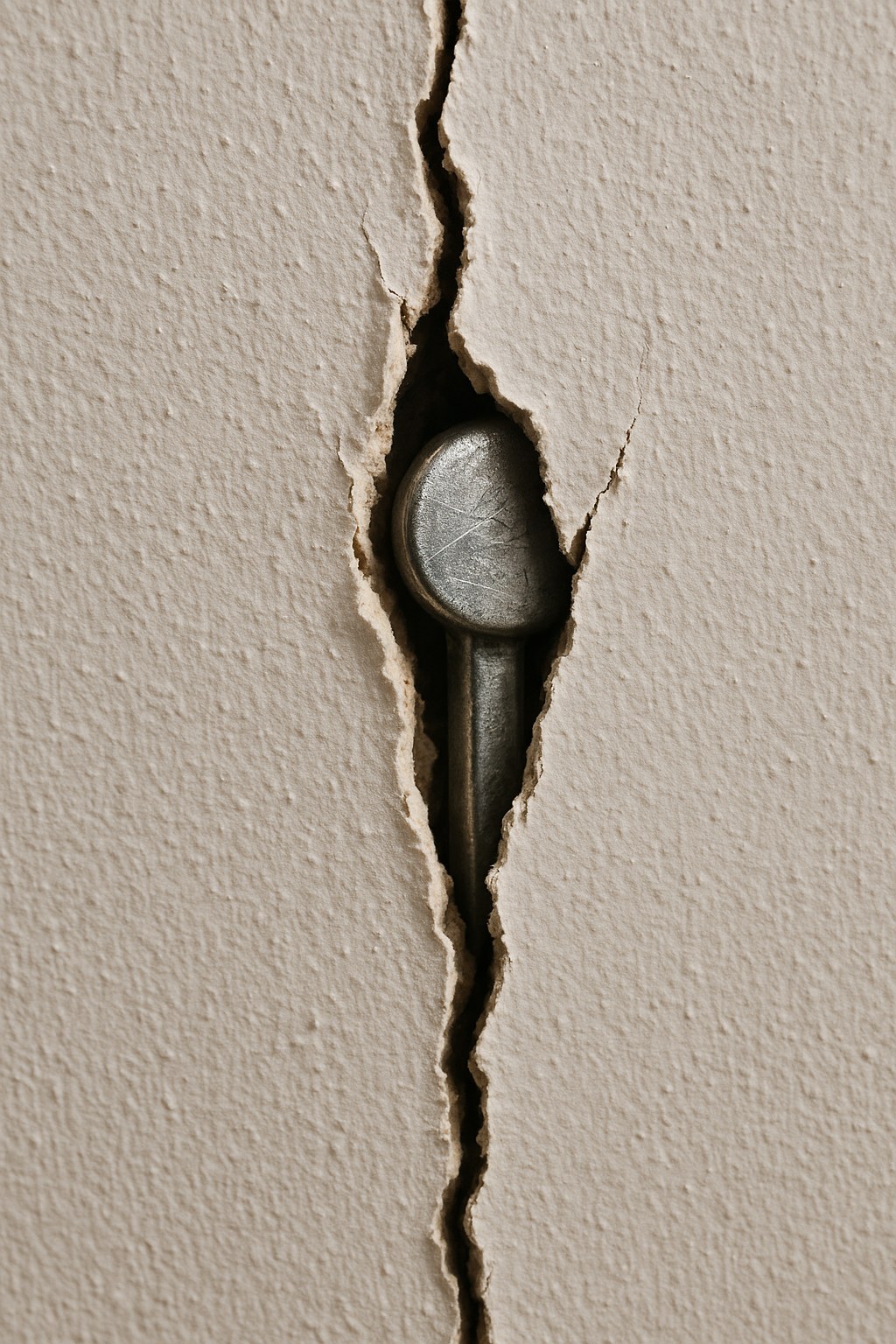
Look Without Touching
- Keep fingers, screwdrivers, and putty knives out of the crack.
- Shine a flashlight in from several angles and take a close photo.
- Note the shape, color, and whether it is flat, round, or flexible.
- Check what is on both sides of the wall: outlets, switches, a bathroom, a kitchen, a water heater, a gas appliance.
- Look for brown stains, bubbling paint, or mold.
- Think about what changed. A new crack after drilling or hanging something may mean a screw has hit a wire or pipe.
What You Might Be Seeing
| What it looks like | Likely | What to do |
|---|---|---|
| Thin metal strip along an outside corner | Corner bead | Patch it |
| Round metal dot, sometimes with a bulge | Screw or nail head | Reset or replace it, then patch |
| Flat metal, vertical, every 16 or 24 inches | Metal stud | Patch the surface |
| Perforated metal or mesh | Old drywall patch | Skim and sand, if the paint and plaster are safe |
| Flat metal plate nailed to a stud | Nail plate that guards a wire or pipe | Don't drill or screw near it. Patch the surface only |
| Plastic-sheathed cable, white, yellow, orange, gray, or black | Electrical cable | Stop. Electrician |
| Separate colored wires, or a metal or plastic box | Wiring or electrical box | Stop. Electrician |
| Flexible metal tube or ridged metal cable | Armored cable or gas tubing | Stop. Treat as both until a pro says otherwise |
| Copper, gray steel, or plastic pipe | Water, drain, or gas | Stop if it is wet, or if you can't tell which |
| Large flat or foil-covered metal | Duct | Call HVAC if it is dented or torn |
Color alone is not proof. Cables and pipes come in many colors.
If It Might Be Wiring
Keep away from it and keep others away. If you see sparks or smell burning, leave and call 911. Otherwise, turn off the breaker for that area if you know it and can reach the panel safely, and call a licensed electrician.
Don't use a non-contact tester as permission to keep going. Klein's instructions for one common model say to test it on a known live circuit before and after each use, and it can't tell you whether a damaged cable is safe to cover. The electrician should check why the cable is exposed and protect it before anyone closes the wall.
If It Might Be a Pipe
- Gas, or you aren't sure: Don't touch it. If you smell gas, leave and call your utility or 911 from a safe place. If there is no smell, ask your gas utility or a plumber to look.
- Water, and the wall is wet or stained: Turn off the water at the main if it is leaking, stay away from outlets on that wall, and call a plumber. The EPA says to dry wet materials within 24 to 48 hours to prevent mold.
- Water, and everything is dry: Ask a plumber whether the pipe is loose or rubbing. If it is fine, a drywall contractor can patch over it and should know it is there. Don't cut a square around it yourself.
Patch a Crack Over Framing or a Corner Strip
Do this only if you are sure it is corner bead, a fastener, a stud, or an old patch, the wall is dry, and the home doesn't have lead paint or old plaster. The EPA says work in a pre-1978 home can create dangerous lead dust, and that some building materials contain asbestos and shouldn't be sanded, cut, or scraped.
- Brush away loose dust. Don't widen the crack or dig.
- Reset a popped fastener so it sits just below the surface. Don't add a new screw near a nail plate, outlet, switch, or pipe.
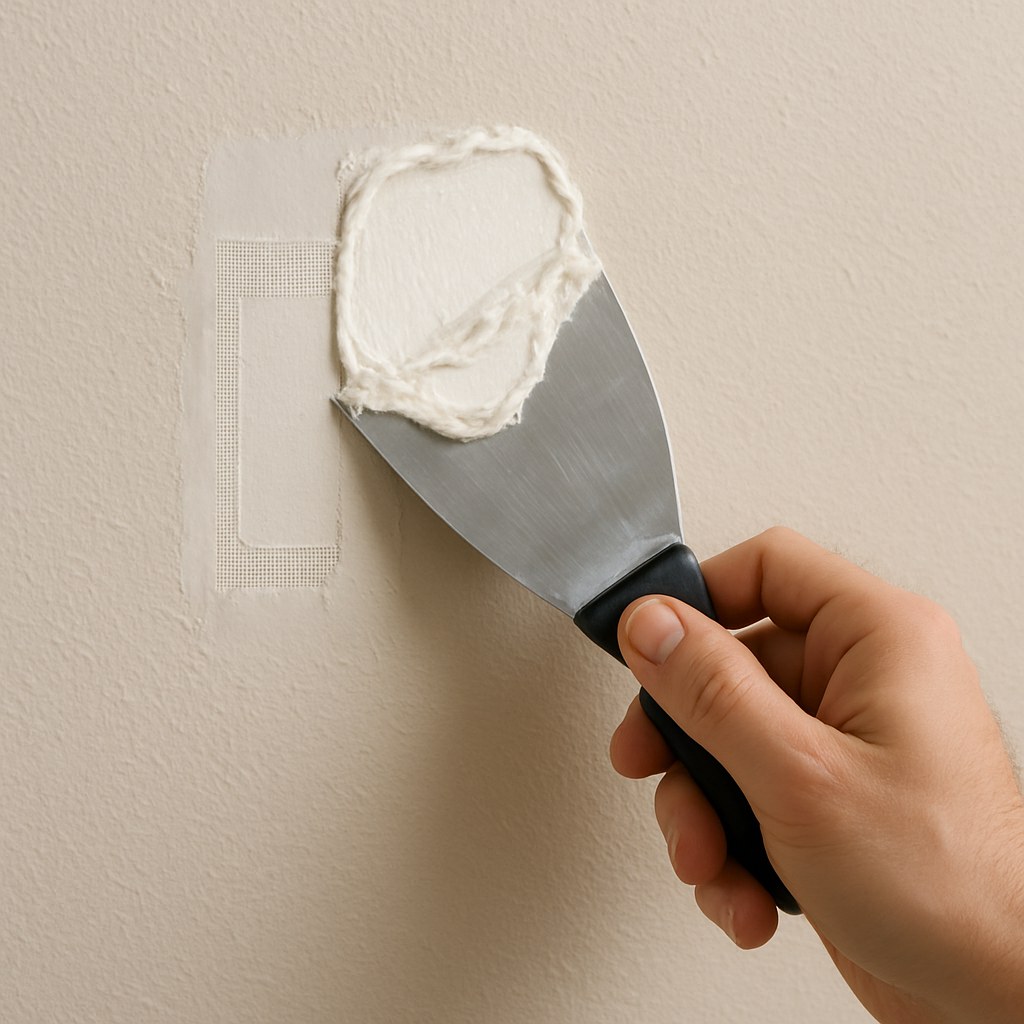
- Press joint compound into the crack with a putty knife.
- Lay drywall tape over it, press it in, and scrape off the extra.
- Add two or three thin, wide coats, letting each one dry.
- Smooth it with a damp sponge to keep dust down.
- Prime and paint.
A bent corner bead or a large loose area is a drywall contractor's job.
How Much Will This Cost to Fix?
If it is only drywall, Thumbtack puts the national average for drywall repair at $294 to $920. If wiring is behind the crack, Thumbtack puts electrical jobs at $193 to $648. A leaking pipe means a plumber, which Thumbtack puts at $205 to $654 on average.
Who to Call
| What you found | Call |
|---|---|
| Wire, cable, box, buzzing, warm wall | Licensed electrician. 911 for sparks or smoke |
| Gas pipe or smell | Gas utility or 911, from outside |
| Wet pipe or stain | Plumber |
| Wide or growing crack, bulge, sticking doors | Structural engineer or foundation contractor |
| Old plaster, or a home built before 1978 | Contractor certified in lead-safe work |
| Corner, fastener, or old patch too big to fill | Drywall contractor |
Send the photo first. It often saves a visit.