

Updated Nov 23, 2026
How to Increase Airflow to One Room
Find out why one room is stuffy, hot, or cold, then fix the filter, vents, return path, and dampers. Includes what not to block and when ducts need a pro.
If only one room has weak airflow, check that the supply vent is fully open and clear, that air can get back out under the door, and that the filter is clean. If the whole house is weak, start with the filter and the return vents. A room that stays off after that usually has a duct problem or a heat problem, such as sun, poor insulation, or a long run from the furnace.
Looking for more guidance? Take a look at our Repairs overview.
Feel the air at the vent with the fan on. That tells you which path to take.
| What you find | Likely cause | Try |
|---|---|---|
| Weak air in every room | Dirty filter, blocked return | Replace, clear |
| Weak in one room, strong in the next | Closed vent, blocked duct or damper | Open, clear, then pro |
| Strong air, still hot or cold | Sun, windows, insulation | Shade, seal, insulate |
| Better with the door open | No path back to the return | Keep it open or add a transfer grille |
| Feels stuffy, no vent in the room | No fresh-air path | Window fan, or HVAC advice |
| Worse after adding a room or finishing an attic | Duct undersized | HVAC technician |
| Upstairs hot in summer, downstairs cold in winter | Warm air rising, attic heat | Balance dampers, seal and insulate |
| Came on suddenly | Damper moved, duct came loose | Check dampers, then pro |
Why Good Airflow Matters
A room that does not move air holds on to moisture, dust, and smells. Watch for damp windows, a musty closet, or mold in corners, especially behind furniture on an outside wall. Weak airflow also makes the system run longer to please one thermostat, so the rest of the house can end up too hot or too cold.
Step 1: Is the Problem in One Room or the Whole House?
- Set the fan to On at the thermostat.
- Hold a tissue in front of a good vent and note how far it moves.
- Do the same at the problem room, with the door open and then shut.
- If it gets stronger with the door open, air cannot get back out.
- Note the temperature in both rooms with the same thermometer, at the same time of day. It helps you see later what worked.
If your house has more than one thermostat, each zone has its own motorized dampers. A whole zone that is weak points to a damper or its control, which is a job for a technician. With ductless units, wash the unit's own filter and check that its fan is not set to low or quiet.
Step 2: How to Fix Whole-House Airflow Issues
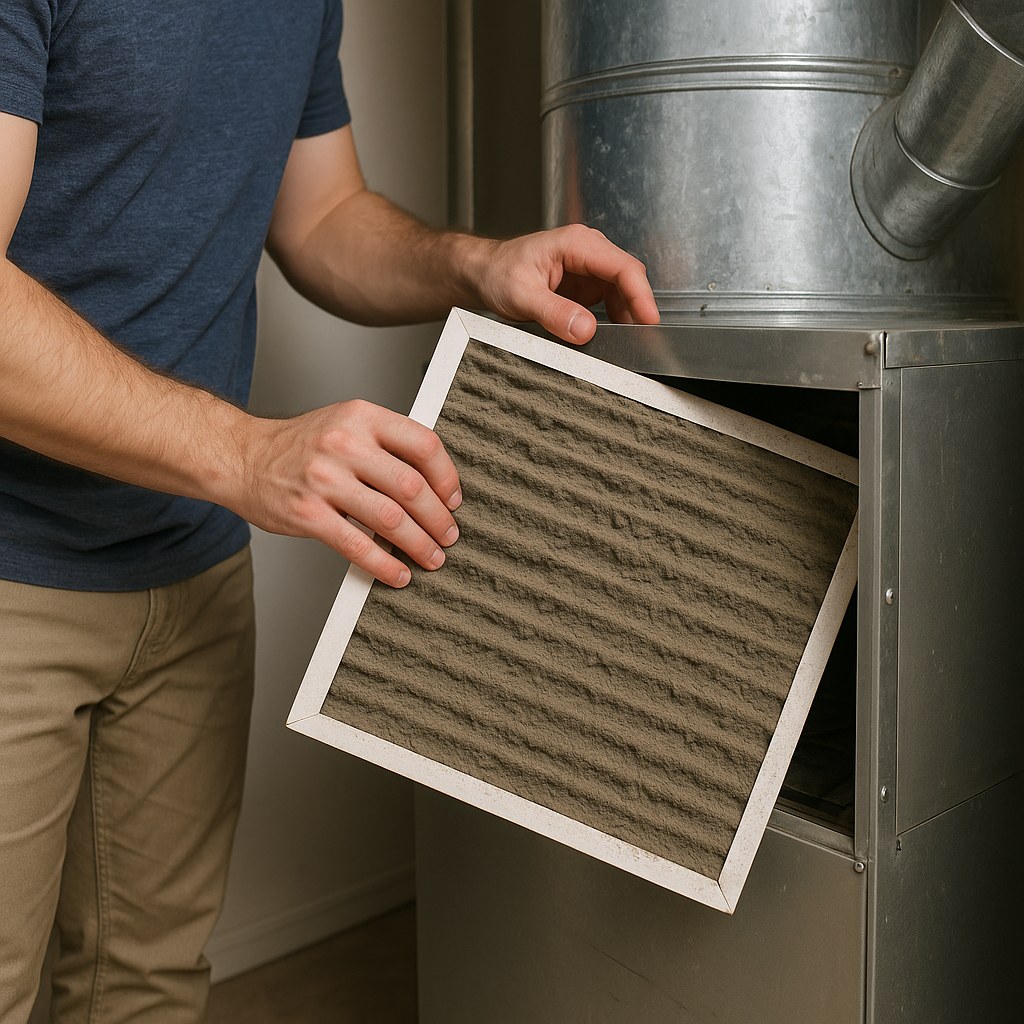
- Check the filter. ENERGY STAR says to check it every month, and change it at least every three months, because a dirty one slows airflow. Turn the system off first, and match the size and arrow direction. The filter is in a slot at the air handler or behind a large return grille, and some homes have more than one. A filter that is too thick or too restrictive can also cut airflow, so use what your system calls for.
- Clear the return vents. These are usually the larger grilles with no lever. Leave a foot or two of space around furniture, rugs, and curtains.
- Open the supply vents. Do not close vents in spare rooms to push air elsewhere. It can raise pressure in the ducts and make leaks worse.
- Look for frost or noise at the equipment. If there is ice on the coil or a bad smell, turn it off and call.
Let it run for 15 minutes, then feel the vents again.
Step 3: How to Fix Airflow in a Single Room
For rooms with HVAC vents
- Move what is blocking the vent: a bed, rug, curtain, or shelf. If furniture has to stay, a plastic deflector can throw the air past it.
- Open the lever on the vent, and look for a damper on the duct in a basement or utility area. A lever handle turned across the duct is closed. Mark its position before you move it, and change only one at a time. Wait a day before you judge it.
- Clean the grille. Turn the system off, unscrew the grille, and vacuum what you can reach at the opening. Look in with a flashlight for a toy, a construction scrap, or a crushed boot. Do not go into the duct or reach past a liner.
- Give air a way back. Keep the door open. If that helps a lot, ask an HVAC technician about a transfer grille or jump duct. A thick new carpet or a new door often starts this problem. Do not cut a door that may be fire-rated or leads to the garage.
- Run the fan for 20 minutes each hour, or set it to circulate.
- Use a small fan in the doorway to pull conditioned air in.
A plug-in register booster can help a vent at the end of a long run, but only after the restrictions are gone. It cannot pull air through a crushed duct.
For rooms without HVAC vents
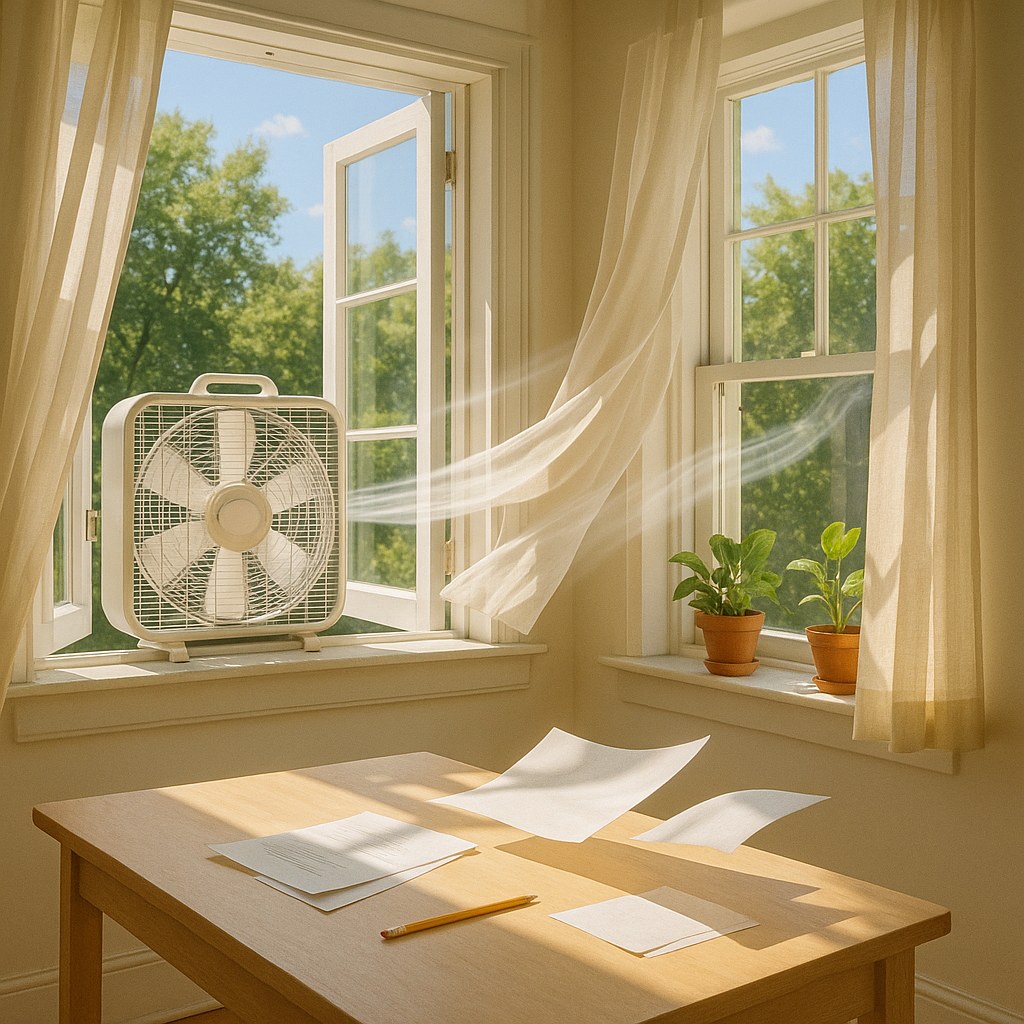
Put a box fan in an open window, facing out, and open a second window or the door across the room. It pulls air through. Fifteen to twenty minutes usually clears a stuffy room. Do this only when the outdoor air is clean and cooler. Do not block an exit window, and do not leave a fan in a window a child can reach.
A ceiling fan moves air but does not cool it, so switch it off when the room is empty. In summer, set it counterclockwise so you feel a breeze. In winter, run it clockwise on low to push warm air down along the walls.
Look at the Ducts
ENERGY STAR says about 20 to 30 percent of the air in a duct system is lost to leaks, holes, and poor connections, and lists rooms that are hard to heat or cool as a sign. Look at any duct you can see without going into an attic or crawl space. Check for a gap, a crushed or kinked flexible duct, or a duct that has fallen off.
If you can reach one safely, use mastic or metal tape, not ordinary duct tape. Leave attics, crawl spaces, and anything near a furnace flue or asbestos-looking insulation to a pro.
If Air Is Fine but the Room Is Not
Sun, windows, an outside wall, an attic above, or electronics can overwhelm good airflow. So can a room over a garage or a porch. Try shades, a better seal at windows, and attic insulation before you buy a bigger unit. Air sealing and insulation can cut heating and cooling costs, but the savings vary by home.
When to Call an HVAC Technician
- Airflow is weak everywhere after a new filter.
- A duct is crushed, disconnected, or out of reach.
- The room was added or rearranged, and the ducts were not changed.
- The system ices up, trips its breaker, or makes a new noise.
- You have fuel-burning equipment and are sealing a lot of leaks. Ask for a combustion safety check.
A good visit includes measuring the pressure in the ducts and the airflow at each vent, checking the blower and coil, and inspecting the run to that room. Fixes range from rebalancing dampers or reattaching a duct the same day to adding a return or resizing a run, which is a bigger project. If you rent, send the landlord your tissue test and temperatures. Ducts and equipment are usually theirs.
Thumbtack data puts the national average for HVAC repair at $191 to $842. If the ducts themselves have to be replaced, its air duct replacement guide puts the national average at $393 to $1,421. Ask for measured airflow at each vent and a written fix. Be wary of an immediate quote for a bigger unit. If the problem is the ducts, a bigger one will not fix it.