Updated Nov 23, 2026
How to Fix a Frayed or Loose Carpet Edge
Stop a carpet edge from unraveling, tuck or restretch one that has lifted, and re-glue or tape it, based on how your carpet is held down.
Cut off loose yarn at the edge, do not pull it, because pulling unravels more. Then seal the cut edge with a carpet edge sealer, tuck it under the metal strip or tack strip, or cover it with a transition strip. If the edge has lifted but is not frayed, it usually needs to be hooked back on the tack strip, re-glued, or taped, depending on how it was installed.
Looking for more guidance? Take a look at our Repairs overview.
| What you see | Best fix |
|---|---|
| Loose yarn or fuzz | Trim, then seal |
| Edge lifted from a tack strip | Hook it back, restretch if it won't reach |
| Edge lifted from glue | Re-glue |
| Loose-lay or rug edge | Carpet tape or rug pad |
| Frayed edge at a doorway | Transition strip |
| Seam opening in the middle | Installer |
| Wrinkles across the room | Restretch, usually an installer |
| Loose on stairs | Installer |
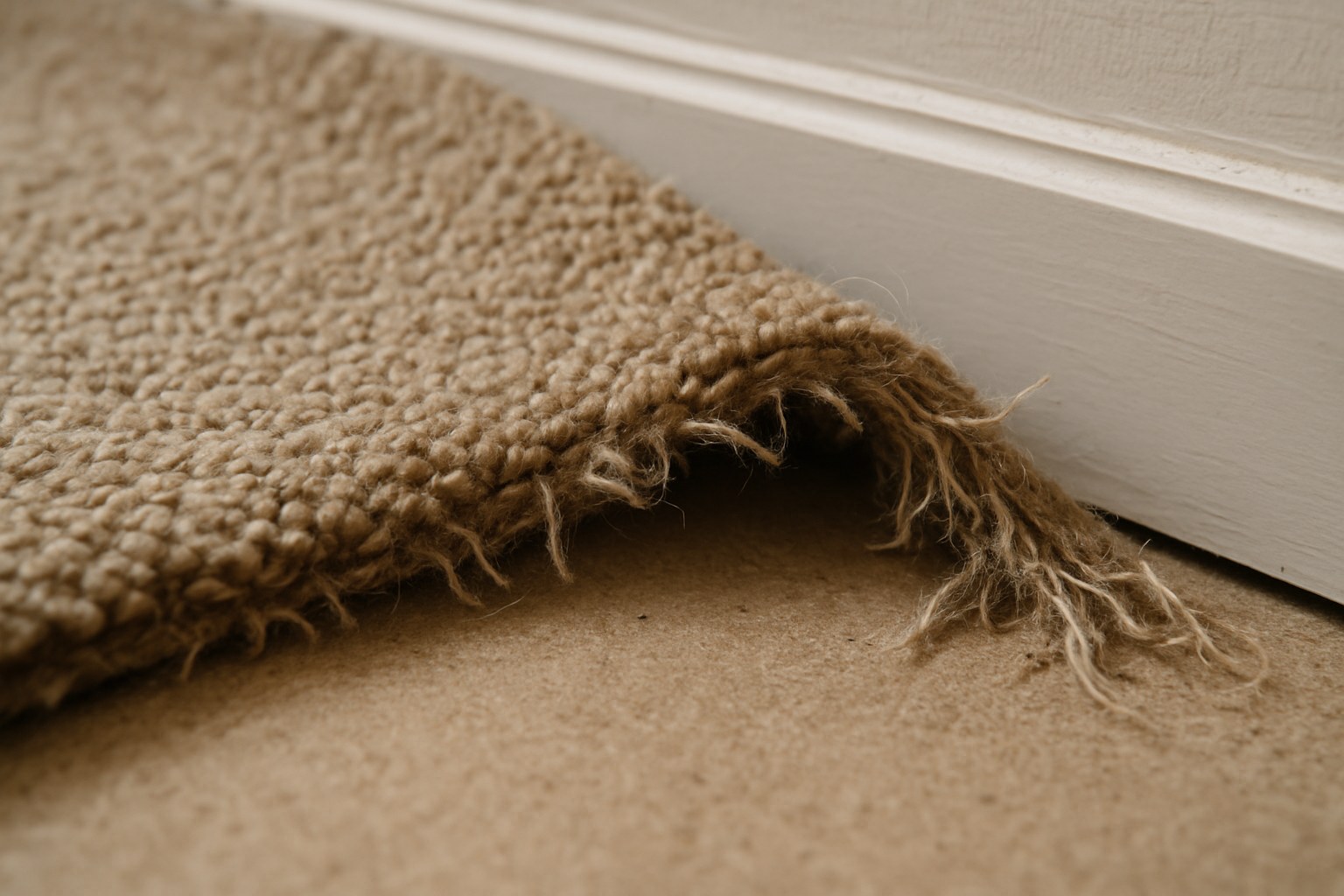
Stop the Fraying First
- Vacuum the edge and lift the loose yarn so you can see it.
- Trim only the loose strands with sharp scissors. Do not cut into the backing, and do not pull a loop.
- Apply carpet edge or seam sealer to the cut edge of the backing. The Carpet and Rug Institute says it should cover the thickness of the backing without getting on the face yarns.
- Let it dry before you walk on it or tuck it.
- Cover it if it will be stepped on: a transition strip, a threshold, or a tucked edge.
Hot glue is a short-term fix and gets stiff. For a looped (berber) carpet, cut a run, never pull it. It can open a row across the room.
Find Out How It Is Held
Put on a pair of work gloves to protect your hands from sharp tack strips or staples, get down on the floor, and gently lift the loose edge.
- Is it stretch-installed? If you see a narrow wooden strip lined with sharp, angled pins running along the wall, your carpet is stretch-installed. This is the most common method for residential homes. The tack strips grip the back of the carpet, holding it in place under tension.
- Is it glued down? If you see patches of old, dried adhesive on the subfloor and the carpet backing feels stiff, it's a glue-down installation. This is more common in commercial spaces or on concrete subfloors like in a basement.
- Is it loose-lay? If there are no tack strips and no signs of glue, it might be a loose-lay carpet or area rug. These are simply held in place by their own weight and friction, often with tape at the edges.
If you see damp, stains, rust, or a musty smell, find the moisture before you fix the edge.
Fix a Stretched-In Edge
What You'll Need:
- Work gloves and safety glasses
- Pry bar and hammer (if replacing tack strips)
- Carpet knee kicker
- Stair tool or a sturdy putty knife
- Utility knife
Assess the Tack Strip Condition
- Check for Damage: Look for broken wood, rusty or missing nails.
- Check for Looseness: Use a flathead screwdriver to gently press on the strip. If it wiggles or moves, it’s not secure enough to hold the carpet.
- Look for Moisture: Check the subfloor for any dark stains, which could indicate a moisture issue that caused the tacks to rust and fail. If you see signs of water damage, you’ll need to address that leak before fixing the carpet.
If the tack strip is loose or damaged, you’ll need to replace it. If it’s in good condition, you can skip to the next step.
How to Replace Damaged Tack Strips
- Safety First: Put on your safety glasses. Removing old strips can send nails flying.
- Pry It Up: Slide a pry bar under the damaged tack strip and carefully lift it off the subfloor.
- Clean the Area: Vacuum up any dust, wood splinters, or debris.
- Install the new strip. The pins must angle toward the wall. The Carpet and Rug Institute says the gap to the wall should be slightly less than the carpet's thickness, and no more than 3/8 inch.
- Secure it. Nail it into wood. On concrete, use the fasteners made for that and check for pipes or radiant heat first. If it meets old tile or black adhesive, stop and have it tested for asbestos. The EPA says vinyl tiles and some backing and adhesives may contain it.
Securing the Carpet Edge
Now that your tack strips are solid, it's time to get the carpet back on them. The technique varies slightly depending on where the loose edge is located.
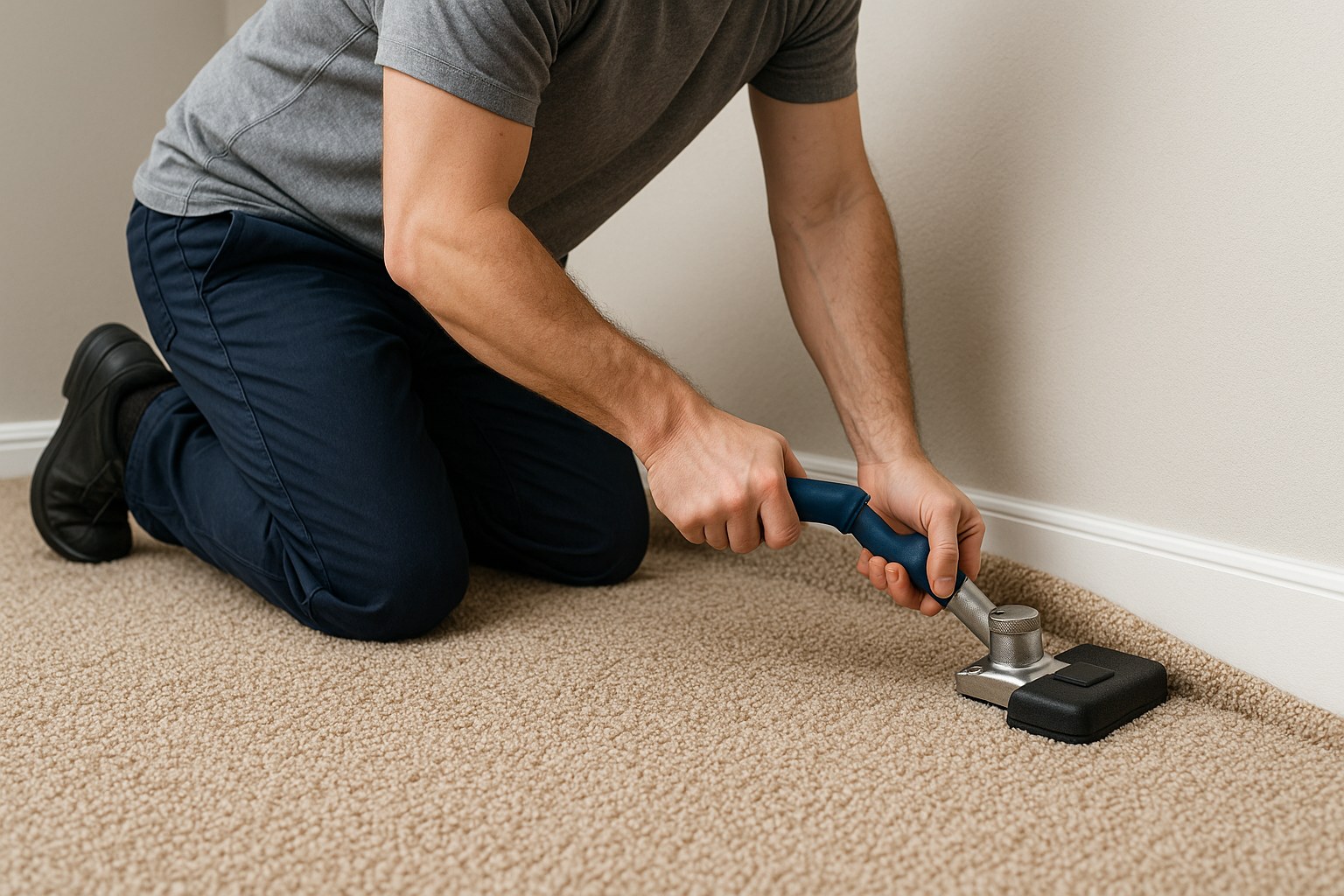
Along a wall
A knee kicker, which you can rent, hooks a small edge back on. It is not enough to stretch a whole room. The Carpet and Rug Institute requires a power stretcher for that.
- Position the Knee Kicker: Place the head of the knee kicker (the part with teeth) onto the carpet about 4 to 6 inches away from the wall.
- Push it in. Bump the padded end with your knee, lightly, until the backing catches on the pins. If it will not reach, do not force it.
- Tuck the Edge: Use a putty knife or a stair tool to press the edge of the carpet down into the gap between the tack strip and the baseboard. This covers the edge.
- Trim if Needed: If you have a raw, cut edge with excess material, carefully trim it with a sharp utility knife after tucking, using the baseboard as a guide.
At a doorway
When carpet meets another type of flooring like tile or wood, a transition strip is essential for a clean, durable edge.
- Measure and Cut: Use a tape measure to find the width of the doorway. Cut a new metal or wood transition strip to that length using a miter saw or hacksaw.
- Position the Strip: Center the transition strip over the seam where the carpet meets the other flooring. The edge of the strip should cover the raw carpet edge.
- Secure the Strip: Drill pilot holes through the strip and into the subfloor. Then, drive in the provided screws to fasten it securely.
- Tuck the Carpet: Use a putty knife to tuck the carpet edge neatly under the lip of the transition strip. Give it a gentle tug to make sure it's secure.
Re-Glue a Carpet Edge
What You'll Need:
- Shop vacuum
- Carpet adhesive (look for a product in a squeeze bottle for easy application)
- A heavy object, like a stack of books or a brick wrapped in plastic
What to do
- Clean the Subfloor: Lift the loose edge and thoroughly vacuum any dust and debris from the subfloor. The adhesive needs a clean surface to bond properly.
- Apply Adhesive: Squeeze a thin, continuous bead of carpet adhesive onto the subfloor, about an inch from where the edge of the carpet will sit.
- Press It Down: Firmly press the carpet edge down into the adhesive.
- Add Weight: Place a heavy object on top of the repaired section. This ensures strong contact while the glue cures. Leave it in place for at least an hour, or as long as the adhesive manufacturer recommends.
- Finish Up: Once cured, remove the weight and use your fingers to brush the carpet fibers upright to blend the repaired area.
Tape Down a Loose-Lay Edge or Rug
Use tape made for carpet. It can stain or damage some floors, so test a small spot. Do not use tape on stairs.
What You'll Need:
- Vacuum or broom
- Double-sided carpet tape
What to do
- Clean the Floor: Lift the edge and thoroughly clean and dry the subfloor underneath. The tape won’t stick to a dusty or dirty surface.
- Apply the Tape: Unroll the double-sided carpet tape and apply it to the subfloor along the loose edge. Press it down firmly.
- Expose the Adhesive: Peel off the paper backing from the top of the tape.
- Secure the Carpet: Carefully press the carpet edge down onto the exposed tape. Smooth it out from the center toward the edge to prevent any bubbles or wrinkles.
When to Call an Installer
- The carpet is loose or rippled across a large area.
- You suspect significant subfloor damage from moisture.
- You've tried the DIY methods, but the carpet won't stay put.
- The carpet is on stairs, at a seam, or frayed along a long run.
- The carpet or backing has gone brittle. It may need replacing.
Thumbtack data puts the national average for carpet repair at $158 to $325, and a rippled carpet at $150 to $250. If it is the whole room, ask for a restretch quote and compare it with replacement. Save a matching scrap for patches.