

Updated Nov 23, 2026
How to Fix Low Boiler Pressure and Get Your Heating Back On
Read your boiler's gauge, find out why the pressure dropped, try the checks that are safe at home, and know when to call a heating technician.
With the boiler cool, look at the pressure gauge. Many U.S. hot-water boilers should read about 12 psi when cold. If yours is well below the number in your manual, the usual reasons are a closed or stuck fill valve, air bled from the radiators, or a leak. You can check all three from the outside. If the pressure won't come back or keeps falling, call a heating technician.
Looking for more guidance? Take a look at our Repairs overview.
This guide is for hot-water boilers. If yours has a glass tube showing a water level, it's a steam boiler, and the steps are different.
What Is Normal Boiler Pressure?
Your manual has the right number. As a reference, one Weil-McLain manual gives a normal cold fill pressure of 12 psi and a relief valve that opens above 30 psi. Pressure rises as the water heats. Taller homes may be set higher, so water reaches the top floor.
| Gauge reading | What it suggests |
|---|---|
| Near the manual's cold number | Pressure isn't the problem |
| A few psi low after bleeding radiators | The system may need to refill |
| Well below the number, or falling each week | A leak, or a fill valve that isn't feeding |
| Zero | Leave the boiler off and call |
| Climbing toward 30 psi when hot | An expansion tank or fill valve problem. Call |
Why Does Boiler Pressure Drop?
- Bleeding radiators: Letting air out also lets out pressure.
- A water leak: A slow drip at a radiator valve, pipe joint, or inside a wall can lower it over weeks.
- The fill valve: Most systems have an automatic valve that tops up the water. If it sticks, clogs, or its shutoff is closed, pressure falls and stays down.
- The expansion tank: A failed tank makes pressure swing, high when hot and low when cold.
Step-by-Step: Safe Checks at Home
Step 1: Confirm the Pressure Is Actually Low
- Turn off the boiler at its switch or thermostat and let it cool. A hot reading can mislead you.
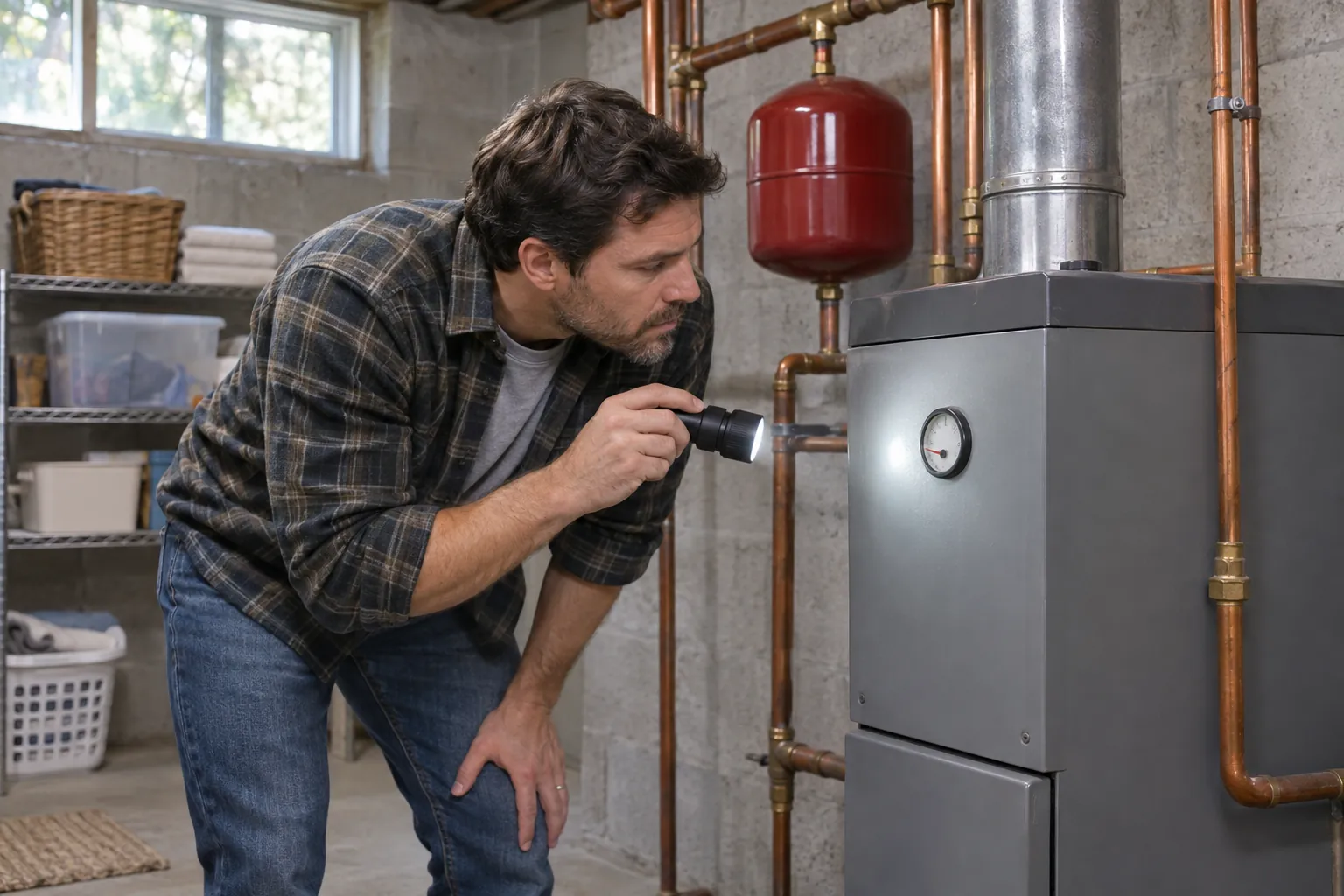
- Find the gauge on the front or side. Many show pressure in psi and temperature on one dial, so read the right scale.
- Compare it with the manual. If you don't have one, search the model number on the manufacturer's site.
- Tap the gauge gently. If the needle jumps, the gauge may be sticking, and a technician can replace it.
Step 2: Look for a Leak
- Radiators and baseboards: Check underneath each one and around its valves.
- Pipe joints: Look for drips, green or white crust, and stains below.
- Around the boiler: Check the floor, the relief valve pipe, and the expansion tank.
Any leak is worth a call to a plumber or heating technician. Topping up a leaking system only hides it, and fresh water speeds up rust.
Step 3: Check the Water Feed
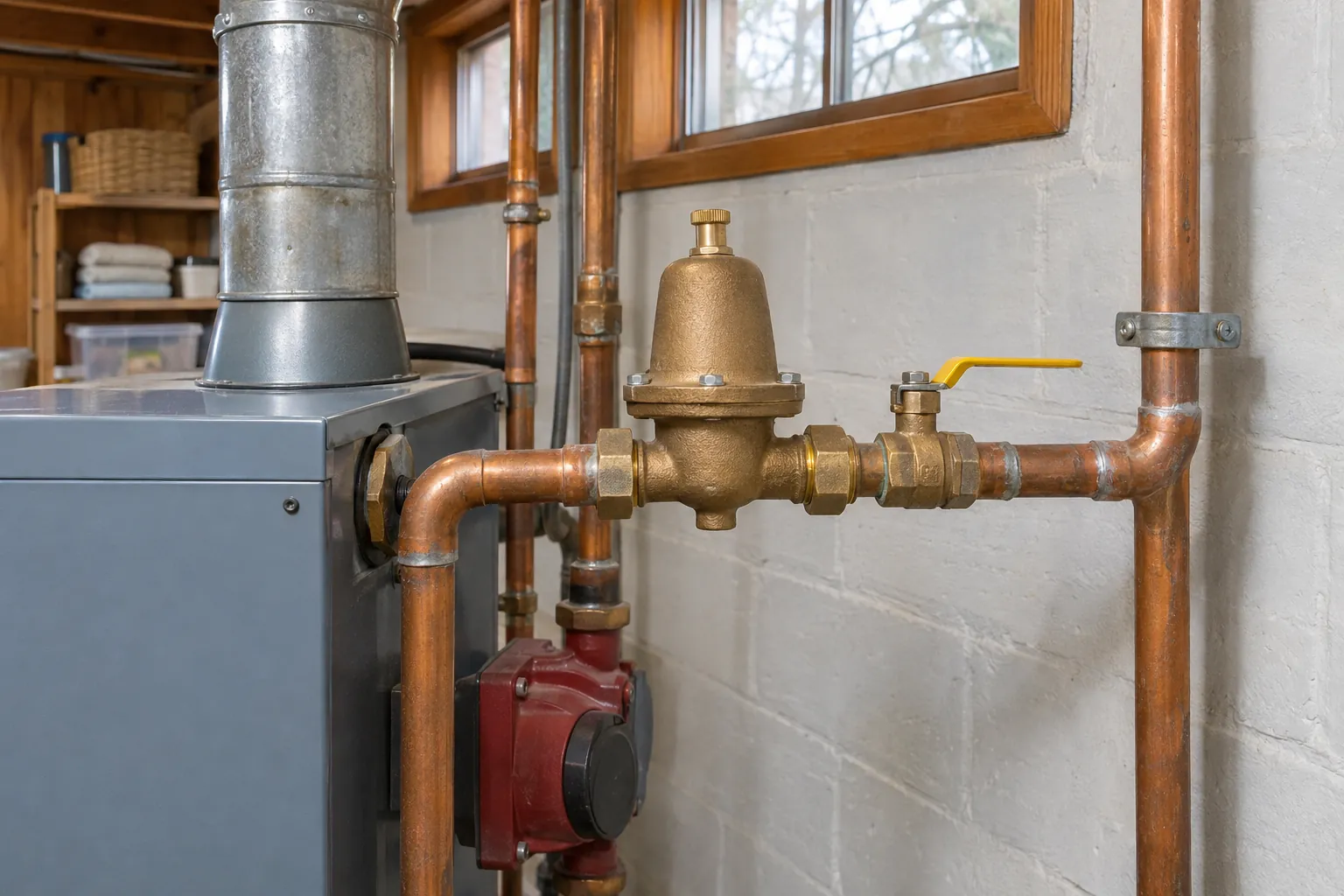
Follow the small cold-water pipe that runs to the boiler. You should see a shutoff handle, then a bell-shaped or box-shaped fill valve.
- Is the shutoff open? A lever in line with the pipe is open. If someone closed it during earlier work, and the boiler is cool, open it slowly and watch the gauge.
- Did you bleed radiators? An automatic valve may take a few minutes to catch up.
- Does it stop on its own? The needle should rise to the normal number and stay there. If it keeps climbing, close the shutoff and call.
Leave the fill valve's adjusting screw alone, and don't open the relief valve.
Step 4: Adding Water by Hand
Some boilers have a manual feed or a lever on the fill valve. Use it only if your manual describes it and the boiler is cool. Never add cold water to a hot or dry boiler. It can crack.
Open the feed a little, watch the gauge the whole time, and close it at the manual's cold number. Check again an hour after the boiler is back on, then the next morning.
What If the Pressure Drops Again?
If it falls again within days, stop topping it up. There's a leak, a failing fill valve, or an expansion tank problem, and each one needs a technician. Write down the readings with the time and whether the boiler was hot or cold. It helps them find it faster.
If the heat is out in freezing weather, keep cabinet doors open near pipes and ask for an emergency visit.
How Much Does It Cost to Fix Low Boiler Pressure?
Opening a closed feed costs nothing. Beyond that, Thumbtack data puts the national average for boiler repair at $184 to $793. Where you land in that range depends on the part, such as a fill valve or expansion tank, how easy the leak is to reach, and whether it's an emergency call. Ask for the diagnosis fee and whether it's applied to the repair.
Keep It From Coming Back
Look at the gauge once a month in heating season and after you bleed a radiator. Have the boiler serviced every year, and ask the technician to check the expansion tank and fill valve while they're there.