

Mar 7, 2026
How to Fix Wobbly Deck Posts
A wobbly deck post can feel alarming, but it doesn't always mean your deck is failing. Learn how to diagnose the shake, tighten loose hardware, and know when a replacement is necessary.
Stepping onto your deck should feel solid and secure. If you lean against a railing or push on a post and feel a distinct "wobble" or shake, it’s natural to feel a spike of anxiety. Does this mean the whole structure is unsafe?
Looking for more guidance? Take a look at our Repairs overview.
The short answer is: probably not immediately, but you shouldn't ignore it.
Decks endure a lot of stress from wind, rain, temperature changes, and foot traffic. Over time, wood shrinks, metal hardware loosens, and the ground shifts. A wobbly post is a signal that one of these connections needs attention.
The good news is that many wobbly posts are solved with a simple wrench. In this guide, we’ll walk through how to find the source of the movement and decide whether you need a quick tune-up or a more involved repair.
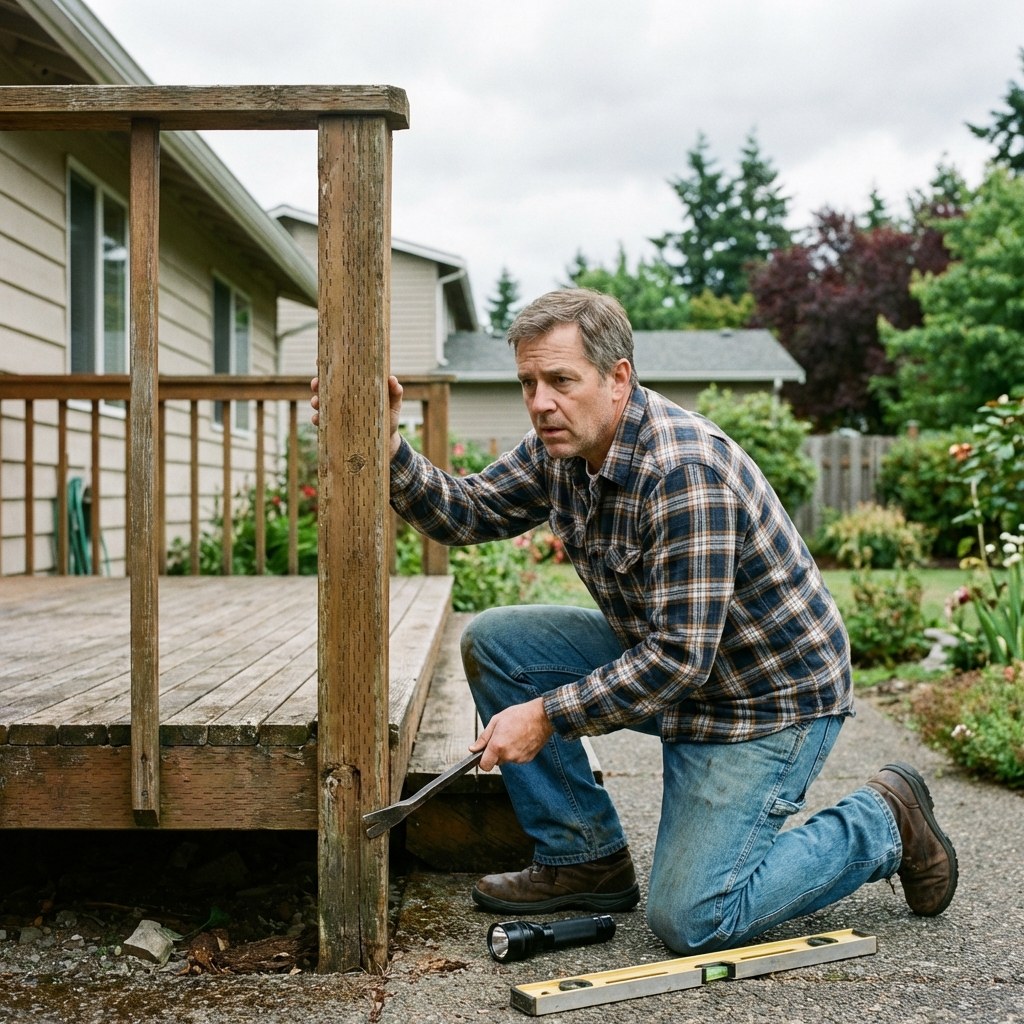
Why Is My Deck Post Moving?
Before you grab your toolbox, it helps to understand why the post is moving. Most issues fall into one of three buckets:
- Loose Hardware: Wood expands and contracts with the seasons. Over a few years, the bolts and screws that hold the post to the frame or the ground can work themselves loose.
- Rot or Decay: If moisture gets into the wood—especially at the bottom where it meets the ground or concrete—the wood fibers can soften, making the connection spongy and unstable.
- Footing Issues: Rarely, the concrete footing underneath the post has sunk or shifted in the soil, taking the post with it.
Is This Safe to DIY?
- Safe to DIY: Tightening bolts, replacing rusted brackets on a single post, or adding structural screws to reinforce a connection.
- Call a Pro: If multiple posts are rotting simultaneously, if the deck is high off the ground (second story), or if you suspect the concrete footings are sinking significantly.
Step 1: Diagnose the Wobble
You need to see exactly where the movement is happening.
- Walk the perimeter. Locate every deck post.
- Apply pressure. Stand safely on the ground and push the middle of the post side-to-side.
- Watch the connections. Don't look at the wood; look at the metal.
- Does the bracket at the bottom lift up?
- Do the bolts at the top wiggle in their holes?
- Does the whole post move, including the concrete at the bottom?
- Check for rot. Use a flathead screwdriver to poke the wood near the ground. If it goes in more than 1/4 inch or feels like wet cardboard, you have rot.
Step 2: The Quick Fix (Tightening Hardware)
Time: 10–15 minutes Cost: $0 Difficulty: Easy
If the wood looks solid but the metal brackets are moving, you likely just have loose connections.
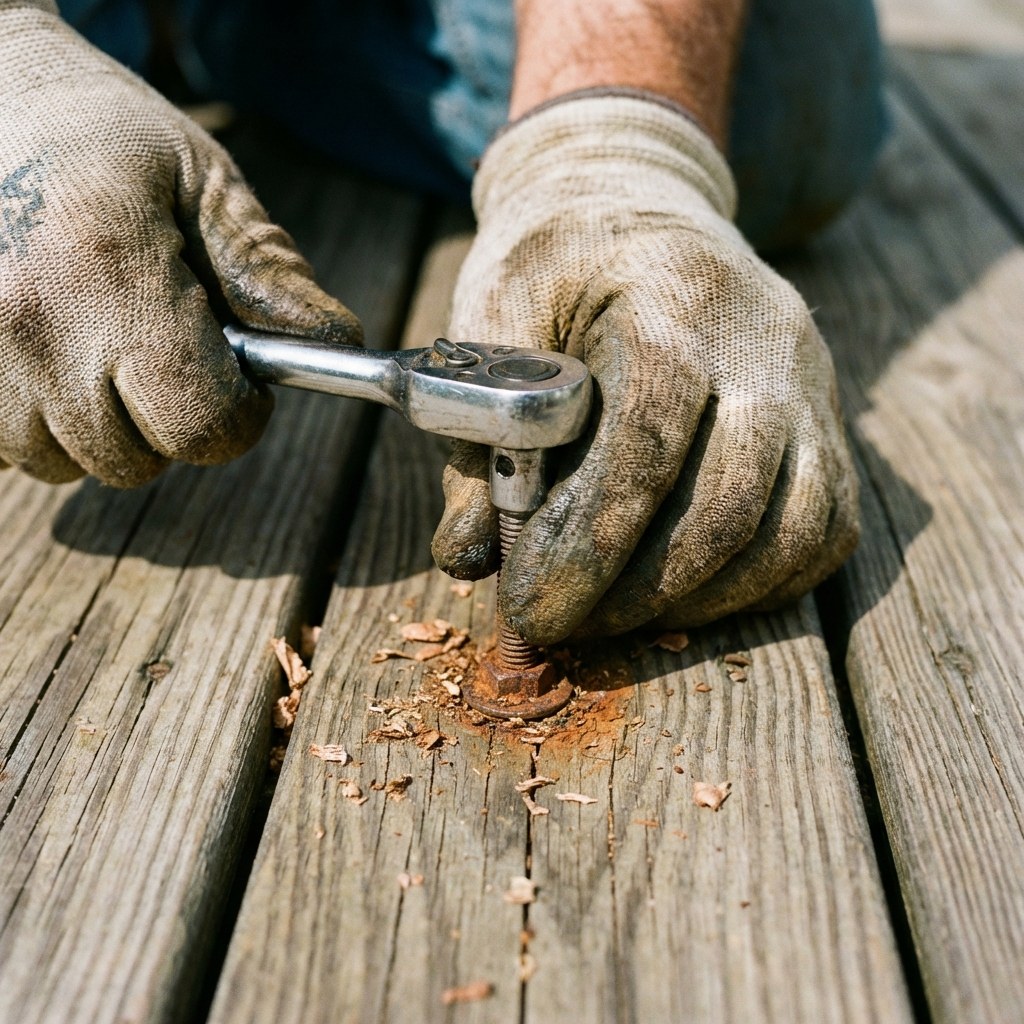
- Grab a ratchet wrench. Find the socket that fits your bolts (usually 1/2" or 9/16").
- Tighten top to bottom. Start where the post connects to the deck beam. Turn bolts clockwise until snug.
- Tighten the base. Move to the bracket anchored to the concrete. Tighten those lag screws or nuts.
- Test. Give the post another shake.
If it’s solid, you’re done! If it still wobbles, or if the bolt spins without tightening (which means the hole is stripped), you need to move to the next step.
Step 3: Replacing Damaged Hardware
Time: 1 Hour Cost: $20–$50 Difficulty: Moderate
Sometimes old brackets are rusted through, or the bolts have snapped. You can replace these one at a time.
Important: You cannot remove a post's hardware while it is holding up the deck. You must take the weight off first.
- Support the deck. Place a temporary 4x4 post or a jack post next to the wobbly one. Use a hydraulic bottle jack to lift the deck beam just enough to take the weight off the bad post. You aren't trying to lift the deck to the moon—just relieve the pressure.
- Remove old hardware. Unscrew the lag screws or remove the carriage bolts.
- Inspect the wood. Once the bracket is off, check the wood underneath. If it's solid, proceed. If it's rotted, stop and see Step 4.
- Install new galvanized hardware. Use heavy-duty brackets meant for exterior use (look for "Z-max" or similar hot-dipped galvanized ratings).
- Lower the jack. Slowly transfer the weight back onto the repaired post.
Step 4: Dealing with Rotted Wood
Time: 2–4 Hours Cost: $50–$100 Difficulty: Hard
If your screwdriver sank into the wood during your inspection, tightening bolts won't help. The wood fibers can no longer hold the screw threads. You generally have two options here: reinforcement or replacement.
Option A: Reinforce (The "Scab" Method)
If the rot is minor or surface-level, you can reinforce the post by bolting a new pressure-treated 2x6 board to the side of the existing post. This acts as a splint. However, this is often a temporary fix and changes the look of your deck.
Option B: Replace the Post (Recommended)
If the rot is deep, the post must go. This follows the same logic as replacing hardware but requires more effort.
- Support the weight. Use temporary jacks to hold the deck beam up.
- Remove the old post. Unbolt it and slide it out. If it's buried in concrete, you will need to cut it flush at the ground or dig it out (see below).
- Cut a new post. Measure twice, cut once. Use pressure-treated lumber sealed with wood preservative on the cut ends.
- Install. Slide the new post into place, level it, and bolt it down.
A note on buried posts: If your old post goes directly into the dirt or concrete (no metal bracket), it will eventually rot again. The modern standard is to pour a concrete footer, let it cure, and then attach the post on top using a metal bracket to keep the wood dry. If you are replacing a buried post, we highly recommend upgrading to this method.
Step 5: When to Call a Professional
While tightening bolts is a great Saturday morning task, some structural issues are better left to pros. Consider calling a contractor if:
- The footing is moving: If the concrete block in the ground wobbles when you push the post, the footing is too small or unstable. This requires excavation and new concrete.
- The deck is high: Working on second-story decks involves significant safety risks regarding bracing and ladders.
- Extensive rot: If you find rot in the posts, check the beams and joists above them. If the rot has spread to the frame, the repair is much larger than just swapping a post.
Planning Ahead
Decks require regular check-ups. A great way to stay on top of this is to schedule a "deck inspection" in your calendar every spring. Using a tool like Casa can help you track when you last tightened bolts or applied water sealant, so you aren't guessing whether it's been one year or three.
Keeping your deck stable isn't just about safety; it extends the life of the entire structure. A tight, stable frame vibrates less in the wind, which means fewer cracks and less wear on the wood over time.
For more guides on maintaining your home’s exterior and organizing your repair history, download the Casa app today. We’ll help you keep track of what needs to be done, so you can get back to enjoying your deck.