

Updated Nov 23, 2026
Water Heater Pilot Light Out? When It's Safe to Relight
Check for gas and carbon monoxide first, then use the label on your water heater. See why a pilot goes out and when to call a plumber.
If there is no gas smell and no carbon monoxide alarm, you can try to relight the pilot by following the label on your water heater. If you smell gas, if the tank has been under water, or if the pilot will not stay lit, leave it alone and call a plumber or gas technician.
Looking for more guidance? Take a look at our Repairs overview.
If You Smell Gas or an Alarm Sounds
Leave first, with everyone and the pets. Do not use light switches, phones, or flames, and do not stop to turn off the gas. Call your gas utility or 911 from a safe distance and wait for the all clear. Propane is heavier than air and can pool near the floor, so smell low as you walk up, before you touch the heater.
If a carbon monoxide alarm sounds, go outside and call 911. Soot around the tank or a vent pipe that has come apart is also a reason to leave it off.
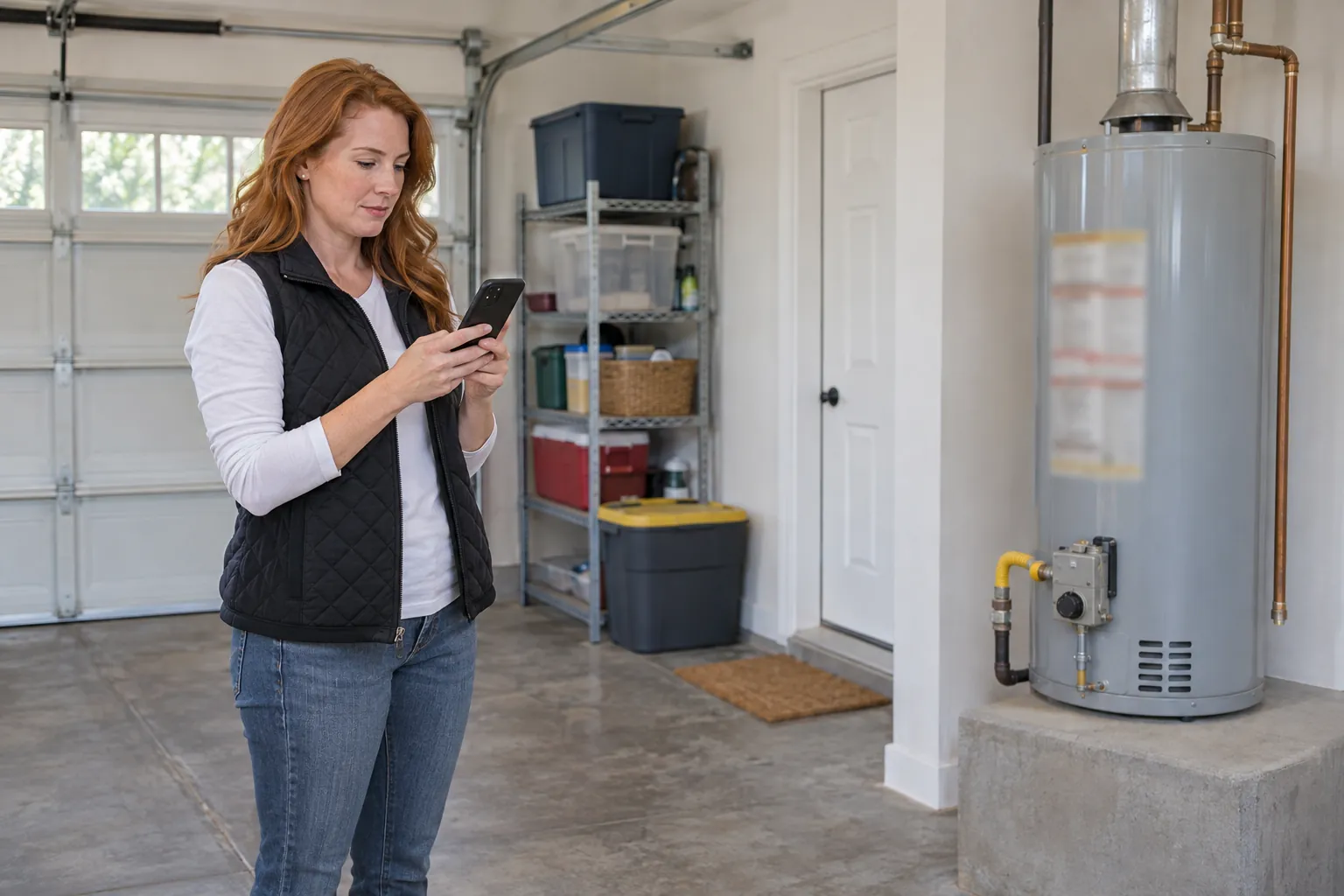
Is There a Pilot at All?
| What you see | Type | What to do |
|---|---|---|
| Knob marked Off, Pilot, and a temperature, plus a sight glass | Standing pilot | Use the label |
| Status light that blinks | Standing pilot or electronic | Check the manual for the code |
| Power cord, display, no pilot | Electronic ignition | Check the cord and breaker once |
| No gas line, thick cable | Electric | Not a pilot problem |
Relighting: Use Your Label
Labels differ. The A. O. Smith label on its ultra-low NOx tanks gives a good idea of what to expect:
- Read all of it first. Make sure the sight glass is not cracked or missing and the tank is full of water.
- Smell for gas around the heater and next to the floor.
- Turn the control to Off and wait 10 minutes for gas to clear. Smell again. If there is any odor, stop and leave.
- Turn the knob to Pilot and follow the button steps. Use only your hand on the knob.
- Wait 10 minutes between tries, and stop after three.
- If it does not light, turn the knob to Off and call for service.
Your label may say a different wait. Follow it, not a number you read online. Do not try if the label is missing, if you would have to remove a panel or light it with a match, or if you cannot see well.
After it lights, set the temperature. A. O. Smith marks Hot at about 120°F. The Consumer Product Safety Commission recommends 120°F to reduce scalds.
If It Won't Stay Lit
Do not keep trying. A flame sensor shuts the gas off when it does not see a pilot. That can mean a dirty pilot, a worn thermocouple, a draft, a blocked vent, or a tripped overheat switch. Each needs a technician. Do not sand, bend, or bypass the sensor, or light it and hold the knob down to keep it running.
Never use a water heater that has been in a flood. A. O. Smith says controls that have been under water require replacing the whole heater.
If It's Electric
Reset a tripped breaker once. If it trips again, leave it off and call an electrician. Do not open the covers over the thermostats. The wires behind them are live.
What Does a Pilot Light Repair Cost?
Thumbtack data puts the national average for water heater repair at $297 to $1,198, and lists cleaning and repairing a thermocouple at $395. If the heater is old enough that a replacement is the better buy, installing a new one averages $748 to $2,138.
What to Ask
Ask what made the pilot go out, whether the vent is clear and the combustion checked, and whether a part or the whole heater is the better buy at its age.