

Updated Nov 23, 2026
Why Is My Microwave Making a Loud or Strange Noise?
See which microwave noises are normal, fix a grinding or squeaking turntable, and know when to unplug it for a buzz, spark, or burning smell.
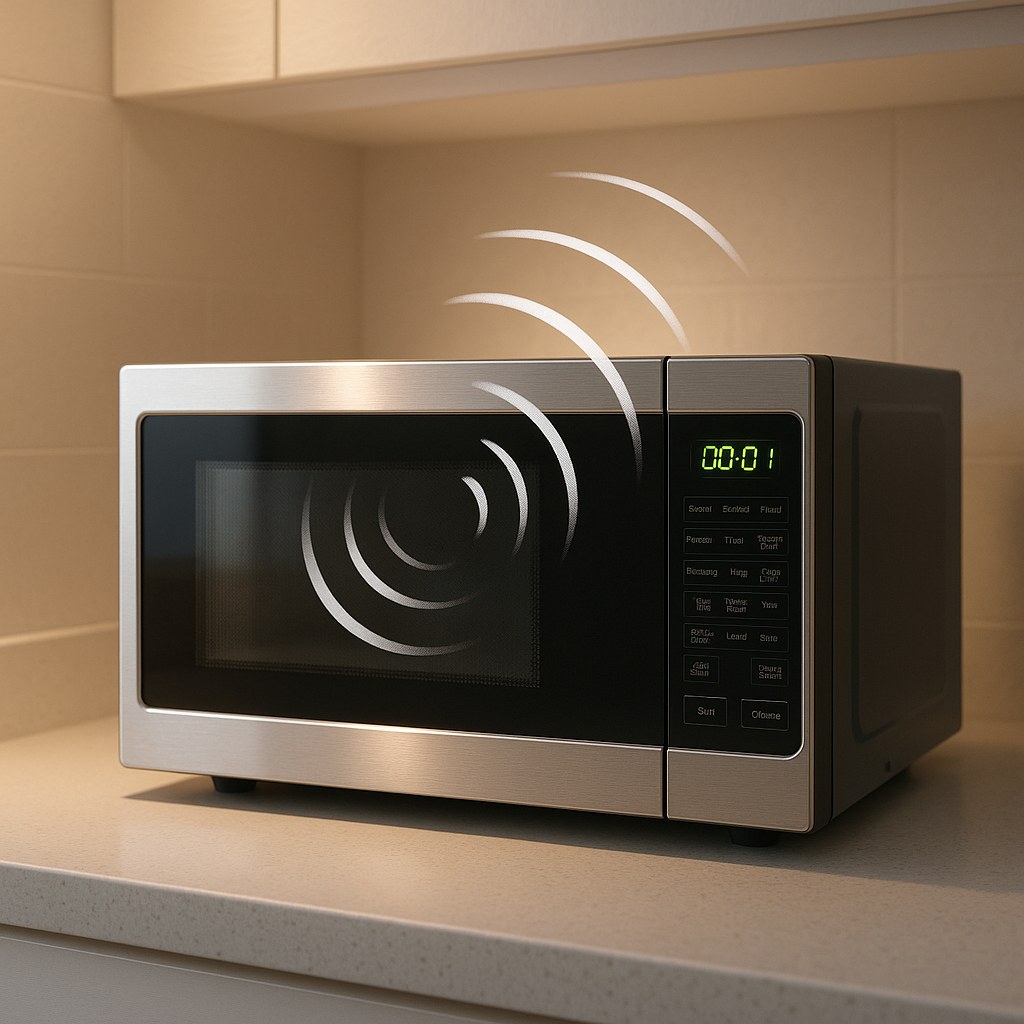
Some microwave noise is normal. A steady hum while it heats, soft clicks at lower power, and a fan that runs for a minute after are expected. A grind, squeak, or thump that follows the turntable usually means it is dirty or off its track, and you can clean it. A loud buzz, spark, or burning smell means stop, unplug it, and do not open it.
Looking for more guidance? Take a look at our Repairs overview.
| Sound | When | Likely cause | Do this |
|---|---|---|---|
| Soft hum or buzz | Heating | Normal | Nothing |
| Clicks or thumps at low power | Heating | Normal cycling | Nothing |
| Grinding or squeaking | Heating | Dirty or misplaced turntable | Clean and reseat |
| Repeated clicking | Heating | Plate hitting the track | Reseat the plate |
| Popping | Heating | Food, or an empty oven | Clean, never run empty |
| Rattle | Heating | Loose filter or vent cover | Reseat it |
| Loud buzz, getting worse | Heating | High-voltage fault | Stop, call |
| Crackle with sparks | Heating | Metal, food, or damage | Stop, unplug |
| Fan hum after cooking, or on its own | Off | Often the vent fan | Wait for it to cool |
| High-pitched noise, squeal, or hum with nothing on | Off | Clock transformer, or a fault | Unplug to test |
GE says thumping, clicking, or humming at lower power is normal, and so is a faint hum from the clock. At anything below full power, most microwaves make heat in bursts, so you hear it switch on and off. Inverter models hold a steady lower power instead, so they tend to hum without the thumps.
Safety First: Is Your Microwave an Immediate Hazard?
Stand back and look and smell:
- Sparks, smoke, burning smell, or scorch marks: unplug it. If it is built in, switch off its breaker.
- Fire: keep the door closed, turn it off, and unplug it. The NFPA says to get out and call the fire department if the fire does not go out.
- Damaged door or latch: do not use it. The FDA says not to run a microwave whose door does not close firmly, or is bent, warped, or damaged.
If none of these apply, do a test.
Step 1: Identify When the Noise Occurs
- Put a cup of water in the middle. Never run it empty.
- Run it on high for 30 seconds and listen.
- Notice if the noise starts with the heat, the turntable, or the fan.
- Open the door and listen. A noise that keeps going after it stops is usually a fan.
- If your model has a turntable on/off button, run the same test with the turntable off. If the noise goes away, you have found it.
Match the rhythm, too. A sound that repeats once per turn of the plate is the turntable, the ring, or a dish that hits the wall. A sound that comes and goes every several seconds is the power cycling. A constant whir is a fan. A constant heavy buzz that starts the moment it heats is the one to stop for.
Grinding, Squeaking, or Jerking Turntable
This is the most common fix you can do yourself. The glass plate rides on a ring of small wheels and is turned by a coupler in the center. Crumbs, a drip of syrup, or a wheel that is off its track is enough to make it grind.
- Unplug it.
- Take out the glass plate and the ring with wheels.
- Check the wheels and the plate for cracks. A cracked plate or broken wheel should be replaced by model number, which is usually on a label inside the door frame.
- Wash the plate and ring with warm soapy water. Wipe the floor, the coupler in the center, and the track.
- Dry everything. Set the ring in its track and the plate on the coupler. Turn it by hand. It should glide without rocking.
- Plug it in and test with water.
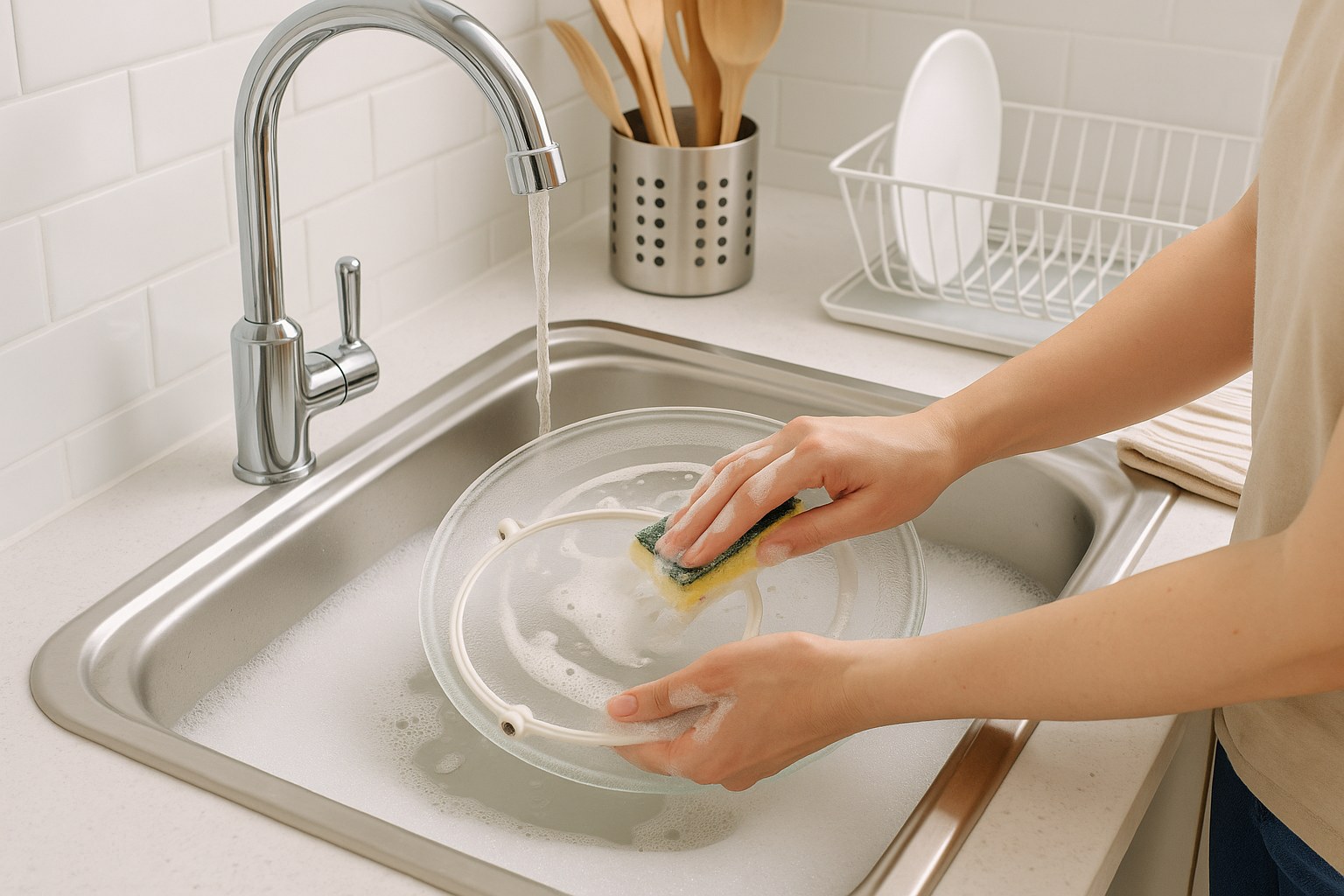
Samsung also says a plate or ring that is out of place or dirty can click, and that loose filters can rattle. Check your dish as well. A tall or square one that catches the wall makes the plate jerk and slip back.
If it still grinds after a good cleaning, the turntable motor or its coupler may be worn. The motor sits under the floor of the oven, so it is a service job on most models. If the plate does not move at all, see How to Fix a Microwave Turntable That Isn't Spinning.
Popping, Clicking, or Rattling
- Clean off food and grease. Old residue can pop.
- Cover food that splatters. Samsung says popping and snapping is normal with fatty or wet food such as potatoes, tomato sauce, and popcorn. To tell food from a fault, clean the oven and heat a bowl of plain water. If it still pops, have it checked.
- Check that a charcoal filter or vent cover is seated. Take anything off the top of the microwave, and make sure a countertop model sits flat and does not touch the wall.
- Check the glass plate is not touching the side.
- Do not use anything metal, or a dish with a metal rim.
- A click or two when you press Start is a relay. Clicking when a hidden vent opens is normal on some over-the-range models.
Loud Buzzing or Humming Noise
Samsung says the hum can get slightly louder with age, but one that becomes much louder needs service. So compare it with what you are used to. A loud, steady buzz that is new can come from the high-voltage parts:
- The magnetron, which makes the heat. A failing one often buzzes and heats slowly.
- The diode, capacitor, or transformer that feed it. These can growl and stop it heating at all.
Stop using it. Do not open the case. Those parts can hold a dangerous charge after it is unplugged. If it still heats, that does not make it safe. Book a technician or replace it.
What If the Noise Happens When the Microwave Is Idle?
- Fan running right after cooking: normal. GE says an internal fan can run for a short time after the cycle, even with the door open.
- Fan that starts by itself on an over-the-range unit: on GE models, a thermostat can start the vent fan when the underside is hot, and you cannot turn it off until it cools. Let it and the cooktop cool. If the fan keeps running when everything is cold, it needs service.
- Faint hum: often the clock.
- Loud hum or buzz: unplug it and wait. If it starts again when plugged in, have it checked.
- Beeping: check the timer, the door, and the manual for codes.
When to Call a Professional
Call if it sparks, smells burnt, buzzes loudly, or still grinds after you have cleaned and reseated the turntable, or if a fan never stops when it is cold.
The technician discharges the high-voltage parts first, then tests the magnetron, diode, door switches, fan, and turntable motor with the case off, and should check for leakage at the door before leaving. The visit is usually short if the part is in the van, with a second trip if it has to be ordered. Before they come, note the model number, the sound, the power level, and whether food still heats. A phone video of the noise helps, since it may not happen on the day.
Ask:
- Which part has failed, and is it still under the maker's warranty?
- What is the total with the diagnosis, part, and labor?
- Will you check the door seal and test for leakage afterward?
Repair or Replace?
- Countertop: a replacement is often cheaper than a visit plus parts.
- Built-in or over-the-range: more often worth repairing, because of the fit. Measure the opening and find out whether the trim kit is still sold before you decide.
- Under warranty: do not try anything. Call the maker. The magnetron sometimes has longer cover than the rest.
- Renting: stop using it and report it. A built-in unit is usually the landlord's to fix.
Ask for the total price first, and get a written estimate. A door that does not close properly, sparks, or a burned smell are reasons not to use it at all. Thumbtack puts the national average for microwave repair at $121 to $308. Our repair or replace calculator compares the yearly cost of each.
Keep It Quiet
- Wipe spills the same day, especially on the floor and under the ring.
- Wash the plate and ring every week or two.
- Keep the vents clear, and clean or replace over-the-range filters on the schedule in the manual.
- Close the door gently. Slamming wears the latch and switches.
Common Questions
Is it safe to use a noisy microwave? Yes, if the noise is the turntable, a rattle, or a normal hum, and the door closes well. No, if it buzzes loudly, sparks, smells, or has a damaged door.
Why does my new microwave sound louder than my old one? Fan size, inverter power, and over-the-range venting all sound different. Judge it by change. A noise that was there on the first day is usually how it runs. A noise that arrives later is worth checking.