

Updated Nov 23, 2026
How to Fix a Loose Stair Railing or Handrail
Find where a stair railing is loose, fix wall brackets the safe way (into studs, not drywall anchors), and learn when a loose newel post needs a carpenter.
Hold the rail at each bracket and post and wiggle it gently to find the one spot that moves. A loose wall bracket is fixed by driving screws into a stud or solid wood behind the wall, not into drywall or plastic anchors. A loose newel post can sometimes be tightened at its own bolts, but a post that rocks at the floor needs a carpenter.
Looking for more guidance? Take a look at our Repairs overview.
Stop using the rail until it is solid. Use the other side if there is one, and keep children and anyone unsteady off the stairs.
Find the Loose Spot
| What moves | Likely cause | What to do |
|---|---|---|
| One wall bracket | Screw backed out or missed the stud | Re-fasten into wood |
| Rail, but brackets are tight | Screws between bracket and rail | Tighten from below |
| Rail where it meets a post | Loose bolt or failed glue joint | Tighten the bolt, or carpenter |
| Newel post at the base | Loose fasteners or failed anchorage | Tighten if you can reach the bolt. Otherwise carpenter |
| Post and stair together | Structure | Carpenter or engineer |
| Balusters only | Glue, screw, or shoe | See the baluster guide below |
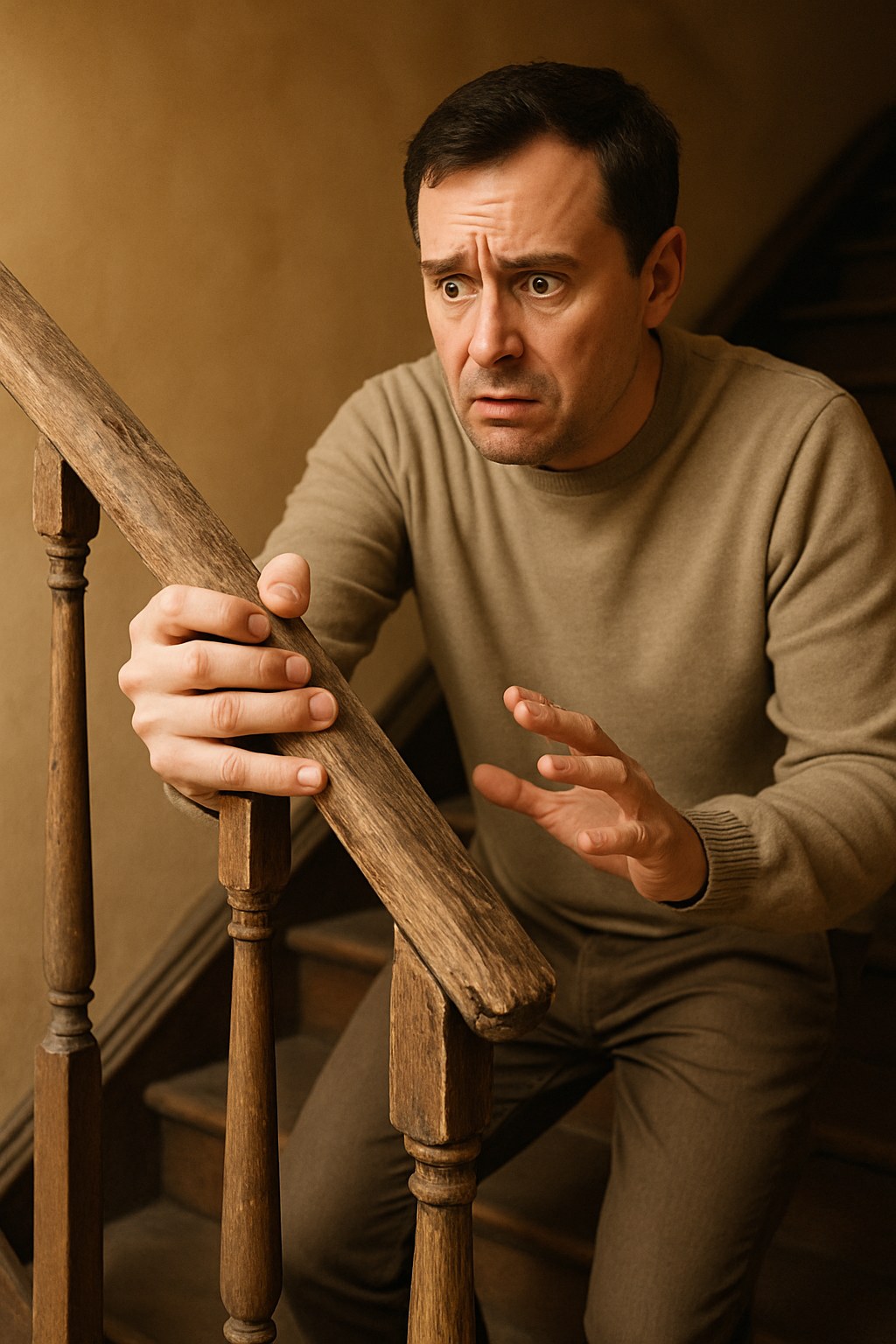
InterNACHI treats a handrail that is loose, incomplete, missing, or splintery as a defect. Handrails get grabbed hard when someone falls, so "mostly tight" is not enough.
Fix a Wall-Mounted Handrail
Tighten it first
- Take everything off the stairs and work with a helper if the rail is long.
- Tighten the screws that hold each bracket to the wall, then the ones that hold the rail to the bracket.
- Wiggle again. If it is solid, check it a week later.
If a screw spins or the bracket still moves, the screw is not holding in wood.
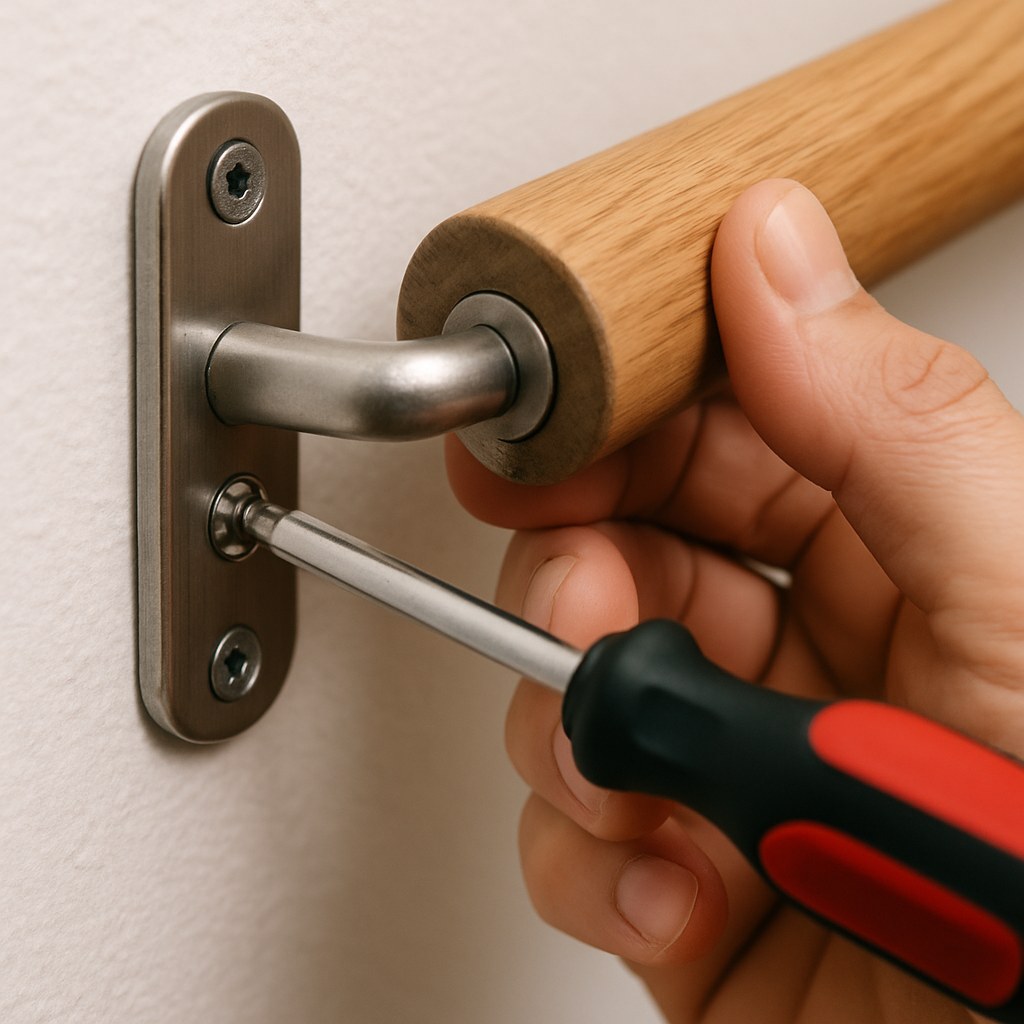
Move the bracket to a stud
A handrail has to hold a falling adult. One maker's guide says to locate the studs and mount the brackets there, no more than 4 feet apart, with long screws into the stud. Follow the instructions for your own bracket.
- Take the rail down in one piece if you can, and number the brackets.
- Find each stud with a stud finder and confirm it with a small test hole behind where the bracket will sit.
- Hold the rail at its old height and slope and mark where it crosses the studs.
- Drill pilot holes and drive the bracket's own screws, or wood screws of the same gauge that go well into the stud.
- Attach the rail, tighten everything, and test it with a firm pull from a safe standing position.
- Patch the old holes.
If there is no stud near a bracket spot, do not use a plastic anchor. A carpenter can open the wall and add wood blocking, or fasten a board across several studs and mount the rail to that.
Do not use
- Drywall anchors or toggles as the main support for a rail
- Toothpicks, golf tees, or filler in drywall
- Adhesive to hold a bracket
- Short screws that reach only the drywall
Toothpicks and glue can help a stripped hole in a solid stud hold a longer screw, but a better choice is to move the bracket an inch to fresh wood.
Fix a Loose Newel Post
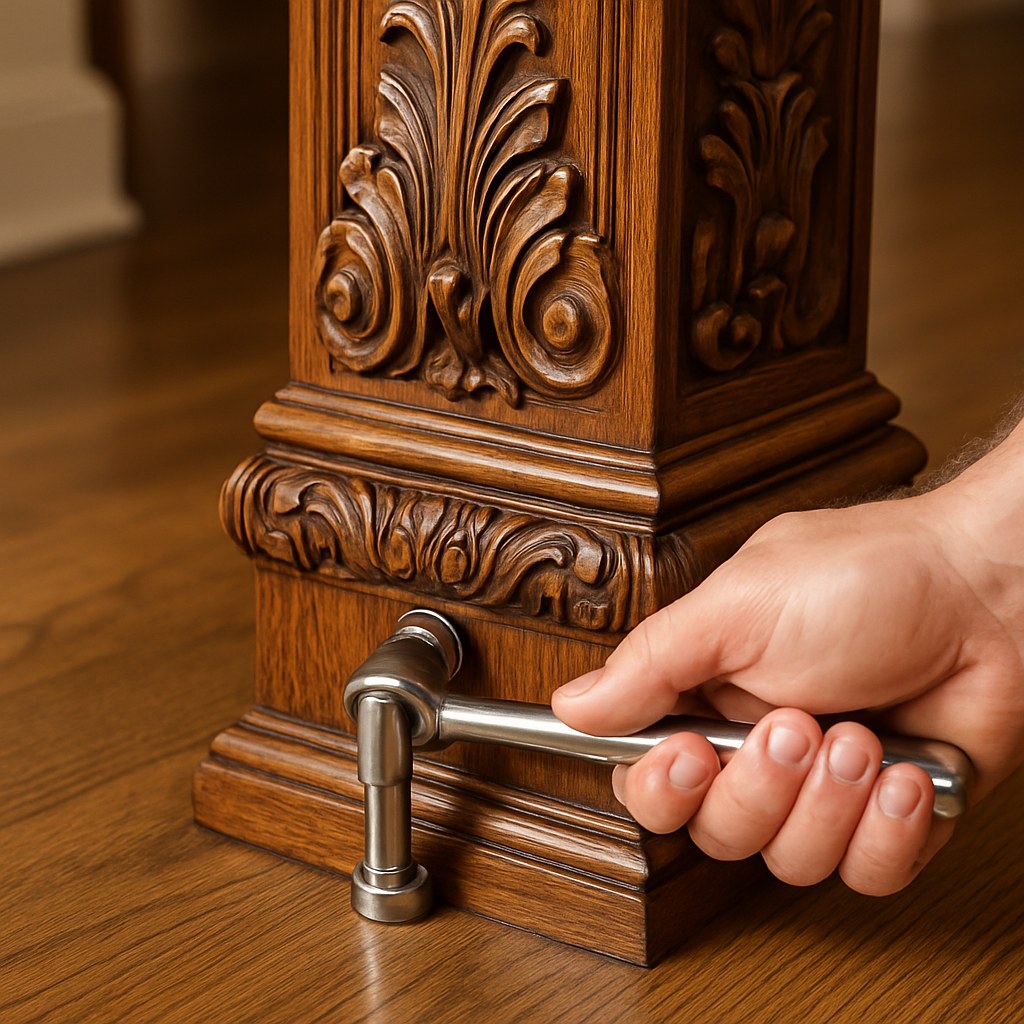
- Look for a wood plug or cap near the base. Pry it out gently with a putty knife.
- If you find a bolt or lag, snug it with a socket wrench. Do not force it. Lag bolts strip.
- Check for a nut or bolt where the rail joins the post, sometimes under a plug beneath the rail.
- Push the post. If it rocks at the floor after this, stop.
Metal L-brackets, long screws through the post, and epoxy over soft wood do not restore a post's anchorage. A carpenter usually has to reach the framing below, sometimes from under the stairs.
When to Call a Carpenter
- The post rocks at the base, or the stairs do.
- You cannot find a stud where a bracket must go.
- The wall is crumbling, damp, or plaster that is breaking away.
- The rail is on an open side with a drop, or on outdoor steps.
- Wood is rotten or insect-damaged.
Ask them to show you how the repair connects to the framing, and whether the rail height and gaps meet your local code.
What Does It Cost to Fix a Loose Railing?
A loose handrail is usually a quick handyman visit; Thumbtack puts jobs that take under two hours at $101 to $257. If the post or rail has to be replaced, HomeGuide prices new stair railings at $20 to $60 per linear foot for wood and $50 to $250 per linear foot for metal, installed.