

Sep 23, 2025
How to Fix a Weird Smell From Your Stove
A strange smell from your stove can be alarming. Is it a dangerous gas leak, burning food, or melting plastic? This guide will help you safely diagnose and fix the source of the odor, whether you have a gas or electric stove.
You walk into the kitchen, ready to whip up dinner, but you're stopped in your tracks by a strange smell. It's coming from the stove. Your mind immediately races—is it a gas leak? Is something burning? Is the appliance broken?
Looking for more guidance? Take a look at our Repairs overview.
A weird smell from your stove is definitely a cause for concern, but before you panic, take a deep breath. Most of the time, the culprit is something simple and easy to fix, like a small food spill you didn't notice. However, it's crucial to approach the situation with caution, especially when a gas stove is involved.
In this guide, we'll walk you through the process of safely identifying the source of that mysterious odor and getting your kitchen back to smelling like home.

Safety First: The Immediate Gas Leak Check
Before we dive into any other troubleshooting, we need to rule out the most dangerous possibility: a gas leak. Natural gas is odorless, so utility companies add a chemical called mercaptan to give it a distinct, unpleasant smell, often described as rotten eggs or sulfur.
If you smell anything resembling rotten eggs, act immediately. This is not something to ignore or "wait out."
What to Do If You Suspect a Gas Leak:
- Don't Touch Anything Electrical: Do not turn any lights, appliances, or even your phone on or off. A tiny spark from an electrical switch can ignite the gas.
- Turn Off the Stove: Make sure all the burner and oven knobs are in the "OFF" position.
- Ventilate the Area: Open windows and doors to let fresh air in and allow the gas to dissipate.
- Evacuate Everyone: Get everyone, including your pets, out of the house immediately.
- Shut Off the Gas (If Possible): If you know where your main gas shut-off valve is and can access it safely, turn it off. It's usually located outside near your gas meter.
- Call for Help: Once you are safely outside and away from the house, call your gas utility's emergency line or 911.
Do not re-enter your home until a professional has declared it safe. Your safety is the top priority.
Diagnosing Non-Gas Smells: Where's It Coming From?
If you've determined the smell isn't like rotten eggs, we can move on to other, less hazardous causes. The next step is to figure out whether you have a gas or electric stove, as the troubleshooting process will differ slightly.
- Gas Stoves: These have grates on the cooktop with burners underneath that produce a visible flame.
- Electric Stoves: These either have exposed metal coils that glow red when hot or a smooth, flat glass or ceramic surface.
Once you know your stove type, you can start pinpointing the source of the smell.
How to Fix a Weird Smell From a Gas Stove
If your stove is gas-powered and you've ruled out a gas leak, the smell is likely coming from food residue, a foreign object, or an issue with the burner ignition.
Step 1: Identify the Source
First, make sure all the burners are off and completely cool. Remove any pots or pans from the cooktop. Carefully lean in and gently waft the air toward your nose over each burner and near the oven door. Does the smell seem stronger in one particular area?
- If the smell is strongest around a specific burner, it's likely a cleaning issue there.
- If it’s coming from the oven, it’s probably a spill inside.
- If it’s a general chemical or plastic smell, you'll need to do a visual inspection.
Step 2: Clean the Gas Burner Residues
Food and grease are the most common culprits. A small bit of sauce or oil can fall onto the burner head and smolder the next time you cook, creating a foul burning smell.
Here's how to clean it:
- Disassemble the Burner: Once cool, remove the heavy metal grate covering the burner. Then, lift off the round burner cap.
- Wipe Away Debris: Use a paper towel to wipe away any loose, burnt crumbs from the burner head.
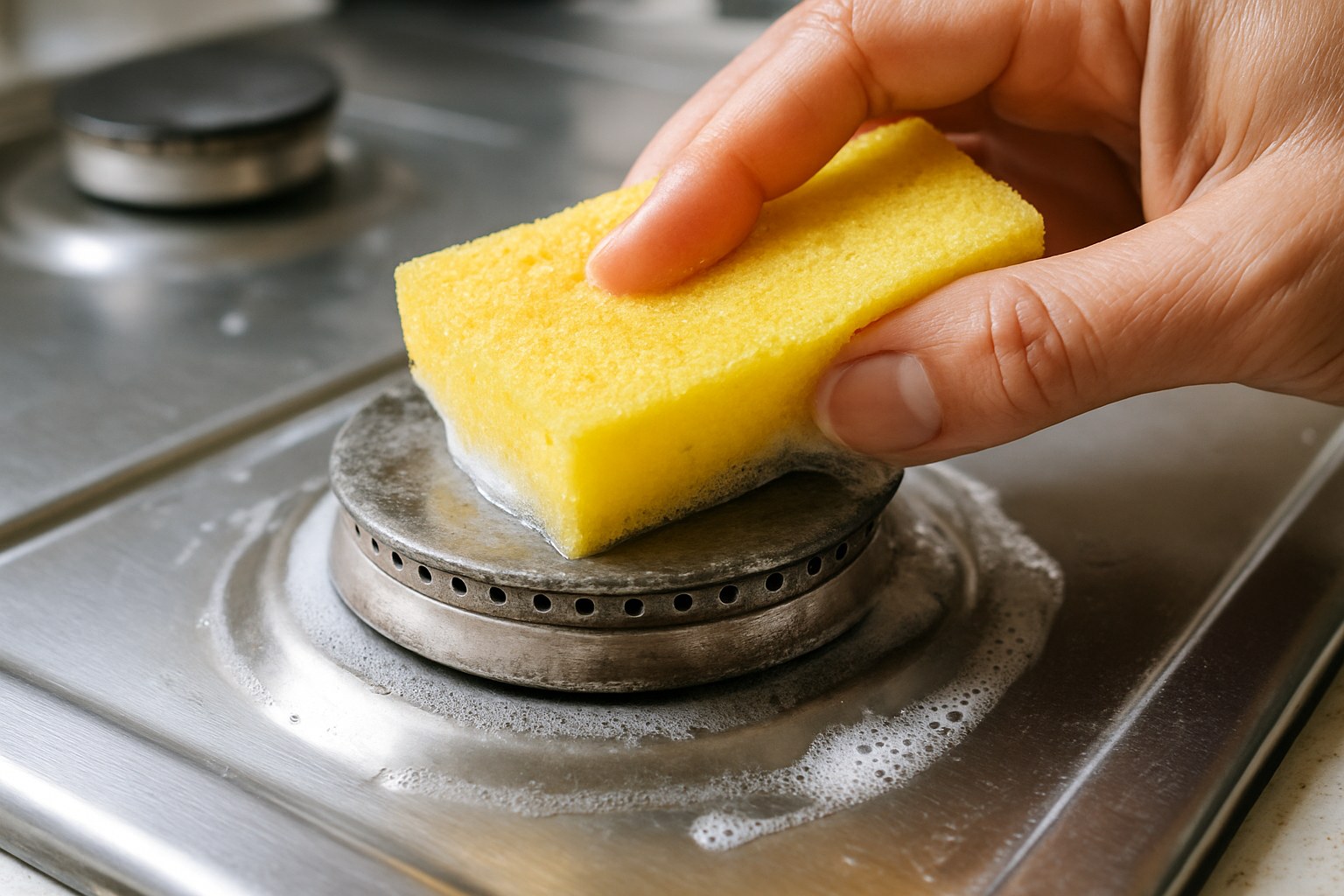
- Scrub the Parts: Use a non-abrasive sponge with warm water and a little dish soap to scrub the burner cap and the burner head.
- Clear the Ports: The small holes around the burner head where the flame comes out are called ports. If they're clogged, it can affect the flame and cause odors. Gently clear them using a toothpick or a paperclip.
- Rinse and Dry Thoroughly: Rinse the parts well and make sure they are completely dry before reassembling them. Trapped moisture can lead to rust and ignition problems.
- Test It: Put the burner back together, turn it on for about 30 seconds, and see if the smell is gone.
Step 3: Clean the Oven
If the smell appears when you preheat your oven, a past spill is almost certainly to blame.
- Remove Racks: Take out the oven racks so you have clear access.
- Create a Paste: In a small bowl, mix baking soda with a little water to form a thick paste.
- Apply and Wait: Spread the paste over the greasy, burnt spots on the oven floor and walls. Let it sit for at least 15-20 minutes.
- Scrub and Wipe: Use a sponge or plastic scraper to scrub away the loosened grime. Then, use a damp cloth to wipe out all the baking soda residue.
- Test It: Put the racks back in, preheat the oven to 350°F for a few minutes, and check if the smell has dissipated.
Step 4: Check for Burning Plastic or Chemical Odors
A smell of burning plastic or chemicals could mean a utensil fell onto a burner or, more seriously, an electrical component is failing.
- UNPLUG THE STOVE: This is a critical safety step. Pull the stove away from the wall and unplug the power cord.
- Perform a Visual Inspection: Look carefully around the burners, under the cooktop, and near the oven vents for any melted plastic, like a bread bag tie, a stray piece of packaging, or a fallen spatula.
- Inspect Wiring: Look at the control panel and any visible wiring for scorch marks or discoloration.
- Remove the Object: If you find melted plastic, wait until the surface is completely cool. Use a plastic scraper or an old credit card to gently peel it off. Avoid using metal, which can scratch your stove's surface.
- Call a Professional: If you can't find the source, or if you see any evidence of burnt wires, do not use the stove. It's time to call a qualified appliance repair technician.
How to Fix a Weird Smell From an Electric Stove
Electric stoves can produce smells from burnt food, manufacturing coatings, or electrical faults.
Step 1: Clean the Electric Cooktop
For electric stoves, food often falls onto the hot coils or bakes onto a smooth glass top.
- For Coil Stoves: Wait for the coils to cool completely. You can usually lift the coils out of their connection port. Remove the drip pans underneath and wash them thoroughly with soap and water.
- For Glass/Ceramic Cooktops: Use a cleaner specifically designed for ceramic cooktops. Apply a small amount and scrub with a non-abrasive pad. For tough, burnt-on food, you can use a razor scraper held at a 45-degree angle.
Step 2: Check for Burning Plastic or Wiring
Just like with a gas stove, a plastic or electrical smell needs immediate attention.
- UNPLUG THE STOVE.
- Inspect for Melted Items: Look for melted plastic on or around the heating elements. On a coil stove, something may have fallen into the drip pan.
- Check the Control Panel: A persistent, acrid smell could indicate that the internal wiring or an electronic control board is overheating. Look for any dark or burnt spots behind the knobs.
- When in Doubt, Call a Pro: If you smell electrical burning, leave the stove unplugged and schedule a service call. It's not safe to use until it's been inspected.

What About That "New Stove" Smell?
If your stove is brand new, a strange chemical smell during the first few uses is completely normal. Manufacturers apply a protective coating to the oven cavity and other parts to prevent rust during shipping. This coating needs to be "burned off."
To do this, ensure your kitchen is well-ventilated (open windows and turn on the exhaust fan), remove the racks, and run the oven at a high temperature (400-450°F) for about 30 to 60 minutes. The smell should be gone after the first or second use.
When to Call a Professional and What to Expect
While many stove smells are easy DIY fixes, some require an expert.
Call an appliance repair technician if:
- You smell gas and the gas company has confirmed the leak is from the appliance itself.
- You smell a persistent electrical or burning plastic odor and can't find the source.
- The smell continues even after a thorough cleaning.
- Your stove is not heating correctly or is making unusual noises along with the smell.
According to Forbes, a standard service call from an appliance technician can cost between $75 and $150 just for the diagnosis. The final repair cost, including parts and labor for something like a faulty wiring harness or control board, could range from $150 to over $400. This makes spending 20 minutes cleaning a burner a very cost-effective first step!
Take Control of Your Home Maintenance
A weird stove smell can be unsettling, but by following these safe and logical steps, you can often solve the problem yourself in under an hour. From a simple spill to a more complex issue, knowing how to troubleshoot is a key part of confident homeownership.
For more easy-to-follow guides and expert advice on everything from your stove to your sump pump, download the Casa app. Our step-by-step instructions make DIY home repair simple and stress-free. And if you run into a problem that's over your head, Casa can connect you with vetted, local professionals to get the job done right. Download Casa today and keep your home running smoothly.