Updated Nov 23, 2026
Why Is My Oven Making Noise? Clicks, Pops, and Buzzing
Match oven clicking, popping, humming, rattling, or booming to its cause. See which sounds are normal, what you can check, and when to stop using it.
Clicking, popping, and a fan running after you switch off are usually normal. A boom when a gas oven lights, sparks, a loud electrical buzz, or a grinding fan are not. Turn the oven off and call for service.
Looking for more guidance? Take a look at our Repairs overview.
| Sound | Usually means | What to do |
|---|---|---|
| Clicks on and off while baking | The control cycling the heat | Normal |
| Ticks or pops while heating or cooling | Metal expanding and shrinking | Normal |
| Soft whoosh or slight poof as gas cycles | Normal burner operation | Normal |
| Popping when a gas oven cycles off | May need an air adjustment | Ask a technician |
| Boom, or the door moves | Delayed ignition | Stop using it |
| Fast clicking, no flame | Failed spark ignition | Turn it off, let gas clear, call |
| Fan running after cooking | Cooling fan | Normal |
| Rattle with the fan on | Loose rack, foil, or fan | Check the racks, then call |
| Grinding or scraping | Fan blade or motor | Stop using that mode |
| Low hum | Element, transformer, or fan | Often normal |
| Loud buzz, crackle, or zap | Electrical fault | Breaker off, call |
GE lists clicking, humming, popping, and fan sounds as normal, and says newer ovens may click more often because they control temperature more tightly. Many wall ovens run a fan during every cooking mode.
Step 1: Is Your Oven Gas or Electric?
The same sound can mean different things, so settle this first. You do not need to pull the oven out. Moving a range can strain a gas line or knock it off its anti-tip bracket.
- Look for a flame. A blue flame under the oven floor or at the top means gas. A looped element that glows at the top or bottom means electric. If the floor is smooth and you see neither, use the label.
- Check the label. The model number is usually on the door frame, behind the drawer, or under the cooktop edge. Look it up on the maker's site.
- Do not go by the cooktop. A dual-fuel range has gas burners on top and an electric oven.
Then note when it happens: as it starts, while it holds temperature, only with convection on, or after you turn it off.
Troubleshooting Noises in a Gas Oven
If there is any smell of gas, leave the house and call your gas utility or 911 from outside. Do not touch switches or phones on the way out.
Clicking when you turn it on
Whirlpool says a spark-ignition oven normally makes 3 to 10 rhythmic clicks and stops once the burner lights. Single clicks as it cycles are normal too. Clicking for more than 15 to 30 seconds without lighting is not.
Many other gas ovens use a glow-bar igniter that makes no spark at all. It gets hot, then you hear a soft whoosh. A tired one takes longer and longer to light the gas.
If it clicks without lighting, turn it off. Do not keep trying, light it with a match, or take out the oven floor to reach the burner. Unburned gas can collect in the cavity. Open a window, let it air out, and book service. If the cooktop burners will not light either, ask your gas utility whether there is an outage before you pay for a visit.
Whoosh, pop, or boom
GE separates normal from not normal:
- Normal: a slight poof or click as the gas cycles, and a brief odor as the oven first starts. Whirlpool says you may hear the whoosh every 1 to 3 minutes as it holds temperature.
- Service: a boom, the door blowing open, or a popping sound when it cycles off that a technician has not checked. The oven should light within two to three seconds.
A boom means gas built up before it caught. It usually points to a weak igniter or a blocked burner, and it tends to get worse. A technician measures the igniter's current, cleans or replaces the burner parts, and sets the air and gas mix.
Troubleshooting Noises in an Electric Oven
A buzzing or humming during heating
A light hum as the elements heat is common, and Whirlpool says elements can pop as they shift in their brackets. Clicks in time with the heat are relays switching.
Turn the oven and its breaker off if you hear crackling or see one spot glow brighter than the rest. GE says a failing element can spark for a few seconds, trip the breaker, and smell of burning plastic, and recommends not using the oven until it is fixed. On a range, the surface burners are not affected by a failed oven element.
Once the breaker is off and the oven is cool, you can look at the elements for blisters, holes, or breaks. Do not tug on them, loosen the screws, or test them. Replacing an element is a common, quick repair for a technician, and they should check the wire ends behind it for scorching at the same time.
A sharp pop or a sparking sound
Stop. A loud pop with a flash, a spark, or a burning smell is an electrical fault.
- Turn the oven off at the control.
- Switch off its breaker and leave it off.
- Look, without touching, for scorch marks or melted spots.
- Call a technician.
If flames continue after the oven is off, keep the door shut, get everyone out, and call 911.
Rattling, Grinding, and Fan Noise
Ovens can have two fans, and telling them apart saves a visit:
- Cooling fan. It blows warm air out of the trim above or below the door and protects the controls. Whirlpool says it can run for 20 to 45 minutes after you turn the oven off. Call if it still runs when the oven is fully cold, or if a wall oven's fan never comes on at all.
- Convection fan. It sits behind the round cover on the back wall. It can cycle on and off during preheat and regular baking, and it stops when you open the door. If the noise stops with it, this is the one.
Check the simple causes first:
- Turn the oven off and let it cool.
- Remove the racks, pans, and any foil. Check that the racks go back in the right way around. GE says racks installed backwards can also overheat the knobs.
- Look for a pan edge, thermometer, or foil touching the back panel.
- Check the side rack supports. If one is loose and your manual shows a screw or nut holding it, switch off the breaker and snug it by hand.
- Make sure the drawer and door are closed, nothing is stored on top, and the vents are clear.
- If it has a removable floor panel and it bangs as it heats, it may not be seated. Whirlpool calls this "oil canning" and says to refit it front edge first, when cool.
- Run the oven empty and listen.
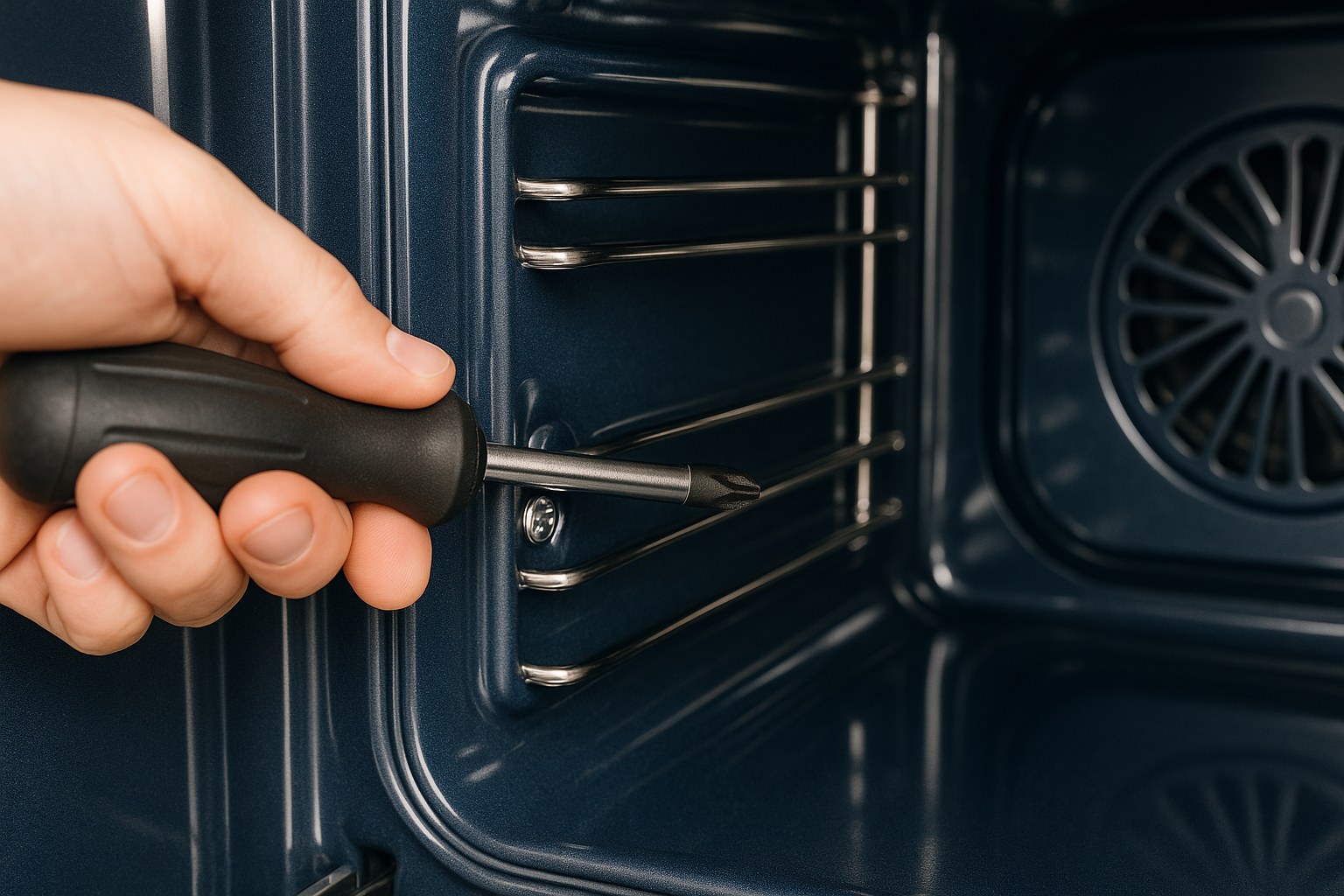
Leave the fan cover on. If it still scrapes or rattles, the fan, its mount, or its motor needs a technician. You can usually keep using a non-convection mode if the sound only comes with convection, but stop if it happens in every mode. The cooling fan protects the controls.
Other Sounds That Are Usually Harmless
- A thin pan that bangs. Light sheet pans warp as they heat and snap back as they cool.
- A motor and a clunk at the start of self-clean. That is the door lock.
- A hiss while you bake. Drips on a hot floor, or steam from the food. On a gas oven, a hiss with a gas smell means leave and call.
- Beeps. Preheat, a timer, or an error code. Write the code down before you clear it.
- More noise than your last oven. Newer ovens have more fans and more relays.
When to Call a Technician
Call for a boom, sparks, a loud buzz, clicking with no flame, a fan that grinds, or any noise that comes with a smell, an error code, or uneven heat. Electric and gas ignition parts, fans, and control boards are often stocked, so a common repair can be done in one visit. Less common boards may take a second trip.
Record the sound. Note the mode, the temperature, how long after starting it happens, and any error code. Ask:
- What failed, and how did you test it?
- What does the part cost, and does the diagnosis fee come off the repair?
- For gas, will you check for leaks and time the ignition before you leave?
- Is the part still made for this model?
Thumbtack puts the national average for oven repair at $136 to $346. Repair usually makes sense for an igniter, element, or fan on an oven that otherwise bakes well. Compare prices if the control board has failed on an older one.
If you rent, report a boom, a spark, or a gas smell to the landlord in writing and leave the oven off until someone has looked at it.