

Updated Nov 23, 2026
Why Is My Oven Smoking? Causes and What to Do First
What to do when an oven smokes, how to tell burnt food from a failed element or gas problem, and how to clean it without making things worse.
Most oven smoke comes from food or grease on the floor, the element, or the racks. Turn the oven off, keep the door closed, and let it cool before you look. If there are flames, gas, or a burning-plastic smell, get out or call for help instead.
Looking for more guidance? Take a look at our Repairs overview.
First Minute
- Flames inside: keep the door shut and turn the oven off. Leave and call 911 if the fire does not go out quickly, gets out of the oven, or fills the room with smoke. Do not open the door, and do not put water on grease.
- Gas smell: leave. Do not touch switches or phones, and do not shut valves on the way. Call your utility or 911 from outside.
- Light smoke, no flames: turn the oven off, run the hood, and open a window. Leave the door shut until it cools.
- Alarm: a smoke alarm or carbon monoxide alarm going off means everyone outside. Do not take out the battery.
What Kind of Smoke?
| Smoke or smell | Likely cause | What to do |
|---|---|---|
| White or gray, food smell | Spills or grease | Cool, clean |
| Only on the first uses of a new oven | Oils, insulation, packaging | Remove packaging, ventilate |
| During self-clean | Heavy soil burning off | Cancel if heavy, cool, wipe, rerun |
| Plastic smell | Liner, tray, or handle | Cool, remove |
| Electrical or acrid, sparks | Element or wiring | Breaker off, call |
| Black soot or yellow gas flame | Poor combustion | Turn off, call |
| Comes back after cleaning | Spill under the floor or a fault | Call |
Clean Up a Spill
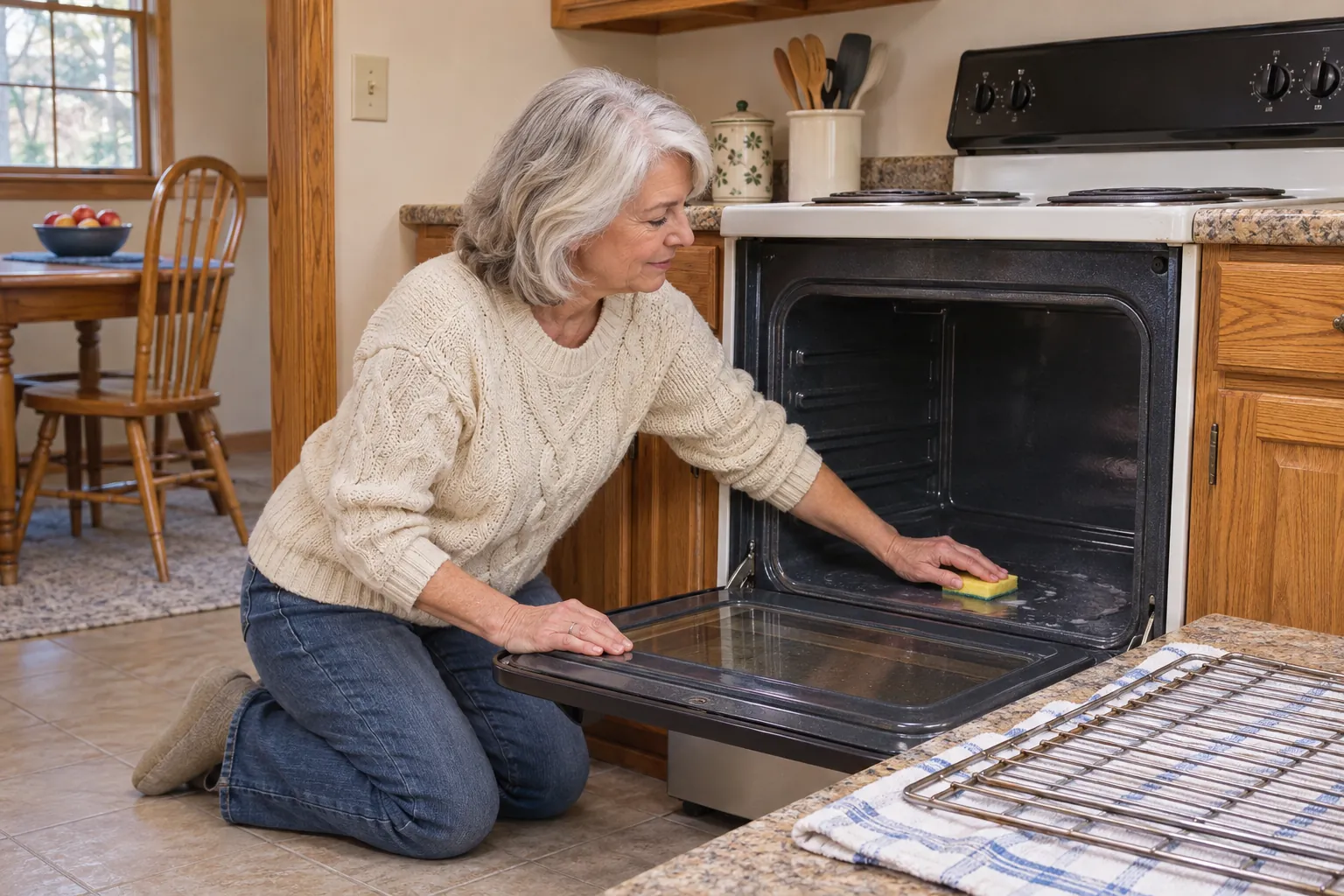
- Turn the oven off. Unplug it or turn off its breaker if you will reach near an element.
- Wait until it is completely cold. Remove the racks.
- Lift out loose, charred food with a plastic scraper.
- Wipe the floor with warm, soapy water, or a paste of baking soda and water. Keep liquid off elements, igniters, vents, and the door gasket.
- Wipe the residue off, since leftover cleaner smokes too.
- Put the racks back. Restore power and heat it empty to 350°F for a few minutes with the hood on. Stay in the room.
Do not line the bottom of a gas oven with foil. The Consumer Product Safety Commission warns against covering the bottom of gas ovens with foil, because it blocks the air the burner needs.
New Oven Smoke
A little smoke or odor is common the first few times. Check for tape, film, and cardboard first. Run it as your manual says, with ventilation. Keep birds in another room with good air.
Self-Clean Smoke
GE says a small amount of smoke is normal, and heavy smoke means too much grease. Cancel the cycle and let it cool at least an hour before opening. Wipe out liquid grease first next time. Stay home while it runs.
Electric and Gas Faults
Electric: with the breaker off and the oven cold, look for holes, blisters, or breaks in the elements. A shorted element can spark, trip the breaker, and smell of burning plastic. Do not use the oven until it is replaced.
Gas: stop if you see soot, yellow flames, or hear a boom at lighting. Do not remove the oven floor to brush the burner, and do not turn the supply valve off and on. Call an appliance technician or your gas company.
Repair or Replace?
Ask for the diagnosis fee, the price of the part, and the total before work begins. If the fault is wiring or a control on an older oven, compare it with a replacement. Thumbtack puts the national average for oven repair at $136 to $346. Our repair or replace calculator compares the yearly cost of each.