

Nov 24, 2026
Home Emergency? What to Do in the First 10 Minutes
Find your emergency, make the right first move, and know who to call. Covers water, gas, carbon monoxide, power, heat, and storm damage.
Get people out of danger first. Next, stop the water or cut the power if you can do it from a safe, dry spot. Leave gas to the utility. Then call for help. Photos, cleanup, and fixing come after that.
Looking for more guidance? Take a look at our Repairs overview.
Leave Now and Call 911 From Outside
- You see fire, smoke, or steady sparks.
- You smell gas or hear it hissing. Don't touch a switch or use your phone until you're well away.
- A carbon monoxide alarm sounds, or people feel dizzy, sick, or confused.
- The electrical panel is hot, buzzing, or smells burnt.
- A ceiling, wall, or chimney is sagging or moving.
- Someone is hurt or trapped.
Power line down on the house or in the yard? Stay inside. Keep to the far side, touch no metal, plumbing, or appliances, and call 911. If there's fire or 911 tells you to go, use the door farthest from the wire and shuffle, feet together, until you're 35 feet away.
Find Your Emergency
| What's happening | First move | What next |
|---|---|---|
| Water spraying or pouring | Shut the main water valve, from a dry spot | Burst pipe |
| A trickle or nothing in freezing weather | Open the faucet, find the main valve | Frozen pipes |
| Water coming through a ceiling | Stay out from under it, stop the source | Ceiling leak |
| Toilet about to overflow | Close the valve behind it | Overflowing toilet |
| Water or sewage coming up a drain | Stop using all water | Drain backup |
| Flooded basement or room | Stay out until the power is safe | Standing water |
| Water heater leaking | Water and breaker off, from a dry spot | Leaking water heater |
| Rotten-egg smell | Leave, then call | Gas smell |
| Carbon monoxide alarm | Leave, then call 911 | CO alarm |
| Burning smell, sparks, or a hot outlet | Don't touch it, call the fire department | Burning outlet |
| No power anywhere | Look outside, then report it | Power outage |
| Power in part of the house | Call the electric utility | Half the power out |
| No heat | Four quick checks, then one warm room | No heat |
| No water | Ask a neighbor | No water |
| Tree or limb on the house | Look for wires. None? Get out | Tree on the house |
Call Tonight, or Wait Until Morning?
| Call tonight | Usually fine until morning |
|---|---|
| Water you can't stop | A slow drip into a bucket, with the valve closed |
| Sewage inside the house | One slow drain |
| No heat with freezing weather, a baby, or an older adult | No heat on a mild night |
| A burning smell, once the fire department has cleared it | One dead outlet with no heat or smell |
| The only toilet is out | One of two toilets is out |
| An outside door that won't lock | A sticky lock that still works |
Waiting can be worth real money. Evening, weekend, and holiday plumbing calls commonly run 50% to 100% more. Thumbtack puts an emergency plumber at $215 to $655 on average.
Who to Call
| Who | For |
|---|---|
| 911 | Fire, gas, carbon monoxide, a downed line, anyone hurt |
| Gas utility emergency line | Gas smell, after you're outside |
| Electric utility | Outage, part of the house dead, lines down |
| Water or sewer utility | No water on the street, a main valve that won't close, sewage coming up |
| Plumber, electrician, or HVAC company | The repair, once things are safe |
| Water damage company | Soaked floors, walls, or ceilings |
| Your insurer | As soon as the damage has stopped spreading |
What to Ask on the Phone
- When can someone be here?
- What's the after-hours fee, and does it come off the repair?
- What's the hourly rate or the likely range?
- Are you licensed and insured for this?
- What should I shut off until you get here?
- Will I get a price before any work starts?
While You Wait
- Take wide photos, close-ups, and a slow video before you move things.
- Move what you can out of the wet or the cold.
- Write down when it started and what you shut off.
- Keep every receipt and any broken part.
- Clear a path and put pets in another room.
Set This Up in 20 Minutes
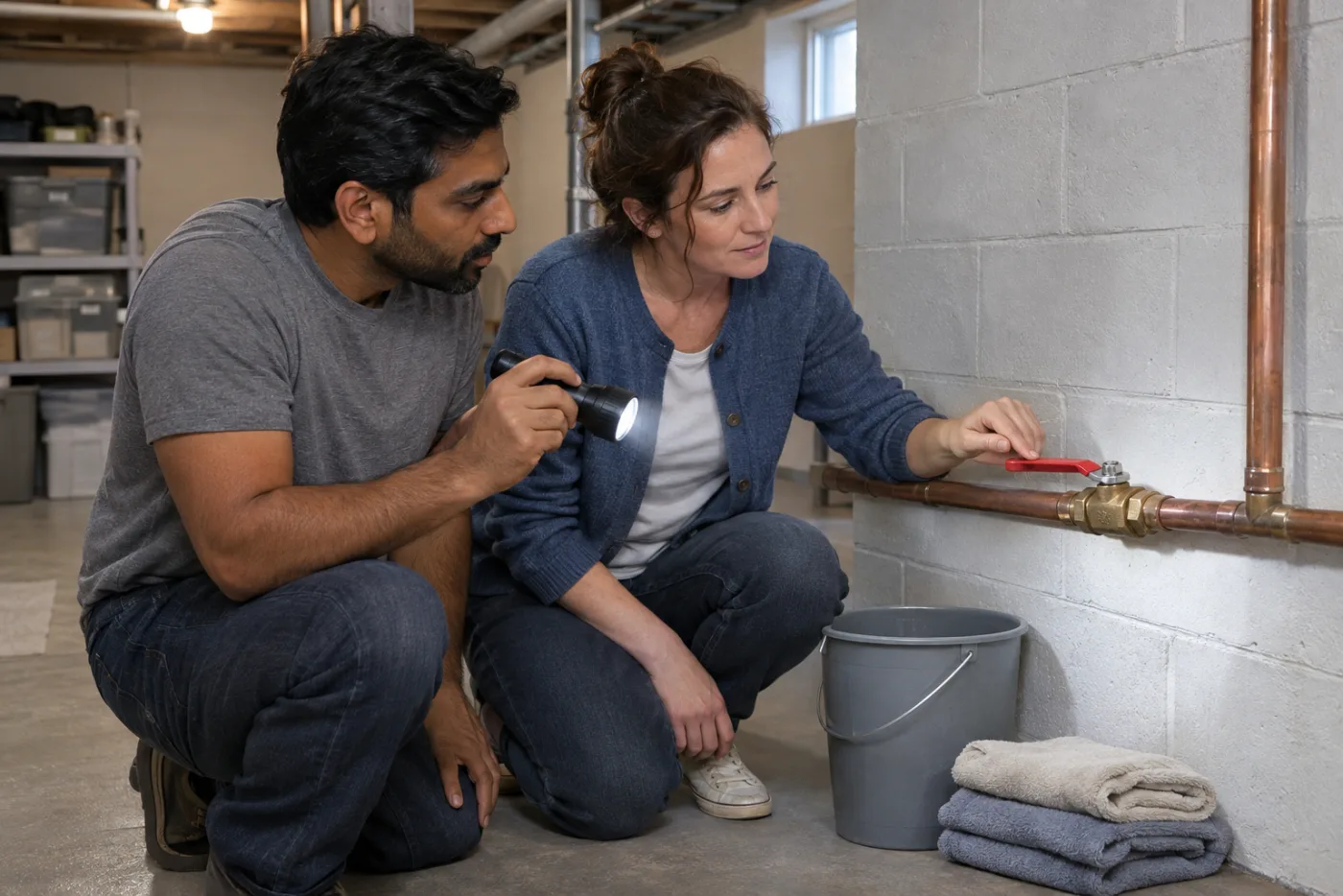
- Find and tag the three shutoffs. Show everyone at home.
- Save the numbers for gas, electric, and water utilities, your insurer, a plumber, and an electrician.
- Put a flashlight where you can find it in the dark.
- Test the smoke and CO alarms.
- Take photos of each room and the labels on your big equipment.
How We Can Help
Once everyone's safe, send Casa a photo and tell us what happened. We help you work out what it is, what's safe to do while you wait, and what a visit should cost. If you need someone, we can look for local pros, contact the ones you choose, and gather times and estimates.
FAQ
What counts as a home emergency? Anything that threatens people or is getting worse by the minute: fire, gas, carbon monoxide, sewage, water you can't stop, dangerous wiring, or no heat in freezing weather.
Is no hot water an emergency? Usually not, unless the water heater is leaking, you smell gas, or an alarm is sounding.
Should I call my insurance company first? Stop the damage first, and take photos. Then call before you hire anyone for a big cleanup, so you know what they need. When to file a claim.
Who do I call for a water leak at night? Shut the main valve, then call an emergency plumber. If the valve won't close, call your water utility.